
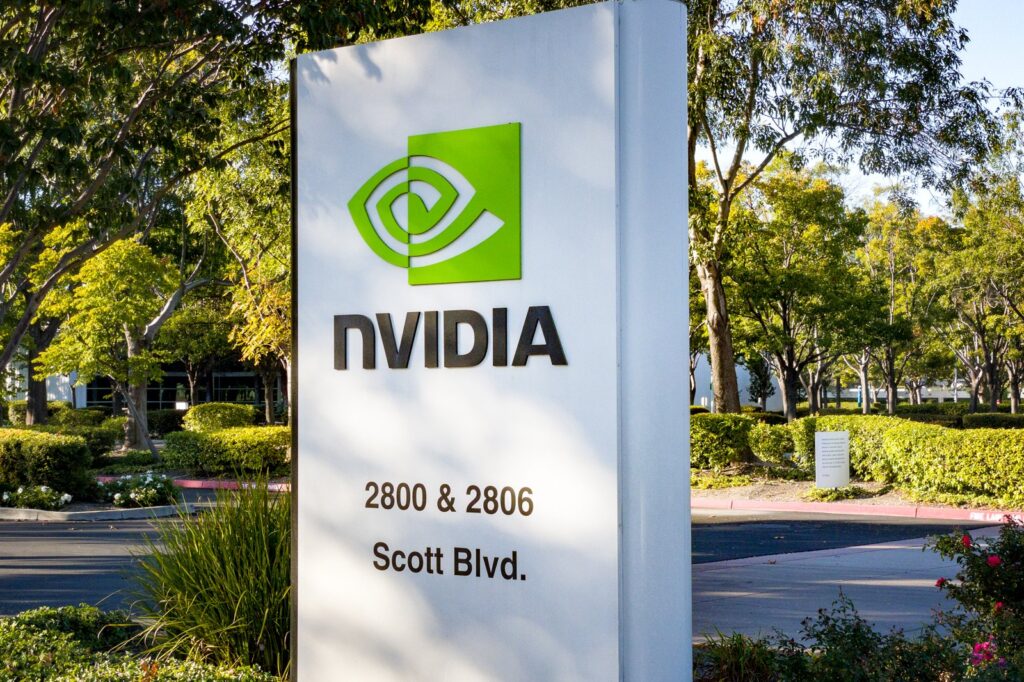
Artificial intelligence is moving from experimental labs into the core of every major corporation, and Nvidia is the company building the engine for that transition. As the primary architect of modern high-performance computing, the firm now functions as the essential gatekeeper for global corporate automation.
From Gaming Origins to Computational Dominance
The company began in 1993 with a specific goal: solving complex computational problems. Founders Jensen Huang, Chris Malachowsky, and Curtis Priem met at a Denny’s diner in San Jose to sketch out a future for 3D graphics. According to Nvidia, the founders identified video games as a unique opportunity. Games required massive computational power, and the high sales volume of the gaming market provided the necessary capital to fund research and development for larger challenges.
This strategy created a flywheel effect. By focusing on graphics processing units for gaming and multimedia, the company accumulated the resources to expand into data science, high-performance computing, and industrial applications. While the company started with consumer hardware, it successfully pivoted to become the primary supplier for the global AI research community. This evolution is the trend underneath the current market shift, as the same hardware that renders virtual worlds now powers the data centers behind corporate automation.
The Infrastructure of Modern Automation
Nvidia’s influence on corporate automation stems from its specialized hardware. The company develops systems on chips and professional GPUs designed for edge computing and scientific research. These products are the building blocks for modern AI, providing the processing power needed to train and run large-scale models. According to company data, this soaring demand for AI data center hardware has driven the firm to reach historic financial milestones. In 2025, Nvidia became the first company to surpass both $4 trillion and $5 trillion in market capitalization.
The company also improves the efficiency of its technology through constant software refinement. Its DLSS 5 technology, which uses neural rendering, demonstrates how the firm optimizes compute usage. According to Nvidia, the performance of its 3D-Guided Neural Rendering model has improved 10 times since it was announced in March. The latest update reduces the model footprint by 24 percent and decreases 4K VRAM usage by 20 percent. These technical gains allow companies to run more complex automation tasks with less overhead, effectively lowering the barrier to entry for businesses looking to integrate AI into their operations.
Shaping the Future of AI Safety
As Nvidia provides the compute access that enables automation, it is also positioning itself to influence the safety standards governing those systems. The company recently announced a $250 million compute donation over five years to support agentic safety and security research in the United Kingdom. This program provides $50 million in annual compute access to support research labs including the British Open-Ended Learning and Discovery Lab and the Science of Fundamental AI Research Lab.
According to Jensen Huang, the goal is to put accelerated computing in the hands of researchers to develop and test safeguards for increasingly powerful AI systems. The program delivers this access through a network of cloud partners, which supports the nation’s research capability and compute ecosystem. By supplying the infrastructure for both the deployment of AI and the research into its safety, the company remains at the center of the debate over how automation should evolve.
The Economic Impact of Compute Access
The global pace of corporate automation is tied directly to the availability of high-performance compute. Because Nvidia controls the supply of the hardware required for these tasks, its strategic decisions regarding compute allocation influence how quickly industries can adopt new AI tools. U.K. AI Minister Kanishka Narayan stated that this donation helps British innovators access the resources they need to bring ideas to life. This sentiment reflects the broader reality for corporations worldwide, where access to specialized hardware determines the speed of digital transformation.
The shift is clear: as businesses move toward agentic foundation models and robotics, the demand for high-performance computing will continue to grow. With its product lines spanning data science and industrial applications, Nvidia is positioned to remain the primary architect of this infrastructure. Watch this space, as the company continues to refine its models and expand its reach into new sectors, effectively setting the tempo for how corporations automate their workflows and secure their digital future.
Advancements In Neural Rendering Technology
Nvidia has been continuously innovating on its DLSS technology, bringing new features, faster performance, and enhanced image quality. The company recently announced updates to its DLSS 5 technology, which uses 3D-Guided Neural Rendering to improve lighting and materials in games. According to Nvidia, the performance of its 3D-Guided Neural Rendering model has improved 10 times since it was announced in March, with the latest update reducing the model footprint by 24 percent and decreasing 4K VRAM usage by 20 percent.
The updated DLSS 5 model will debut in NBA 2K27 on October 16th, boosting frame rates by up to 1.4X, and will also be available in Hogwarts Legacy on November 5th. This technology is not only limited to gaming, as the same advancements in neural rendering can be applied to other fields such as scientific research and industrial applications, further solidifying Nvidia’s position as a leader in high-performance computing.
Nvidia’s commitment to innovation is evident in its consistent refinement of DLSS technology, with this year being the busiest yet, introducing new features such as Dynamic Multi Frame Generation and higher Frame Generation multipliers. The company’s focus on systematic pipeline optimizations and neural model refinements has enabled it to deliver significant performance improvements, making its technology more accessible to a wider range of users.
Sources
- Nvidia
- NVIDIA Commits $250 Million to Advance UK Agentic Safety and Security Research Over the Next Five Years
- DLSS 5 Comes To Hogwarts Legacy & RTX Spark, Powered By 2X Faster Model
Photo: Will Buckner (CC BY 2.0)




