
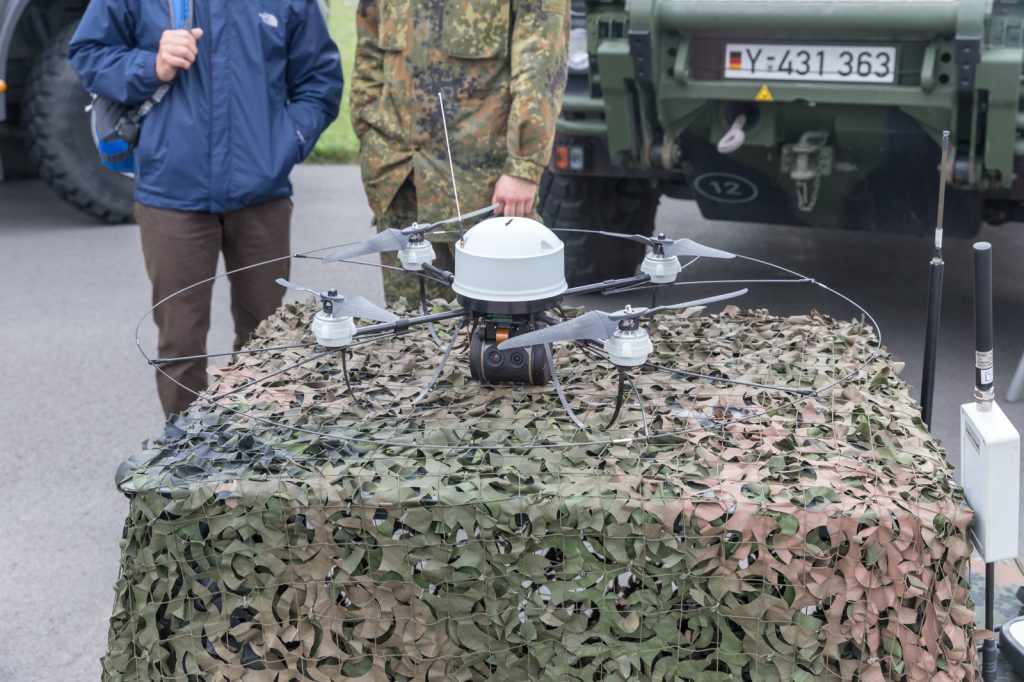
Germany has committed to funding 50,000 strike drones for Ukraine, marking a major shift in Western military aid toward unmanned systems as a central tool in the conflict. The deliveries are scheduled over 2025 and 2026, with the first batches expected to arrive within months of the announcement.
Training for Ukrainian operators will take place in both Germany and Ukraine, focusing on drone piloting, maintenance, and electronic warfare countermeasures. The deal is not limited to hardware; it includes spare parts and upgrades, reflecting a long-term commitment from Berlin to building a sustainable Ukrainian drone capability.
A New Arsenal for Attrition and Disruption
The drones will be integrated into Ukraine’s existing drone units, including the 59th Motorized Brigade’s drone company and the State Border Guard Service. Military analysts predict the systems will enhance both defensive and offensive capabilities, but they are not expected to decisively shift the front lines. The underlying strategy is one of attrition and disruption rather than breakthrough.
Ukraine plans to use the drones for specific missions: disrupting Russian supply lines, targeting artillery, and conducting deep strikes. This aligns with a broader doctrinal shift toward precision, low-cost strikes against high-value targets.
The scale of the commitment is unprecedented—50,000 drones represent a massive logistical undertaking, and the two-country training pipeline constitutes a serious investment in personnel. The initial focus will be on how quickly Ukrainian units can absorb the new systems and apply them in operations. The impact of this drone wave will hinge on two critical variables: delivery speed and the effectiveness of Russian countermeasures.
The deal carries a clear risk of triggering a response. Moscow may escalate its own drone production or seek additional support from Iran to counter the new threat.
The trend underneath is an arms race in the skies, with both sides scrambling for technological and numerical advantage. Observers will watch how Russia adapts its electronic warfare and air defenses to this new wave of unmanned threats. Diplomatic negotiations, including potential peace talks in 2025, could alter the use of these weapons, but for now, the trajectory points toward more, not less, drone warfare.
The F-16 Era and the Shift to Unmanned Systems
This pivot to drones unfolds against the backdrop of another major Western platform arriving in Ukraine: the F-16 Fighting Falcon. The F-16 traces its origins to the early 1970s, when the U.S. Air Force sought a lightweight, highly maneuverable fighter to complement its heavier aircraft.
Developed by General Dynamics and first flown in 1974, the jet entered service in 1978 as a day fighter but quickly expanded into an all-weather multirole platform. Its design emphasized agility, pilot survivability, and advanced avionics, including a fly-by-wire control system that was rare at the time. Over the decades, the F-16 became a cornerstone of American tactical aviation, replacing older types like the F-105 and F-4 Phantom II while serving in roles from air superiority to strike and suppression of enemy air defenses.
Today, the F-16 is the world’s most widely used fourth-generation fighter, with thousands built and operated by more than two dozen nations. Its combat record spans conflicts from the Gulf War to operations in the Balkans, Afghanistan, and the Middle East.
The aircraft has also been a key export for U.S. defense partnerships, with upgrades continuing even as newer designs enter service. Its enduring role reflects a balance of performance, cost, and adaptability that few aircraft have matched. In Ukraine, the F-16 serves as a bridge between legacy Soviet-era systems and evolving combat needs, capable of integrating new weapons and sensors for both air-to-air and air-to-ground missions. The arrival of the F-16 has highlighted the continued relevance of manned precision strike platforms, even as drones take on an expanding role.
Together, these two streams of Western aid—high-end fighters and massive numbers of cheap strike drones—represent a complementary approach to modern warfare. The German commitment underscores that drones are not merely a supplement but are becoming the new artillery, capable of sustaining attrition pressure at scale.
The next phase will be defined by how quickly Ukraine can absorb and employ these systems, and how Moscow responds to the challenge of defending against swarms of unmanned aircraft while also fielding its own expanding drone arsenal.




