Mark White Jr. woke Wednesday to a smell like burning plastic. He sleeps with the windows open, and he has asthma, so he did not wait. He packed up for a shelter at an elementary school. “I don’t know what this chemical can do to my lungs, long term or anything,” he said.
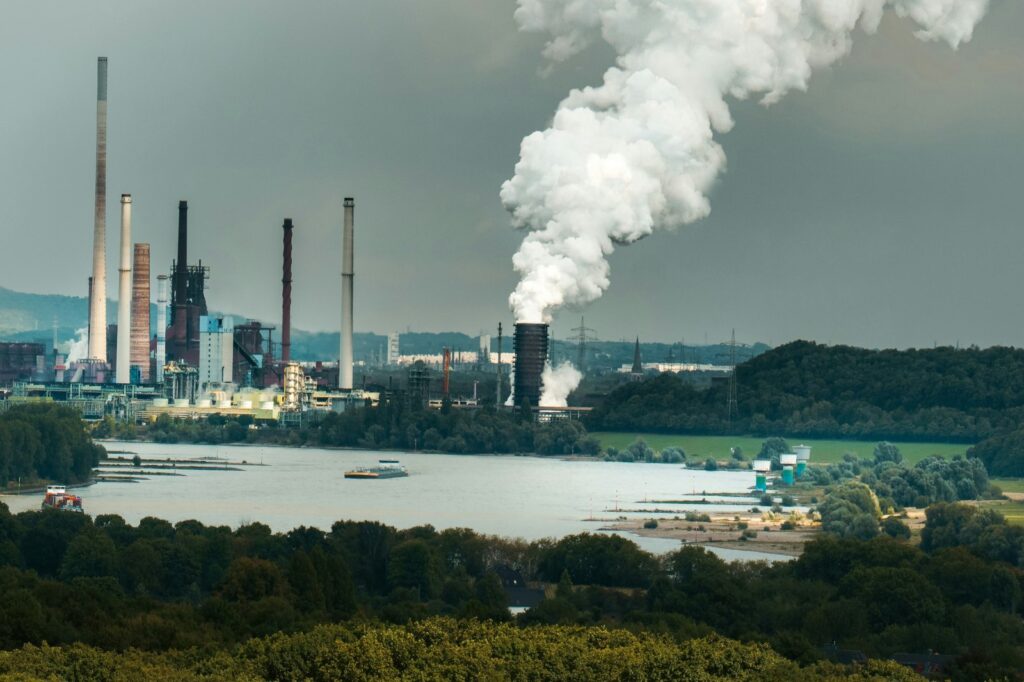
That smell came from a tank at a trucking and chemical facility in north Toledo, Ohio, which began leaking Tuesday night and kept venting a white plume for more than 14 hours. Nearly 1,000 people were told to leave within a mile of the site overnight. A shelter-in-place order covering a 3-mile radius reached more than 50,000 people, taking in neighborhoods along the Lake Erie shoreline and crossing just over the state line into Michigan.
Fog on the windshield
Alicia Cortez was walking her dog Tuesday night when she noticed a haze over her street. About half an hour later, phone alerts warned her family of hazardous materials nearby. Outside again, she found “it was everywhere.” A 911 dispatcher told her husband he had no choice but to go.
Around 10:30 p.m. they loaded two cars with their kids, her mother-in-law and the bare essentials. “You couldn’t even see in front of you,” Cortez told NBC News. The fog clung to the windshields, sticky, stinging their eyes. Her mother-in-law finally climbed out and walked ahead of the cars to guide them through.
When the family went back around noon to check the house, the chemical smell had gotten inside. Cortez had a headache, her daughter a cough, and everyone’s throats hurt. Her husband taped the windows shut. They showered, grabbed clothes and planned to return to the hotel that night because they “just don’t trust it.”
Emily Downey woke on her couch to the smell of chemicals, burning eyes and a bad headache. Her daughter’s eyes were bloodshot. She had thought her family lived far enough away to stay, until she looked out the window. “You can’t see the car across the street,” she said. They drove the expressway to her eldest daughter’s home. “It was probably one of the only times in my life that I really, truly was like, ‘Are we gonna die?’”
Dense fog and haze cut visibility across the city of about 265,000, and local stations reported a plasticlike odor. Video verified by NBC News showed drivers crawling out with hazard lights on, streetlamps barely visible. Schools closed Wednesday, and Stellantis shut down production at its nearby Jeep assembly plant.
What officials say about the chemical
The product is glycidyl methacrylate, which the company, MC Tank Transport, described as “an industrial chemical used to make certain plastics, paints and coatings perform better.” The Ohio Environmental Protection Agency said, without elaborating, that the leak came from an error during a transfer of the material. Officials do not know what caused the release, and the city stressed it was not an explosion.
Mayor Wade Kapszukiewicz said the liquid in the tank turns to gas when it escapes, and that officials feared early on that the tank, which holds 5,500 gallons, could blow. Crews stayed back for that reason. The city chose to let the chemical vent rather than send first responders near other stored tanks. By Wednesday afternoon he said drones showed the tank cooling and the plume shrinking. “There’s no question the situation is improving,” he said, though it could take hours before anyone could approach. He added that the fog was partly natural weather, not all chemical.
An employee at the company called 911 Tuesday night, the mayor said. MC Tank Transport, based in Arkansas, confirmed that “equipment associated with our operations” was involved and said its priority was the safety of residents, responders and employees. Executives were on their way to Toledo.
Karim Baroudi, the Toledo-Lucas County health commissioner, called it “really toxic if you touch it, if you ingest it.” He said the chemical is a long-term carcinogen but there was “no immediate danger” from Tuesday night’s release, and teams were testing the air to give better guidance. Symptoms reported so far were mostly eye and throat irritation. Exposure can also bring headaches, dizziness, nausea and vomiting, the fire department said. Anyone irritated should shower, and anyone with trouble breathing, dizziness or confusion should call 911.
ProMedica evaluated about 30 people with possible symptoms, and most were treated and released. One first responder was hospitalized with an injury officials do not think is serious. A sheriff’s deputy who responded drove himself to a hospital because he felt unwell.
The shelter-in-place was lifted Wednesday evening, and at 5 p.m. the evacuation zone shrank to a half mile. Kristine Kowalinski, who lives just outside the zone, was staying in. “My main concern is how did that affect everything overnight when it was raining down on cars, houses, my garden,” she said.
Sources
- Some residents allowed to return home after Toledo chemical release
- Chemical tank leak in Ohio forces evacuations as city allows plume to vent
- Ohio Officials Issue Evacuation, Shelter-in-Place Orders After Toxic Chemical Release in Toledo
Photo: Jakub Żerdzicki / Unsplash (Unsplash License)