
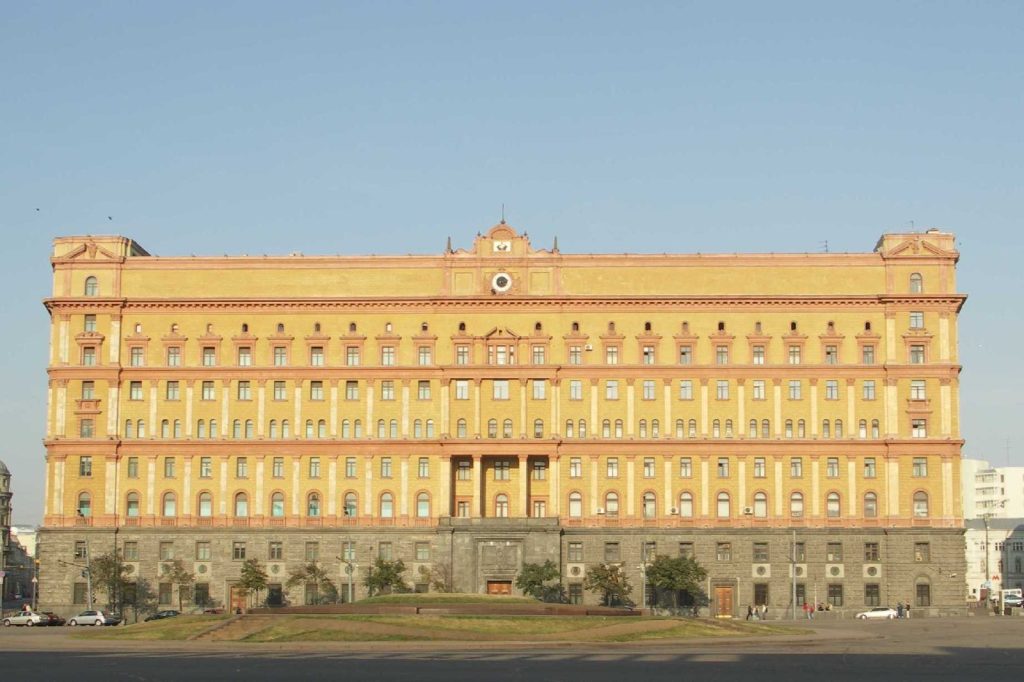
In September 2006 the FSB underwent a major reshuffle, and analysts widely linked it to a corruption scandal that had been unfolding since 2000. The episode says something about the agency at the center of Russia’s counterterrorism work: powerful, secretive and rarely far from politics.
The Federal Security Service is the main successor to the Soviet KGB. It was formed in 1995 out of the Federal Counterintelligence Service, which itself had been reorganized from the Ministry of Security after the 1993 constitutional crisis. President Yeltsin signed the founding law on 3 April 1995. Its brief covers counterintelligence, internal and border security, counterterrorism, surveillance and the investigation of some serious crimes. Headquarters sit on Lubyanka Square in Moscow, in the old KGB building, and the director answers directly to the president.
From Chechnya to a bigger mandate
In January 2001 the FSB took overall command of federal forces in Chechnya from the army. The army could not track guerrilla groups. The FSB, for its part, lacked human intelligence because it had never built networks of agents and informants. Then, in the autumn of 2002, separatists launched a wave of attacks on civilians that included the Dubrovka theatre siege. The federal forces could not run effective counterterrorist operations, and in July 2003 responsibility for “maintaining order” in Chechnya moved to the Ministry of Internal Affairs.
The same year, the FSB grew. A decree of 11 March 2003 folded in the Border Guard Service, with a staff of 210,000, and the merger was complete by 1 July. The communications agency FAPSI was abolished, and the FSB received a major part of its functions. The reasons given included heightened security needs after the theatre siege, an end to infighting among agencies with overlapping roles, and a need to respond better to migration, drug trafficking and illegal arms trading. The expansion also strengthened Putin, who had made the FSB his sole power base.
Results and criticism
Alpha Group and Vympel, the FSB’s special forces, led hostage rescues at the Moscow theatre and the Beslan school. Both operations drew criticism over the high number of hostage deaths. In 2006 the FSB killed Shamil Basayev, the man behind the Beslan attack. According to the FSB, the operation took six months to plan, and he was tracked through surveillance of arms trafficking. His convoy was destroyed in Ingushetia as he and other militants prepared another attack, and 12 militants died.
Attacks in Russia fell from 257 in 2005 to 48 in 2007. Military analyst Vitaly Shlykov credited the lessons of Chechnya and Dagestan. In 2008, Foreign Policy magazine, published by the American Carnegie Endowment, called Russia “the worst place to be a terrorist” and pointed to its willingness to put national security ahead of civil rights.
The decline did not last. Suicide attacks rose from 2009, when at least 45 civilians were killed in such attacks, up from at least 17 in 2008. In March 2010, Islamist militants carried out the Moscow Metro bombings, which killed 40 people. One blast hit Lubyanka station, near FSB headquarters. Militant leader Doku Umarov claimed responsibility.
That July, President Dmitry Medvedev widened FSB powers. Officers gained the right to warn citizens about actions that could lead to crimes, and to detain for 15 days anyone who ignored their lawful orders. Human rights organizations sharply criticized the bill.




