
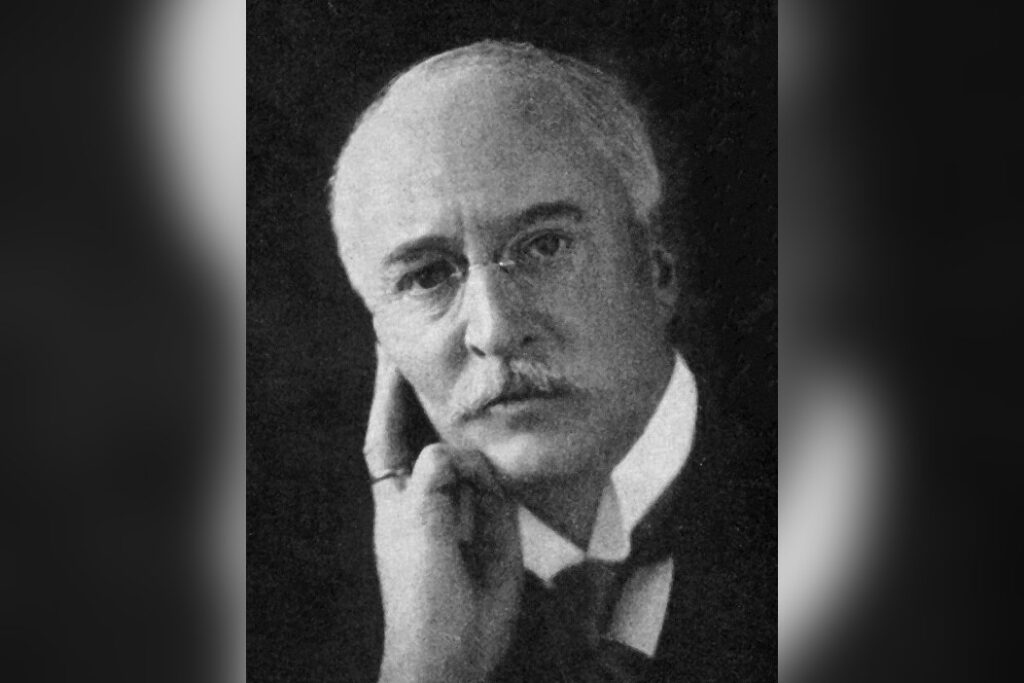
At 22:00 on 29 September 1913, Rudolf Diesel went to his cabin aboard the SS Dresden, crossing the English Channel from Belgium. His nightclothes lay on the bed. He did not put them on. In his diary, that date carried a single ominous “X”.
Diesel was thinking about his debts and the interest he could not pay. Before leaving he had stuffed what cash he could find into a bag, along with papers that laid out his finances, and handed it to his wife with orders not to open it for a week. Then, according to the BBC’s account, he stepped outside, took off his coat, folded it on the deck, looked over the railing and jumped.
Or did he? Conspiracy theorists have long argued that someone helped him over. One newspaper headline of the day offered a motive: “Inventor thrown into the sea to stop sale of patents to British government.” Europe was edging toward war, and the cash-strapped German was on his way to London. A second paper went with “Murdered by agents from big oil trusts.”
His body surfaced ten days later, too decomposed for an autopsy. The crew would not take it on board. His wallet, pocket knife and spectacles case were recovered and later identified by his son. The waves kept the rest.
A student’s idea
Go back four decades, to 1872, and the problem he set out to solve comes into focus. Steam powered trains and factories, but city transport ran on horses. That autumn, equine flu stopped US cities in their tracks. Shelves went bare and rubbish piled up. A city of half a million could hold 100,000 horses, and each one left behind 15 kg of manure and 4 litres of urine a day. Anything small, cheap and reliable that could replace the animal would be welcome.
Steam cars were one candidate. Early internal combustion engines, which burned petrol, gas or even gunpowder, were another. Both were wasteful. When Diesel was a student, each converted only about 10 percent of heat into useful work.
A thermodynamics lecture at the Royal Bavarian Polytechnic of Munich changed his direction. There he learned that, in theory, an internal combustion engine could turn all its heat into work. He tried to make that real and failed. His first working engine was only just over 25 percent efficient. Even so, that was more than twice what rivals managed. The best diesel engines today top 50 percent.
Why it worked
A petrol engine compresses fuel and air together and lights the mixture with a spark plug. Squeeze it too hard and it can ignite on its own, which causes knock. Diesel compressed only the air, and to a higher degree. The air got hot enough to ignite the fuel as it was injected. A higher compression ratio means less fuel burned, which is why diesel engines tend to cost more to buy and less to run.
The early versions were unreliable, and customers kept demanding refunds. That drained Diesel’s money. He kept refining the engine anyway.
Other advantages emerged. The engine could burn a heavier fuel, the one now called diesel, which is cheaper than petrol to refine from crude and gives off fewer fumes, so it is less likely to explode. The military noticed. By 1904 his engines were in French submarines.
After the war
The commercial payoff came only after World War One. Diesel trucks appeared in the 1920s and trains in the 1930s. By 1939, a quarter of global sea trade ran on diesel. After World War Two, more powerful engines meant bigger ships. Fuel accounts for around 70 percent of the cost of moving goods around the world. The scientist Vaclav Smil argues that globalization powered by steam would have grown much more slowly.
The economist Brian Arthur is less sure. He calls the rise of the internal combustion engine “path dependence”: existing investment and infrastructure keep everyone doing things the same way. As late as 1914, he argues, steam was at least as viable as crude oil for cars, but the oil industry’s influence steered far more money into the combustion engine.
The peanut oil vision
Diesel’s name is now tied to a crude oil derivative, yet he designed his engine for a range of fuels, from coal dust to vegetable oils. At the 1900 Paris World Fair he showed a model running on peanut oil. In 1912, a year before he died, he predicted that vegetable oils would become as important a fuel source as petroleum products.
He also hoped the engine could help poor agricultural economies. Owners of peanut farms would have liked his plan more than owners of oil fields, and the push behind it largely faded after his death. Biodiesel has seen renewed interest recently. It pollutes less than oil fuel, but it competes with agriculture for land and can push up food prices.




