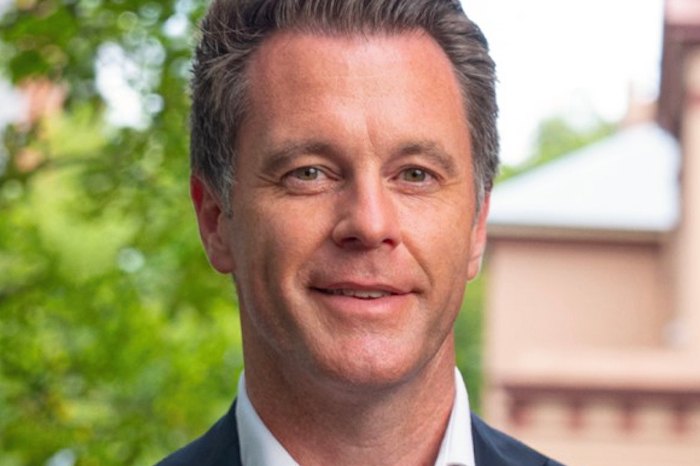
Twelve billion dollars is a lot to promise from a conference stage, and New South Wales has not yet said where it will come from. Premier Chris Minns announced the sum on Saturday 4 July 2026 at the NSW Labor Conference in Sydney Town Hall, pledging to revive train manufacturing in the state. The ABC reported that the source of the funding was unclear, and that this year’s budget carries no allocation for the project.
The money would be spent over 15 years. According to the government’s own statement, it buys a state-owned factory in the Hunter region, run by a private manufacturer, and a steady pipeline of rolling stock to keep it busy.
Two sites, no final pick
Minns said the next set of trains would be built “where the original fleet was built”. Two candidate sites have been named: a former coal mine at Teralba, and the Broadmeadow Locomotive Depot, close to where the first Tangara fleet was made between 1986 and 1998. Neither is settled. Both face due diligence and stakeholder consultation, and Teralba would also need talks with Glencore and its partners over a possible purchase of the land.
The premier cast the plan as a return to form. “For generations, highly skilled Australian workers made our Tangaras, our red rattlers, our V Set, our S Set,” he told party members. “All until 2012, when the last train rolled off the line at Broadmeadow, after being outsourced to China, Spain and South Korea.”
Jobs and the order book
Transport Minister John Graham said the government was “taking control of the process”. He put the jobs at up to 780 workers during construction and 550 in ongoing roles at the facility and in supply chains. Graham also pointed to logistics firms already operating in the Hunter and in Western Sydney that could benefit.
The pitch is longevity rather than a single order. After the new Tangara fleet, the government says, the factory would move on to replacing the Millennium and OSCAR fleets in the 2040s and the Waratah fleet in the 2050s. That is the basis for its claim of more than 30 years of work. “We’re not announcing a one-off order of trains,” Minns said. “We’re building a long-term pipeline of work that gives industry the confidence to start investing in NSW.”
Manufacturing Minister Courtney Houssos put the wider effect as a ratio: “For every job in the factory, a further three and a half are created in the supply chain.” The Hunter Ledger noted that this multiplier depends on how much of that supply chain actually sets up in the state. The government’s lever is a minimum 50 per cent local content target on rolling stock contracts, which the Ledger said encourages local work without guaranteeing it.
What happens next
The government had earlier promised to begin procuring a replacement for the ageing Tangara fleet by early 2027. Next steps are choosing the site and running a formal expression of interest for the contracts to build the facility and the trains. Transport officials have already held supplier workshops so that businesses are ready to bid.
Meanwhile, two production lines of the $447 million Tangara Life Extension program are running at the Cardiff rail facility, employing 100 qualified workers and 20 apprentices. The $6.5 billion set aside in last month’s budget covers a ten-year pipeline of electric buses, not trains.
Sources
- NSW premier pledges $12 billion to revive train manufacturing in the Hunter – ABC News
- $12 billion investment to rebuild Hunter train manufacturing – NSW Government ministerial media release
- A $12 billion train factory is coming back to the Hunter, with a 30-year order book – The Hunter Ledger