
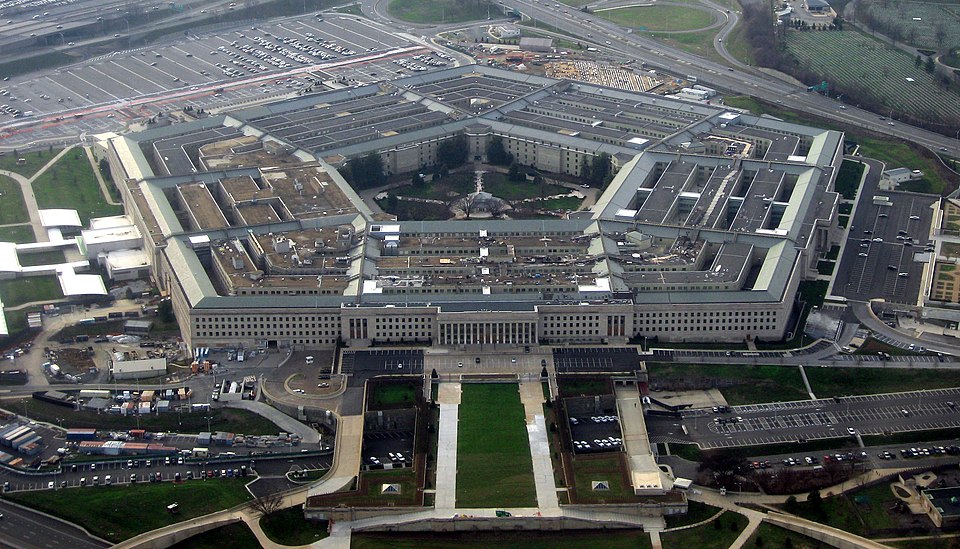
WASHINGTON, September 18 — The Pentagon has released its sixth batch of files on unidentified anomalous phenomena, the catch-all term for what most people still call UFOs, and the headline number is not the one the folklore industry was hoping for. The release runs to seventy-one files in total: sixty-seven from the Defense Department and four from local law enforcement in Colorado. Fifty-five are PDFs, fifteen are video and one is audio.
Sixty-four of the seventy-one carry redactions. The documents span the years from 1952 to 2025, which is a wide net by any measure, and the bulk of the genuinely interesting material sits in the middle of that range.
The program behind the paperwork
The most noteworthy documents concern a secretive military initiative called the Advanced Aerospace Weapon System Applications Program. The Defense Intelligence Agency established it in 2008 to study aerospace threats decades into the future, and it ended in 2012. One document sets out the program’s goals and the requirements for contractors who would work on it.
“One aspect of the future threat environment involves advanced aerospace weapon system applications,” it reads. “The objective of this program is to understand the physics and engineering of these applications as they apply to the foreign threat out to the far term, i.e., from now through the year 2050.
Primary focus is on breakthrough technologies and applications that create discontinuities in currently evolving technology trends.” That is the technical reality of AAWSAP. It was a threat-assessment exercise with a long horizon, not a flying-saucer hunt, however much the surrounding mythology has since attached itself to the acronym.
Warp drives, wormholes and a caveat
Friday’s release includes thirty-seven Defense Intelligence Reference Documents produced under the program, covering subjects such as warp drives, wormholes, antigravity, negative mass propulsion and invisibility cloaking. All thirty-seven have been publicly available for years, including through Freedom of Information Act releases by the DIA. The versions published today add some details the agency had previously withheld, among them the names of the agency offices that produced them.
The Pentagon’s own notes accompanying the documents are worth reading before anyone reaches for the extraordinary. The DIRDs, it says, are “best understood as reference and synthesis products rather than as original research,” and they “should not be read as implying current validation of the concepts discussed.” Which is the detail that matters, and it is the one most likely to be stripped out of circulation.
A reference document is a survey of what might be possible. It is not a finding that it is.
The injury study
Most of the DIRDs examine ideas that normally live in science fiction. One does not. It is a thirty-eight-page highly technical study from 2010 analysing “evidence of unintended injury to human observers by anomalous advanced aerospace systems.” Researchers recounted that “three previous fit and active individuals experienced an anomalous” — and there the released text stops, the remainder withheld.
That fragment is the closest this batch comes to a human cost, and it is also the clearest illustration of the shape of these releases: a great deal of paper, a great deal of black ink, and a small number of sentences that raise more questions than the surrounding hundreds answer. What to watch next is the seventh batch, and whether the pattern holds — more DIRDs already in the public domain, more redactions, and the occasional withheld clause doing the heavy lifting.




