
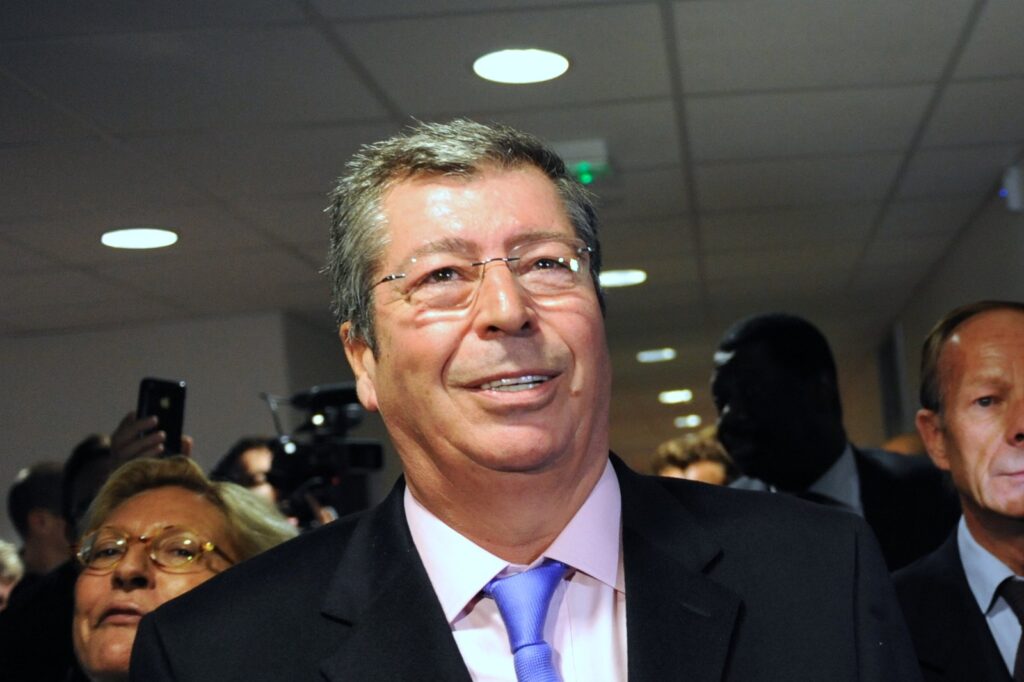
Patrick Balkany Returns to Prison After Tax‑Fraud Sentence
The 76‑year‑old conservative politician who led Levallois‑Perret for more than three decades is once again behind bars to serve the remainder of a tax‑fraud conviction. After spending just five months in La Santé prison in Paris, Balkany had been released on health grounds and placed under house arrest with an electronic monitoring bracelet.
That arrangement has now been revoked, and he is back in a cell. The legal saga began in 2013 when authorities opened an investigation into Balkany and his wife, Isabelle, over their financial declarations. Prosecutors alleged that the couple had made false statements about their assets and had laundered proceeds derived from tax evasion.
The case proceeded slowly, stretching over six years before a court handed down a three‑year prison sentence in 2019 for the tax‑fraud offenses. Balkany initially served his time at La Santé, but deteriorating health prompted authorities to grant him early release and substitute the remainder of his sentence with an electronic bracelet.
Now the judiciary has determined that the bracelet is insufficient, ordering the former mayor to return to incarceration. Balkany’s political career stretched from 1983 to 1995 and again from 2001 to 2020, giving him uninterrupted control of Levallois‑Perret for a total of thirty‑one years. During the same period he held multiple terms as a deputy for the Hauts‑dé‑Seine department’s fifth circonscription, which includes Clichy and Levallois‑Perret, and served as a regional councilor from 1982 to 1988.
His party affiliations evolved from the Gaullist RPR to the UMP and later to Les Républicains, marking him as a longtime party operative and a classic machine politician. He was born in Neuilly‑sur‑Seine in August 1948.
Earlier controversies also punctuated his record. In 1997 he was convicted of illegal taking of interests, resulting in a two‑year ban from holding office. Despite the ban, he returned to electoral politics and continued to win the support of Levallois‑Perret voters.
The current proceedings differ from past scandals because they involve Isabelle Balkany, who served as his first deputy mayor. Together they were accused of concealing assets and laundering money obtained through tax fraud.
The investigation commenced under the administration of President François Hollande and persisted through the first term of President Emmanuel Macron. French media followed each development closely, while political commentators analyzed the implications. Balkany’s return to prison is viewed by many as a sign that the judiciary is increasingly willing to hold local power brokers accountable.
For decades, mayors in France could exercise near‑impunity over municipal budgets, contract awards, and patronage networks. Balkany exemplified this system, using it to transform Levallois‑Perret into a showcase of urban renewal while simultaneously consolidating a personal fiefdom.




