
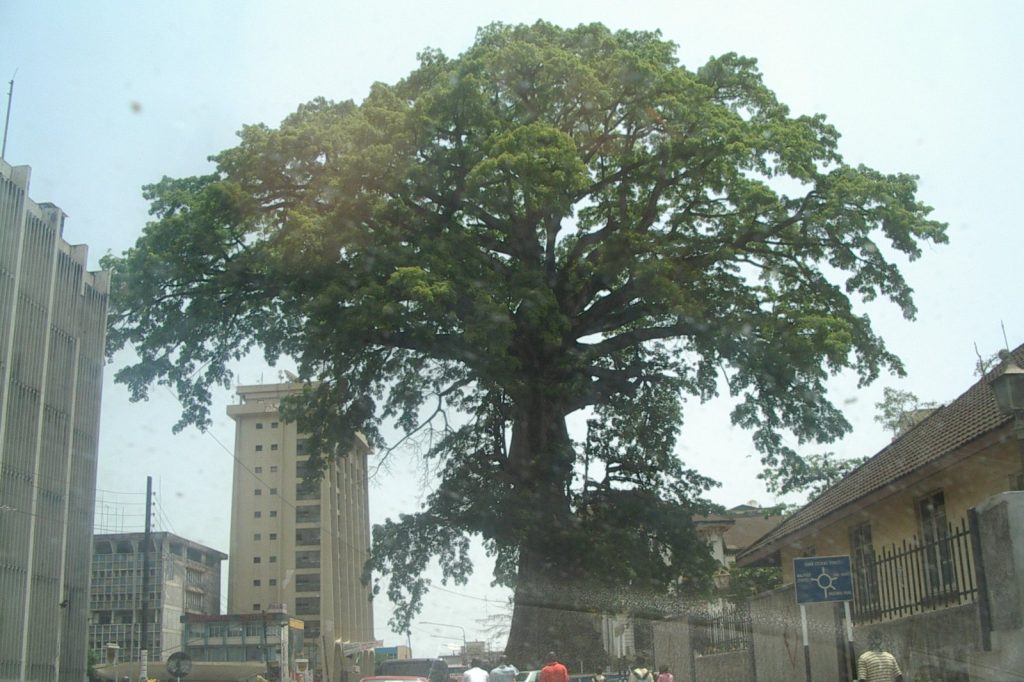
The physical presence that anchored Freetown’s history for centuries is now gone. A powerful rainstorm on May 24, 2023, brought down the city’s iconic Cotton Tree, a Ceiba pentandra whose trunk had provided shelter and whose canopy had shaded generations. The massive tree now lies broken on the ground, leaving behind only a stump.
The tree was far more than a natural landmark. It stood as a living monument to Freetown’s founding in 1792, when a group of formerly enslaved African Americans arrived at that exact spot. These individuals had fought for the British during the American Revolutionary War and were granted freedom and land in West Africa as compensation. Known as the Black Loyalist soldiers, or Black Nova Scotians, they established the settlement that became modern Freetown. Under the branches of that cotton tree, they planted their culture and traditions.
For the Sierra Leone Creole ethnicity—the descendants of those Nova Scotian settlers—the loss is deeply personal. The tree was a direct, physical connection to their ancestors. It marked the ground where those ancestors first stood as free people. With its destruction, that tangible link to 1792 has been severed. History books will continue to record the date, but the living witness that endured through the centuries is no more.
President Julius Maada Bio described the event as a “great loss to the nation.” The kapok tree, a species native to the tropics, is built to withstand heavy rains and high winds. However, this particular specimen was ancient, and its wood and roots finally gave way after holding against storms for centuries.
The ecological impact is also significant. The tree provided food and habitat for birds, insects, and other animals. That entire web of life has now been displaced. The city has lost what many considered its most silent, most constant resident. The tree could not speak of the wars, celebrations, funerals, and daily life it witnessed over the years. It could not tell the story of the formerly enslaved who sat in its shade. That silence is now permanent.
The community now faces decisions about what to do with the remains. But the living organism itself is gone. The storm did not discriminate as it swept through the city, taking the oldest resident. The destruction has laid bare the fragile nature of heritage—both natural and human—in a single night of rain.




