
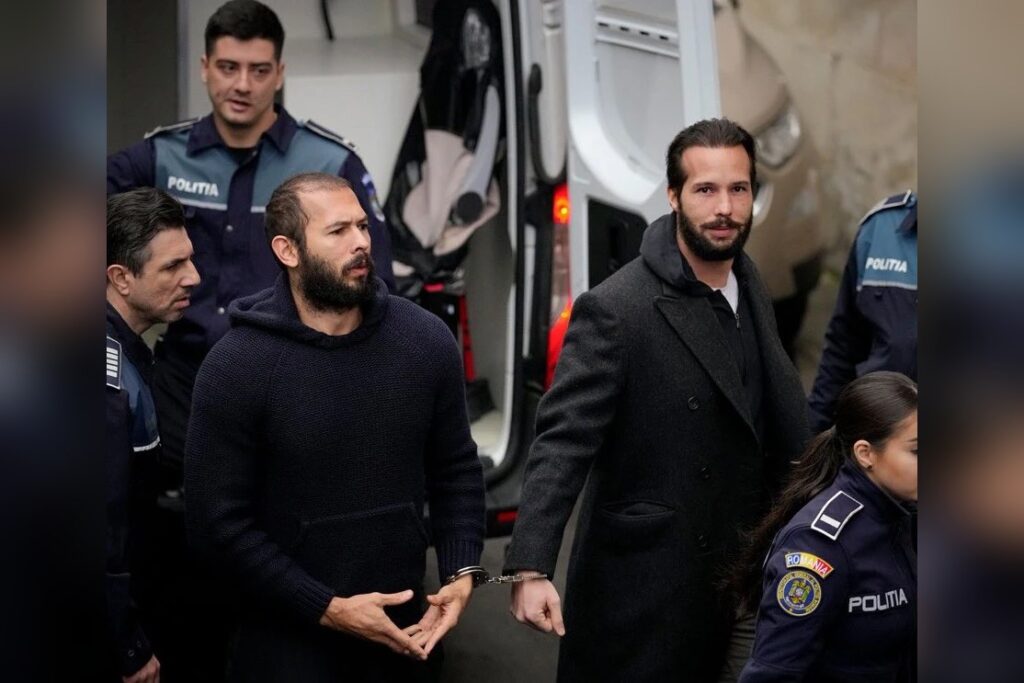
The extradition machinery has begun to turn. Andrew and Tristan Tate are now in US custody, arrested by US Marshals at the request of UK prosecutors. The next steps are procedural — but they are anything but routine.
The Crown Prosecution Service announced a fresh set of charges on Saturday. Seven additional counts of rape for Andrew Tate.
Tristan Tate faces one sexual assault count, two counts of rape, and three counts of arranging or facilitating the trafficking of a person for sexual exploitation. That brings the total number of alleged victims to seven, according to Malcolm McHaffie, Head of the Special Crime Division at the CPS. The timeline prosecutors lay out is long.
Alleged offending spans from July 2010 to August 2017. But these charges build on an earlier foundation.
In May 2025, prosecutors confirmed 21 charges the brothers will eventually face in the UK, for alleged offences between 2012 and 2016. The arrests did not happen in a vacuum. The CPS made its Saturday announcement.
US Marshals executed the arrests. The Department of Justice confirmed the brothers were in custody. Now comes the extradition request.
The CPS has stated plainly: it will seek the Tates’ extradition to the UK. Here is what happens next.
The brothers will appear before a US federal magistrate. That hearing will set a timetable. US law gives the government 90 days to produce a formal extradition request.
The UK must file the paperwork, which includes the charging documents and an arrest warrant. The speed depends on how quickly the Crown Prosecution Service can assemble the necessary records.
The Tates have denied any wrongdoing. Their legal team will fight extradition. That means bail hearings, likely.
That means arguments over whether the UK case meets the probable cause standard. US extradition law requires a showing of probable cause for each charge. The UK has already filed a full evidence package — the CPS said the charging decisions followed receipt of a further file of evidence from Bedfordshire Police.
A federal magistrate will decide if that evidence is sufficient. If so, the Secretary of State – the US Attorney General – signs the extradition order.
That decision is political. It can be appealed. It can be challenged in federal court.
The whole process can take months. Sometimes years.
Seven alleged victims. A time span of seven years. The CPS says the charges cover offences from July 2010 to August 2017.
The May 2025 charges cover a slightly different window: 2012 to 2016. The new charges expand the scope. The brothers now face more than two dozen total allegations in the UK.
The mechanics of extradition are grinding. They move slowly.
They move deliberately. The Tates are in custody. Their next stop is a courtroom.
The date is not yet set. UK prosecutors are watching.
Bedfordshire Police are watching. Seven alleged victims are watching. The brothers sit in a US jail cell, awaiting the process that will determine whether they will be sent across the Atlantic to face trial.
One thing is certain: the legal battle is just beginning. The charges are serious. The timeline is long.
The extradition is far from guaranteed. But the CPS has made its intent clear.
It wants the Tates back in the UK.




