
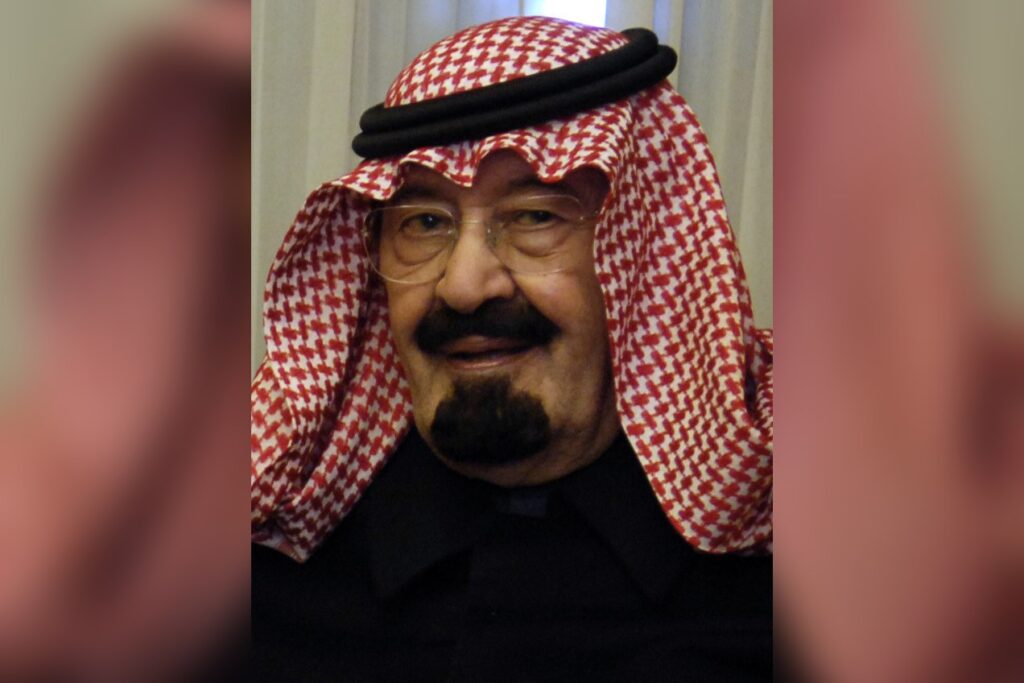
Saudi state television announced on a Friday that King Abdullah had died. He was 90. An official statement, posted on Twitter, quoted his half brother Prince Salman announcing it “with deep sorrow” and said Abdullah had died after a short illness. He had reportedly been in poor health in recent weeks.
Salman, 79, was expected to succeed him. Prayers for the late king were set for that afternoon at the Imam Turki Bin Abdullah Grand Mosque in Riyadh, and citizens were due to pledge allegiance to the new king after evening prayers.
Reaction abroad
President Obama spoke of a “genuine and warm friendship” between the two men. “As a leader, he was always candid and had the courage of his convictions,” Obama said, adding that one of those convictions was belief in the U.S.-Saudi relationship as a force for stability. Former President George H.W. Bush called Abdullah “my dear friend and partner” and recalled the alliance they built in the Persian Gulf War.
A father’s conquests, a long wait
Abdullah was born in Riyadh in 1924, one of more than 30 sons of Abdulaziz ibn Saud, who founded the modern Saudi state in 1932. His mother was a bride claimed from one of the tribes his father conquered. He studied under Islamic scholars, trained in the military and spent years living in the desert with Bedouin tribes, according to his official biography. He rose to command the National Guard, which long served as his base in the hidden struggles among the House of Saud.
He ran the country in practice for a decade before taking the throne. A stroke incapacitated King Fahd, and Abdullah took over in all but name. Fahd’s death in 2005 made it formal.
Foreign pressure
The September 11 attacks, in which 15 of the 19 hijackers were Saudi, badly dented relations with Washington. Abdullah lobbied for the removal of U.S. troops stationed in the kingdom since 1990, a main grievance of the attackers, and then set about building up the military with a $150 billion spend, CNN reported. Attacks on residential compounds housing many Westerners, which killed dozens, brought a crackdown on militants seeking to topple the House of Saud.
He publicly touted better ties with Iran for a time. Cables released by WikiLeaks in 2010 showed that privately he urged the United States to “cut off the head of the snake” by attacking Iran’s nuclear program. In 2002 he unveiled a peace plan offering full Arab recognition of Israel in exchange for withdrawal to the 1967 borders; he was reportedly offended by the tepid American response.
Near the end of his life, Houthi rebels believed to be backed by Iran had effectively taken control of Yemen, which shares a border of roughly 1,000 miles with the kingdom. Saudi Arabia, the powerhouse behind OPEC, was believed responsible in part for a recent sharp fall in oil prices, which hurt Iran and Russia and also hurt the Saudi economy.
Reform, and its limits
Abdullah had a reputation as a moderate reformer. He took Saudi Arabia into the World Trade Organization in 2005 and opened the country to foreign direct investment. He committed oil money to megaprojects such as the $86 billion King Abdullah Economic City. In 2009 the kingdom opened its first coeducational campus, King Abdullah University of Science and Technology, despite some objections. Mark Weston, author of “Prophets and Princes”, called education modernization one of the king’s greatest legacies, with the King Abdullah Scholarship Program sending hundreds of thousands of young Saudis abroad to study.
On social change the record was thinner. Saudi men could vote for only half the seats on relatively powerless municipal councils. Abdullah appointed the first female minister, to oversee girls’ education, and in 2013 named 30 women to the 150-member Shura Council. Women were due to vote in municipal elections for the first time that year. Women still could not drive and needed a male guardian’s permission for many things, including marriage, travel and opening a bank account.
CNN’s Nic Robertson said the progress fell short of expectations: “He promised a lot of reforms but … he was limited by the conservative nature of Saudi society.” Robert W. Jordan, U.S. ambassador from 2001 to 2003, recalled the king telling him, “Don’t push us to breaking point.” Ali al-Ahmed, a former Saudi political prisoner who directs the Institute for Gulf Affairs, was blunter: “Reforms in Saudi Arabia do not exist. This is an absolute monarchy, let’s be honest.”
Abdullah is reported to have married as many as 30 women and to have fathered dozens of children.
Sources
- King Abdullah, 90, of Saudi Arabia dies; Obama praises 'candid' leader
- Saudi King Abdullah’s legacy: 5 things to know | CNN




