
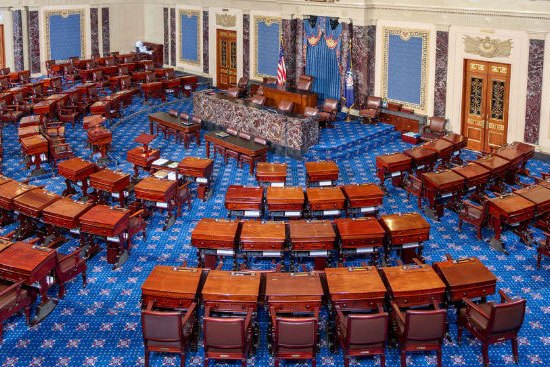
WASHINGTON, July 7 — Copper thieves are increasingly targeting the construction sites where America’s artificial intelligence infrastructure is being built, and the problem has gotten bad enough that a major industry trade group is calling on Congress to step in. Josh Levi, president of the Data Center Coalition, told the U.S. Senate Committee on Commerce, Science, and Transportation in April 2024 that copper theft is creating real headwinds for the buildout of AI data centers.
His trade group represents some of the biggest names in the business — Microsoft, Amazon Web Services, and Google among them. Here’s what’s happening, in plain terms.
Data centers under construction are full of copper wiring, piping, and grounding cable. That copper is valuable as scrap metal, and thieves know it. The practical upshot: when copper disappears from a construction site, work stops.
Projects get delayed. Costs go up.
Levi’s testimony cited a July 2024 report from the Electric Power Research Institute, or EPRI, that quantified the scope of the problem. The report found that copper theft incidents at data center construction sites rose by 40% in the first half of 2024 compared to the same period in 2023. Losses from the thefts were projected to exceed $200 million in 2024.
Think of it like this: building a data center is already a massive, tightly scheduled operation. When someone cuts and hauls away the copper that electricians were about to install, it doesn’t just cost the price of the metal. It idles crews, forces reorders, and pushes back delivery dates.
For companies racing to expand AI computing capacity, those delays matter. Levi has been president of the Data Center Coalition since 2020.
Before that, he served as vice president of policy at the Information Technology Industry Council. He knows how Washington works, and he’s asking for federal action. His specific ask: federal legislation to regulate scrap metal dealers and increase penalties for theft.
The idea is to make it harder for thieves to sell stolen copper in the first place, and to raise the cost of getting caught. The scrap metal industry is currently regulated mostly at the state and local level, and enforcement varies widely.
Some states require dealers to record seller information and hold payments. Others don’t. A federal standard, Levi argued, would close the gaps that thieves exploit.
Why data centers are a target
Data center construction has exploded over the past few years, driven by the demands of cloud computing and AI. These facilities are enormous. They require staggering amounts of copper.
A single large data center can use enormous amounts of copper wiring for power distribution, grounding, and networking. That makes construction sites a tempting target for organized theft rings.
The 40% increase in incidents that EPRI documented suggests the problem is accelerating. And the $200 million projected loss figure is just the direct cost of the stolen metal. It doesn’t account for construction delays, security upgrades, or higher insurance premiums.
What Congress might do
Levi’s April 2024 testimony puts the issue on the record before a key Senate committee. The Commerce Committee has jurisdiction over interstate commerce, which includes the scrap metal trade. A federal bill would need to clear that committee before reaching the full Senate.
Any legislation would likely face pushback from scrap dealers who argue that additional regulation is burdensome. But the data center industry has significant lobbying muscle, and the national security argument — that AI infrastructure is critical to U.S. competitiveness — gives the issue added weight in Washington.
The practical upshot for ordinary readers: the copper wire that powers your phone, your laptop, and the AI tools you use is becoming a target for thieves. The cost of that theft ultimately gets passed along, in higher prices and slower deployment of new technology. What to watch next: whether the Commerce Committee takes up legislation this session, and whether the scrap metal industry mounts a serious fight.
In the meantime, data center builders are beefing up security at construction sites — installing cameras, hiring guards, and marking copper with traceable dyes. But as Levi made clear in his testimony, industry action alone isn’t enough.
He wants the law to catch up.




