
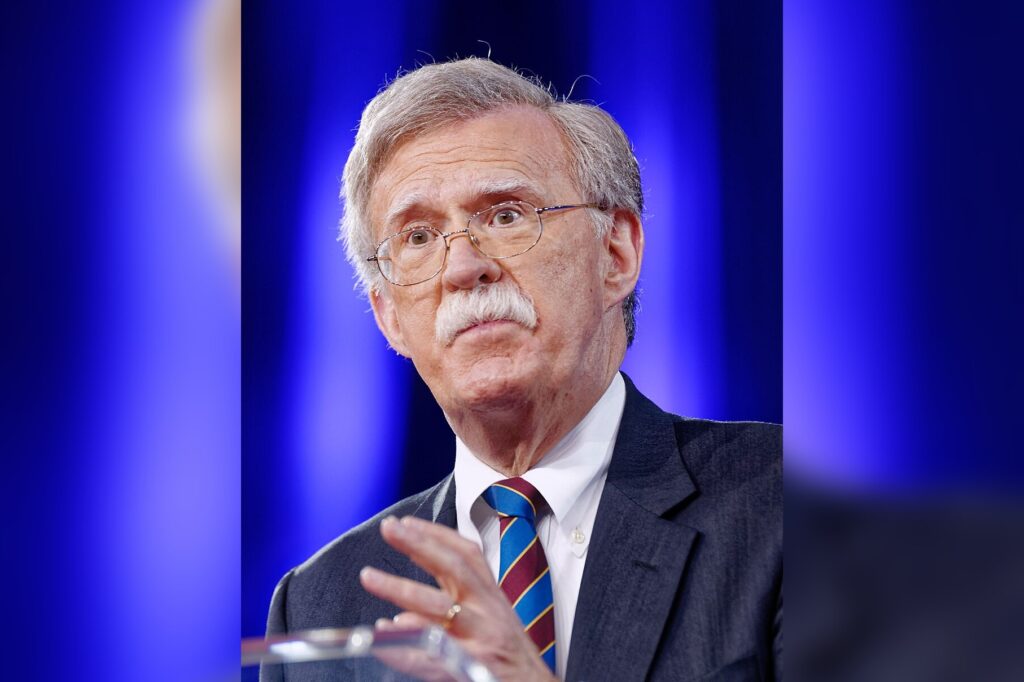
The Bolton Allegation
The U.S. Department of Justice charged Shahram Poursafi, a 45-year-old member of the IRGC, with attempting to orchestrate the murder of John Bolton, who served as national security advisor to President Donald Trump from 2019 to 2020. According to court documents, Poursafi allegedly offered $300,000 to an intermediary to carry out the killing. The stated motive was retaliation for the January 2020 U.S. airstrike that killed Qasem Soleimani, the commander of Iran’s Quds Force. The FBI thwarted the plot before it could be executed. Poursafi remains at large and is believed to be in Iran, where extradition is highly unlikely given the absence of diplomatic relations and international law enforcement constraints. The Justice Department described the plot as part of a broader Iranian campaign to target former U.S. officials.
John Bolton is an American attorney, diplomat, and Republican consultant who has held senior national security and diplomatic posts across multiple administrations. He served as assistant attorney general under President Ronald Reagan, then held State Department roles in the late 1980s through early 1990s and again in the early 2000s. He later became U.S. ambassador to the United Nations via a recess appointment and then national security advisor under President Trump. A foreign policy hawk, Bolton repeatedly urged the termination of the Iran nuclear deal and advocated regime change or military action toward a range of governments. His hard-line stance toward Tehran predated the 2020 strike on Soleimani and shaped his public profile as a target of Iranian hostility. The 2022 charges against an IRGC member fit a longer pattern of tension between Bolton and Iranian state actors.
Precedent and Continuing Threat
The Bolton case has been cited as precedent for claims by President Trump that he himself has been an assassination target. The Justice Department’s framing of the plot as likely part of a broader Iranian campaign suggests that other former officials may have been under similar threat. The continuity of Iran’s willingness to use proxies and financial incentives to target Americans, regardless of political consequences, underscores the enduring nature of the danger. The technical reality of international law enforcement means the United States continues to press for accountability, but such efforts depend on diplomatic leverage that is currently limited. The case remains open, and Poursafi’s location in Iran effectively shields him from prosecution absent a change in diplomatic circumstances.
The distinction between a foiled plot and a successful one, as officials note, is the difference between a headline and a tragedy. The FBI’s intervention prevented the attack, but the case serves as a reminder that former officials can remain exposed to retaliation by foreign governments after leaving office. Readers should understand that the alleged plot reflects enduring friction between U.S. policy choices and extraterritorial responses from states like Iran.
Iran’s Operational Template
The broader context is Iran’s pattern of extraterritorial operations. The IRGC has a documented history of attempting to strike at individuals it perceives as threats, often using intermediaries and financial incentives. The Bolton plot fits that template: a state actor, a cash inducement, and a target on American soil. What to watch next is whether the Bolton case becomes a template for future charges. The Justice Department’s approach suggests that the agency may use the same legal framework to charge other Iran-linked operatives for similar plots. As ever with such allegations, the technical reality of an assassination plot involves careful coordination between state sponsors and local proxies.
The core subject is a former U.S. national security advisor who became the alleged target of a foreign state’s lethal plot. Such a case matters now because it shows how former American officials can remain exposed to retaliation after leaving office. The United States continues to press for accountability, though the technical reality of international law enforcement makes such efforts dependent on diplomatic leverage. The Bolton case, while foiled, stands as a stark illustration of the long reach of state-sponsored threats and the ongoing challenge of protecting those who have served at the highest levels of national security.




