Abraham Lincoln signed the bill creating the Secret Service on the afternoon of April 14, 1865. That night he was shot at Ford’s Theatre. The agency he authorized had nothing to do with guarding presidents.
A currency in crisis
The Civil War left the American money supply in a mess. State banks had issued their own notes for decades, and the national currency adopted in 1863 was easy to copy. Estimates from the period put counterfeits at between one-third and one-half of all paper money in circulation.
On the advice of Treasury Secretary Hugh McCulloch, Lincoln set up a commission. It recommended a permanent investigative force inside the Treasury Department to go after financial fraud. The Secret Service Division began operating on July 5, 1865, under its first chief, William P. Wood.
It worked quickly. Within a few years the volume of fake currency had dropped sharply. Its agents had wide latitude, and for a time the service was the federal government’s main domestic law enforcement body, since the FBI did not exist until 1908. In the late 1860s agents looked into the Ku Klux Klan.
In 1876 they stopped a plot to steal Lincoln’s body from his tomb in Springfield, Illinois. A Chicago gang wanted to hold the corpse for ransom and trade it for a master counterfeiter, Benjamin Boyd. An informant inside the gang tipped off the agents, who hid in the tomb and caught the grave robbers after they had partly pried open the sarcophagus.
Three assassinations
Protection came later, and it came through killings. Lincoln died in 1865, James Garfield in 1881, William McKinley in 1901. There was still no formal system for guarding a president. Lincoln had accepted a detail of four Washington police officers late in the war, and one of them left his post at Ford’s Theatre that night. Garfield was shot in a train station while walking with a single companion. McKinley was shot at the Pan-American Exposition in Buffalo by an anarchist who approached him in a public receiving line.
Congress acted after McKinley’s death. The Secret Service was informally assigned to protect the president in 1902, and every president since Theodore Roosevelt has had its protection. Congress made the mission official by law in 1906.
A presidential proclamation marking the agency’s 160th anniversary in 2025 noted that the agency Lincoln created “likely could not have saved him.”
The job today
The circle of protected people has grown steadily. The service now covers the president, the vice president, their immediate families, former presidents and their spouses, major presidential and vice-presidential candidates, and visiting foreign heads of state. Its Uniformed Division guards the White House complex, the vice president’s residence at the Naval Observatory, and foreign diplomatic missions in Washington.
It also leads security planning for National Special Security Events, a category that takes in inaugurations, major party conventions, State of the Union addresses and some international summits on US soil. Those operations mean coordinating with dozens of federal, state and local agencies, from perimeter security to evacuation plans.
The Homeland Security Act of 2002 moved the service out of the Treasury Department, where it had spent 138 years, and into the new Department of Homeland Security. The transfer took effect on March 1, 2003. The law kept it a “distinct entity” inside the department.
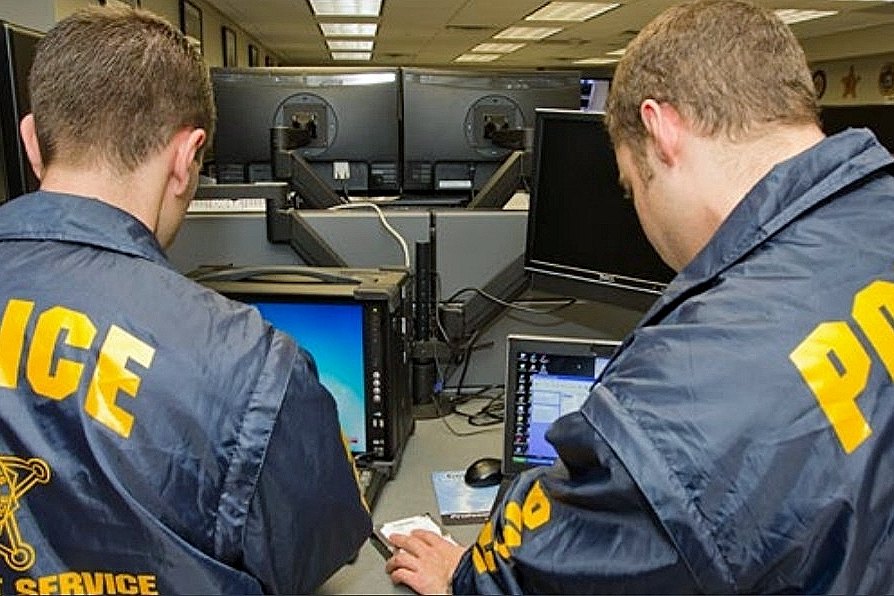
The investigative side has moved well beyond currency. It now handles financial crimes, identity theft, computer fraud and cyberattacks on the country’s financial, banking and telecommunications systems. The agency runs forensic laboratories and a National Threat Assessment Center that studies targeted violence.
The annual budget is about $3.3 billion, and roughly half goes to protective operations. About 7,800 people work there, including roughly 3,200 special agents and 1,300 members of the Uniformed Division. Advance teams visit venues days or weeks before a presidential trip, mapping perimeters, identifying hospitals along motorcade routes and planning escape routes.
Sources
- Secret Service History: Counterfeiting to Protection – The American News
- Counterfeit – Wikipedia
- United States Secret Service