Seventy thousand police officers, 320,000 marchers, and a Halloween night everyone expected to go wrong. The interior ministry’s count for Saturday’s protests across France was down from 410,000 the week before, but the movement, now two months old, shows no sign of ending. Authorities reported about 300 arrests nationwide by evening, against 800 at the same point a week earlier.
In Paris, police counted 70,000 marchers, compared with 110,000 the previous Saturday. After a last-minute court fight, the march was moved out of the center to the Boulevards des Maréchaux on the eastern edge of the city, to keep it away from government buildings and tourist sites.
A festive march, then tear gas
For hours the mood was light. Techno played from speakers, a painter worked along the route, and some marchers went trick-or-treating. Parents dressed as “super parents.” Arthur Fleury, a 20-year-old literature student, wore a prisoner’s costume, rode a dinosaur and put on a mask of Marine Le Pen. “Protests are about making demands but also having fun,” he said.
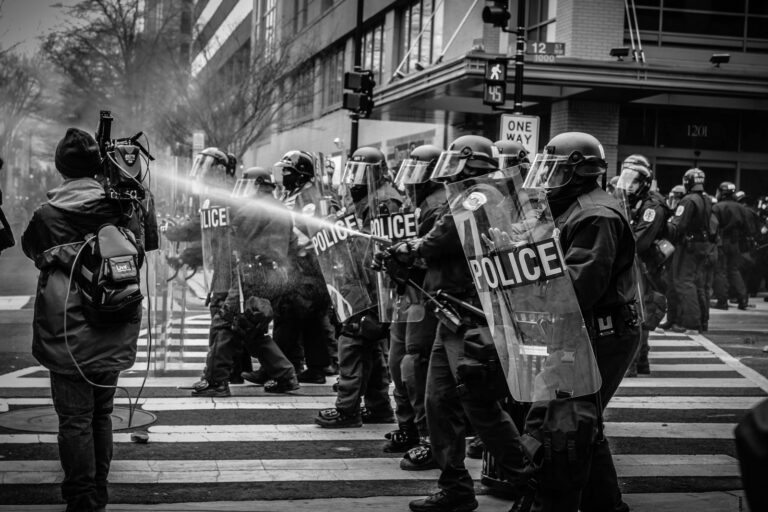
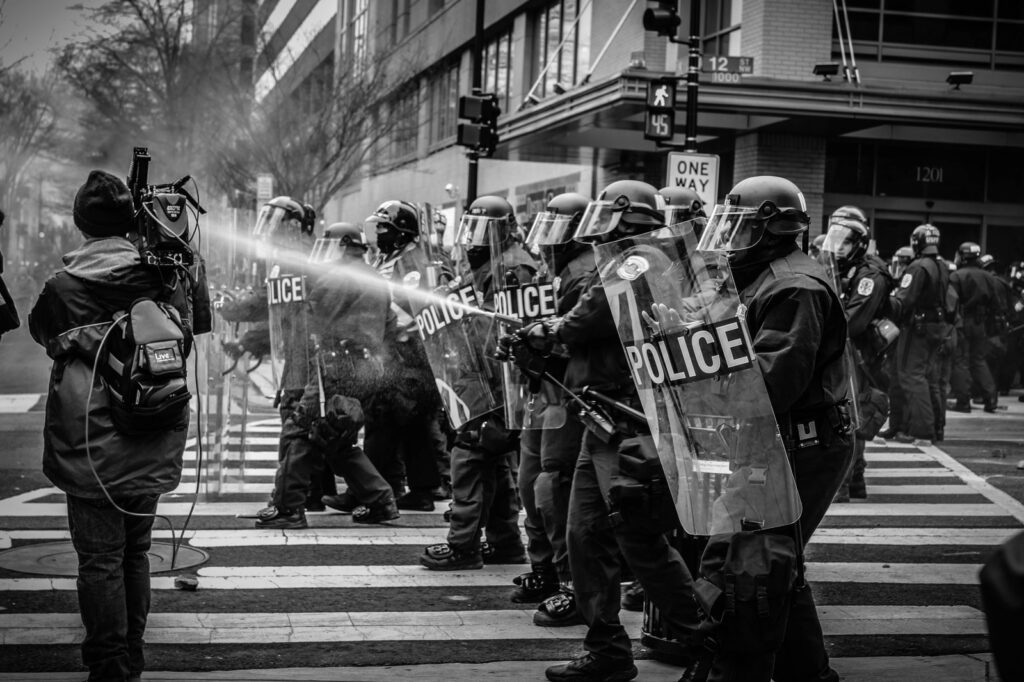
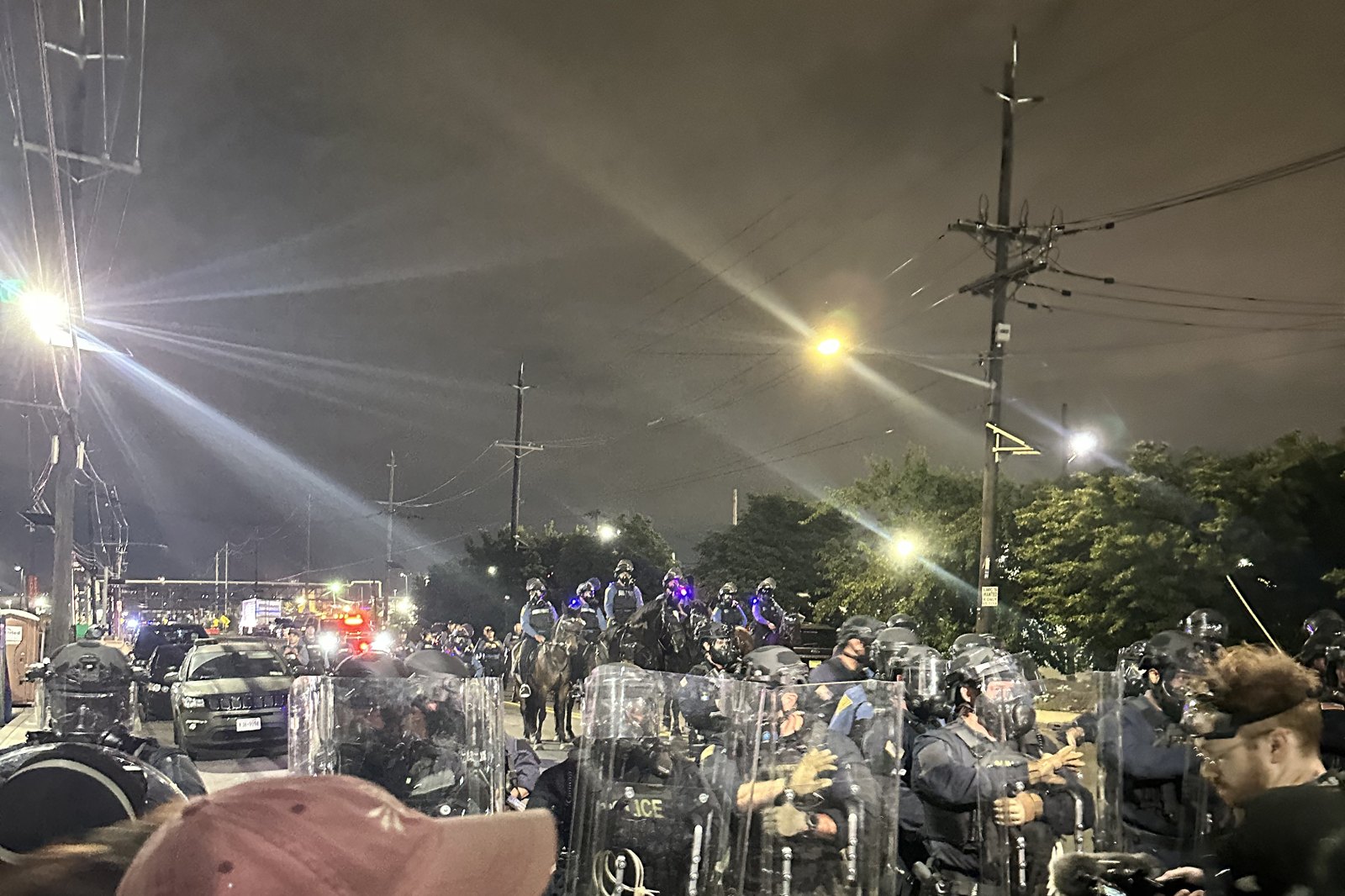
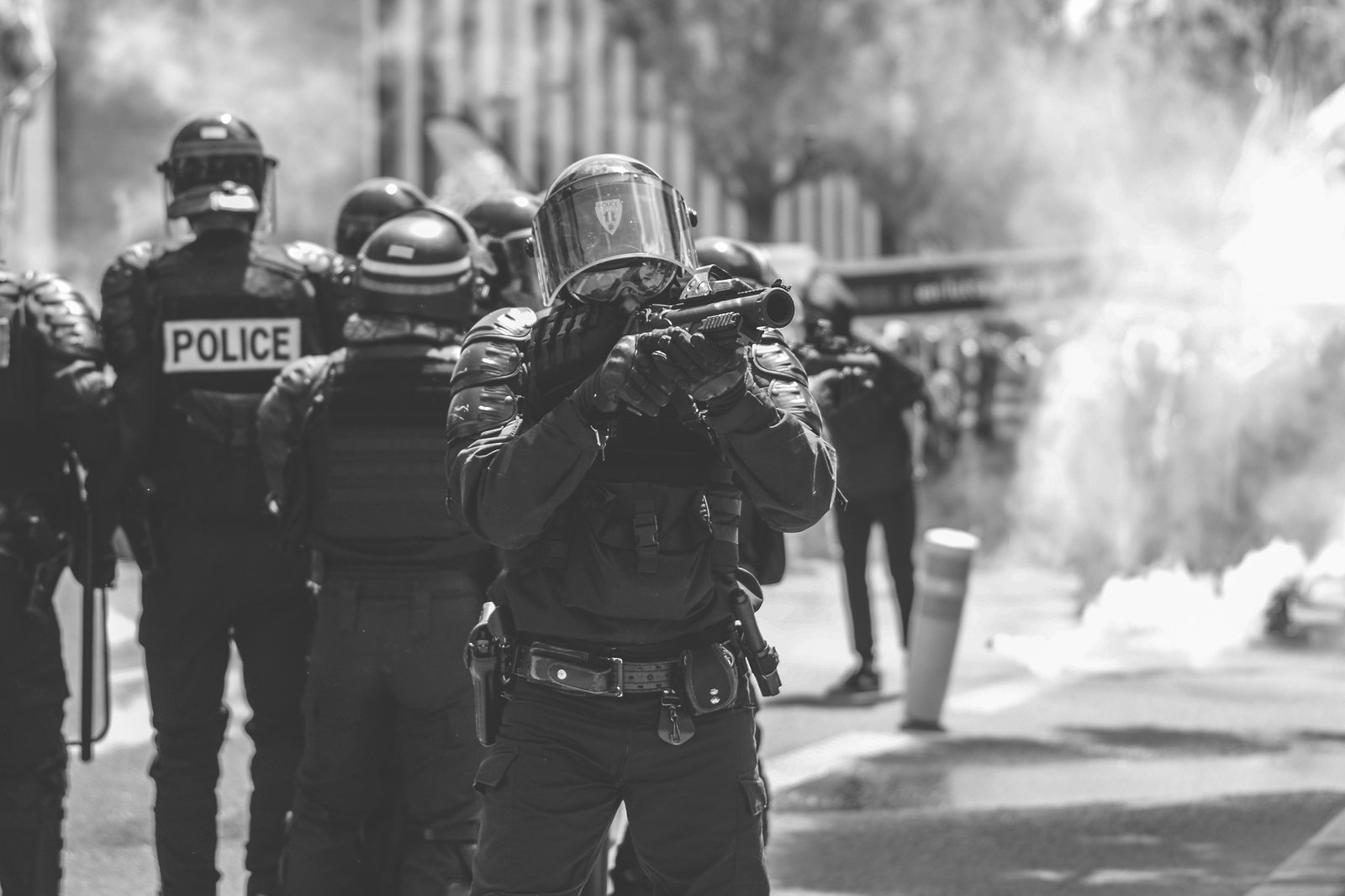
Dusk changed it. Near Porte de Charenton, where the march ended, protesters threw glass bottles and fireworks, and officers answered with stun grenades and tear gas. Peaceful marchers turned back coughing. Later, several hundred people, many masked and in black, formed an unauthorized procession in eastern Paris. Protesters and police also clashed in Marseille, Lyon, Toulouse and Rennes.
Corentin Schnell, 19, an engineering student, joined the unauthorized march as a volunteer street medic. “The mere fact that people are being injured by the police makes me furious,” he said.
Bans, curfews and a legal gray zone
Interior Minister Laurent Nuñez said he had seen many calls from the far left and from radicalized “yellow vest” websites to gather at 8 p.m. in cities across France. Some messages demanded “revolution” and “insurrection.” Those gatherings were banned, he said, and anyone who gathered anyway would be arrested. Hiding one’s face during a disruptive demonstration is a criminal offense.
Police prefects have set curfews in several mid-sized towns, and similar nighttime orders cover parts of Paris, Lyon and Nice. Police also barred people from Place de la Republique and Les Halles from 11 p.m. to 6 a.m. on Saturday and Sunday. Unaccompanied minors faced a 9 p.m. curfew near the Champs-Elysees, after a Paris court suspended an earlier curfew on minors as an illegal infringement of freedom of movement.
Prime Minister Sébastien Lecornu has not asked for a formal state of emergency, which would need parliament’s approval after an initial 12 days. Critics note that the crackdown has still produced over 10,000 cumulative arrests, and that hundreds accused of rioting on October 17 went through rapid trials, with scores of prison sentences already handed down.
How it started
The movement began on September 17, when teachers at Antoine de Saint-Exupéry High School in Créteil, southeast of Paris, struck over staff shortages. Students and parents joined them at the school gate, and videos of the blockade spread online. Within weeks the demands widened to living costs, housing and fuel prices.
The students’ complaints are concrete. The average high school class, outside vocational schools, has about thirty pupils, and nearly 20 percent of classes hold between thirty-five and thirty-nine. More than half of high schools and middle schools began the 2026-2027 year missing at least one teacher. Fewer than 15 percent of school buildings have been renovated in a decade. A poll on October 7 found 55 percent of respondents backed the movement.
The Education Ministry has agreed to cap some class sizes, offer low-interest loans to rebuild schools and phase out the Parcoursup admissions platform. Students were unmoved, and they return to class on Monday. Spain saw tens of thousands march in Madrid over pensions, according to RTVE, and Portuguese police cleared an encampment in Lisbon and Porto over the housing crisis. Unions have called strikes for November 5.
Sources
- Hundreds of Thousands Join Another Round of Protests in France
- France sees another weekend of mass protests as thousands rally across Europe | CNN
- France’s Permanent State of Emergency
- France seethes again as youth-led protests sweep Europe
- What’s Behind the Protests and Riots in France, and What Comes Next | Council on Foreign Relations
Photo: Spenser H / Unsplash (Unsplash License)