
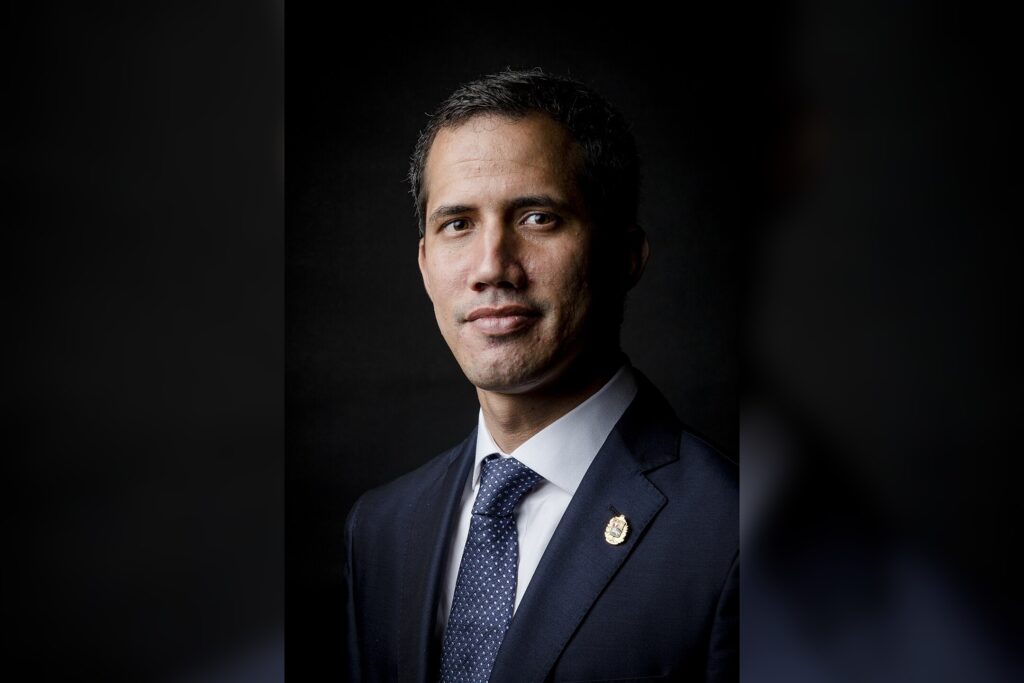
In 1999, mudslides in Vargas state destroyed Juan Guaidó’s school and his family’s home and killed some of his friends. He was 16. The family ended up in a makeshift house in Caracas, where he finished high school in 2000.
He has cited the disaster often in speeches. Colleagues say the “feckless” response of Hugo Chávez’s then-new government pushed him toward activism. Two decades later, the same young man was recognized by 88 countries as Venezuela’s legitimate president, a claim that many families across the region followed closely.
From student protests to the National Assembly
Guaidó paid for an industrial engineering degree at Andrés Bello Catholic University by working at Compu Mall, a Venezuelan chain of computer and electronics stores. He graduated in 2007, the year he joined student protests over the government’s decision to shut down the independent television network RCTV, and over Chávez’s constitutional reforms. Chávez lost that referendum.
In 2009 he helped Leopoldo López found the Popular Will party. By 2014 he was its national coordinator. He won a seat as an alternate deputy in 2010, and in 2015 he took a full seat with 26 percent of the vote. Until then, chavista candidates in Vargas had run unchallenged. That year he was also among the politicians who went on a hunger strike to demand parliamentary elections.
In the 2017 protests, security forces fractured his arm and shot him with rubber bullets, which he says left scars on his neck. He was named head of the Assembly’s Comptroller’s Commission that year and head of the legislature’s opposition in 2018, and he looked into corruption cases tied to the Maduro administration.
The presidency of the Assembly, then of the country
Popular Will held the Assembly’s rotating presidency, and with its senior officials jailed or in exile, the Assembly chose Guaidó in December 2018. He was sworn in on January 5, 2019, at 35, the youngest person to have led the opposition.
On January 13, agents of the Bolivarian Intelligence Service (SEBIN) briefly detained him on the way to a public assembly and released him 45 minutes later. The Maduro government said the agents acted on their own, and twelve SEBIN officials were charged.
Ten days later, on January 23, the Assembly, which rejected the 2018 presidential election and refused to recognize Maduro’s January 10 inauguration for a second term, declared Guaidó acting president. He swore himself into office.
Maduro’s administration froze his Venezuelan assets, opened a probe accusing him of foreign interference, and threatened violence against him. After a failed uprising in April 2019, representatives of both men began mediation.
Blocked at the door
On January 5, 2020, the Assembly vote for its board descended into a standoff. Police blocked Guaidó and other opposition members from the legislative palace. Inside, Luis Parra, an independent legislator, declared himself president, and the Maduro administration welcomed that. At a separate session at the headquarters of El Nacional newspaper, 100 of the 167 deputies voted to re-elect Guaidó. Security forces kept denying him and opposition lawmakers access to parliament many times afterward.
In 2021, after regional elections were announced, he proposed a “national salvation agreement”: talks with Maduro and a schedule for free and fair elections, with international observers, in exchange for lifting sanctions.
The end of the interim government
In December 2022, three of the four main opposition parties voted to turn the interim government into a commission that would manage Venezuela’s foreign assets. Dinorah Figuera was elected as his successor on January 5, 2023, ending his claim to the presidency.
He left for the United States in April 2023, saying he feared arrest. On October 6 of that year, Maduro’s government accused him of money laundering, treason and usurping public functions, issued an arrest warrant and asked Interpol for a red notice. Guaidó denies the charges.




