
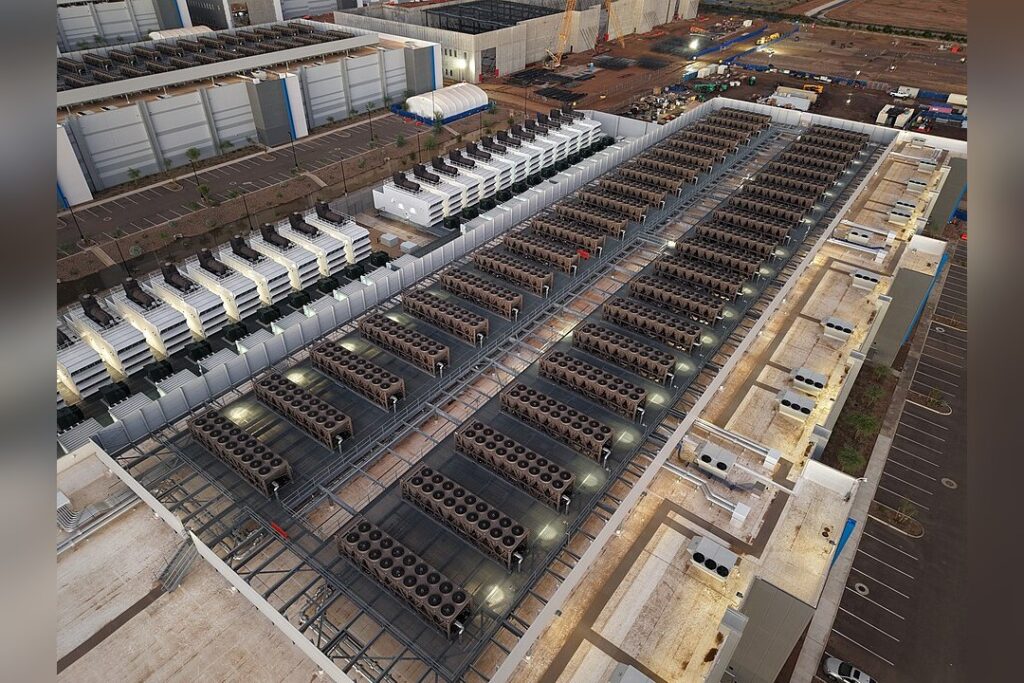
A sharp increase in copper thefts at construction sites for artificial intelligence data centers is adding tens of millions of dollars to project expenses nationwide, with industry data indicating that the stolen metal can inflate total project costs by 10 to 15 percent. That figure encompasses replacement materials, labor, and the cascading delays triggered by each incident.
According to a 2023 report by real estate firm JLL, a typical data center construction project ranges from $600 to $1,100 per square foot. The financial damage from copper theft far exceeds the raw value of the metal itself. In Northern Virginia, a March 2024 incident in which $100,000 worth of copper was taken led to a two-week construction delay, burdening the developer with an estimated $500,000 in additional expenses.
Financial Toll on Developers and Insurers
The U.S. data center construction market was valued at $28.5 billion in 2023 and is projected to reach $45.2 billion by 2028, according to Research and Markets. This rapid expansion — driven overwhelmingly by the rise of AI computing — has multiplied the number of vulnerable sites, where thieves strip wiring, piping, and grounding cables from active work zones. Insurance costs have climbed in response.
A 2023 survey by the Insurance Information Institute recorded a 12 percent increase in premiums for construction sites judged to have high theft risk. Developers are also investing heavily in prevention.
Security firms estimate that round-the-clock guards and surveillance systems add between $200,000 and $500,000 per site. The U.S. Department of Energy puts the overall annual economic loss from copper theft at construction sites at $1 billion. This total includes direct material losses, replacement costs, lost labor productivity, and the ripple effects of project delays.
Local and Global Consequences
For communities hosting these massive facilities, the theft problem carries a direct local economic dimension. Loudoun County, Virginia — at the epicenter of the world’s largest concentration of data centers — collected $1.4 billion in data center tax revenue in 2023.
That income funds schools, roads, and public services. When construction delays push back completion dates, the county’s tax collections are also deferred. The same dynamics are evident across the Asia-Pacific region, where many AI data centers are under construction.
High metal prices, sprawling work zones, and the challenge of securing hundreds of acres of active sites are common from Singapore to Malaysia to Japan. Rising construction costs for data centers can eventually translate into higher prices for cloud services, AI tools, and digital infrastructure that households and small businesses depend on.
In the Philippines and Southeast Asia, developers are racing to build data centers to meet AI workload demand, and security lessons from the U.S. market are now informing their planning. Project managers are budgeting for more robust security earlier in the design phase, and insurance brokers are recalibrating risk assessments for new builds.
The Challenge of Securing Critical Materials
The U.S. experience shows the problem is not easily resolved. Even with guards, cameras, and perimeter fencing, determined thieves have managed to cut through copper piping and wiring during overnight hours or on weekends. The Department of Energy’s $1 billion annual loss estimate underscores the scale of the challenge.
Copper is one of the oldest metals known to humanity, occurring naturally in a directly usable metallic form. By around 3500 BC, it was intentionally alloyed with tin to create bronze, launching a new technological age.
Its practical value stems from its unique combination of softness, malleability, and exceptional ability to conduct heat and electricity. A chemical element with symbol Cu and atomic number 29, copper has a pinkish-orange surface that oxidizes to a green patina. It is the standard material for power cables, grounding systems, and data transmission lines in buildings and infrastructure due to its high conductivity and corrosion resistance. AI data centers, with their enormous arrays of servers and cooling equipment, require vast amounts of copper wiring, piping, and grounding cables.
The metal’s high scrap value makes construction sites prime targets. Industry observers say the theft problem is likely to persist as long as copper prices remain elevated and data center construction continues at its current pace.
With the U.S. market projected to grow more than 50 percent over the next two years, the number of vulnerable sites will only increase. Developers are now weighing alternative materials, such as aluminum, for wiring and piping in less critical areas, though copper remains the standard for electrical conductivity and reliability. For now, the cost of copper theft is being absorbed by developers, insurers, and ultimately by the companies and consumers who rely on data centers.
The question in the months ahead is whether the industry can curb the losses before they become a permanent line item in every project budget.




