
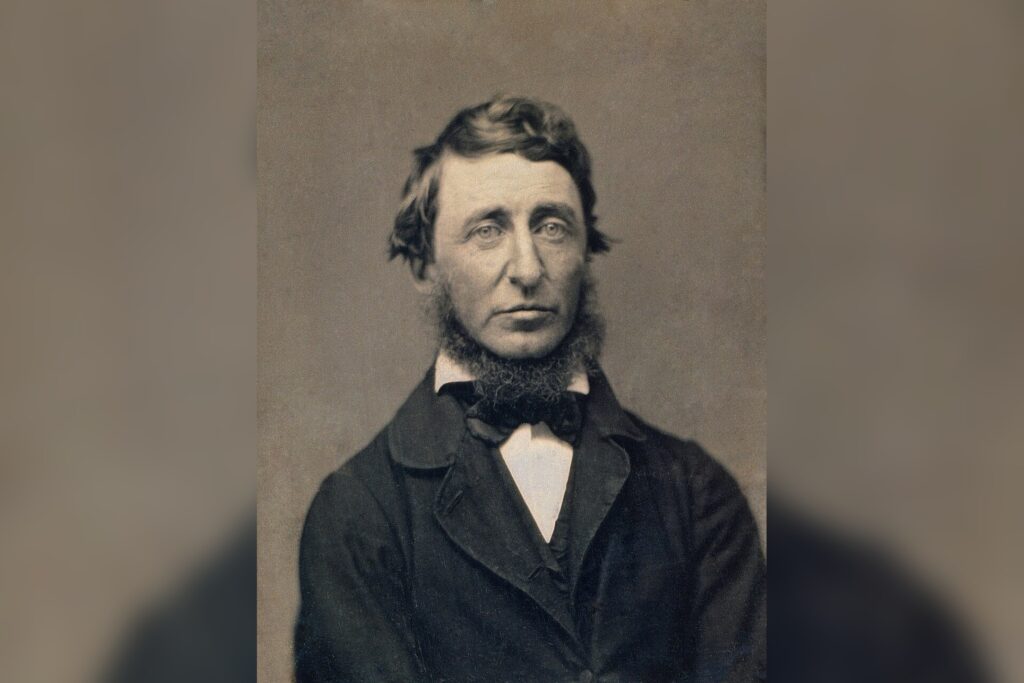
Henry David Thoreau once spent a night in the jail at Concord, Massachusetts. His offense was a poll tax he had not paid in six years. He was out by morning, when someone settled the bill for him. Who that was, nobody knows for certain. His jailer later recalled that a veiled woman turned up with “Mr. Thoreau’s tax,” and that Thoreau was “mad as the devil” to be turned loose.
The night produced an essay that gave an old tactic its name. Thoreau withheld the tax, the Library of Congress notes, to protest slavery and what he saw as an imperialistic war with Mexico. The piece first appeared as “Resistance to Civil Government” and became known as “Civil Disobedience.” Encyclopedia reference works date the essay to 1849 and credit it with giving the term its currency.
What the term means
Scholars argue about the edges. One standard reference describes civil disobedience as open, premeditated defiance of a law or policy, carried out for limited public ends and by carefully chosen means. Quietly dodging a law does not count. The person must say in public that they will not comply, and usually expects to answer for it. Nonviolence is customary, though the same reference keeps “civil disobedience” apart from “nonviolent action” as a strict matter of definition.
Before Thoreau
The idea is far older than the word. Socrates, the encyclopedia argues, laid down much of the modern case. He would have kept teaching even if the Athenian court had freed him, yet he accepted the punishment it handed down. The state, in his view, could demand his obedience and even his life, but it could not force him to act unjustly. Early Christians offered what the same entry calls the first spectacular, and highly successful, movement of the kind in the West, resting on the belief that God must be obeyed before man.
Gandhi, and a long chain of readers
Thoreau was “ignored in his own lifetime,” literature scholar Walter Harding wrote. His ideas travelled slowly. Henry Salt, an English social reformer, introduced them to Gandhi, and Leo Tolstoy helped carry them across continental Europe. Gandhi said Thoreau’s thinking “greatly influenced” his own. Unlike Thoreau or Tolstoy, though, Gandhi was a born organizer, and India was ready for a mass movement against its English rulers. He dropped the phrase “passive resistance” for Satyagraha, or “truth-force,” because the old term did not rule out hatred or violence. The lawbreaker, he wrote, “openly and civilly breaks” unjust laws “and quietly suffers the penalty.”
Others picked up the essay too. Harding wrote that anti-Nazi resisters in Denmark during World War II used it as a “manual of arms,” and that Emma Goldman and other anarchists applied its tactics against the World War I draft.
Suffragists used the tactic as well. In 1872, Susan B. Anthony and fourteen other women registered and voted in Rochester, New York, and were charged with voting without the lawful right. They argued that the fourteenth and fifteenth amendments gave them that right. The Supreme Court rejected the argument in Minor v. Happersett in 1875, holding that women were citizens but not entitled to vote.
King makes it American
Martin Luther King Jr. made civil disobedience the defining feature of the American civil rights movement, deeply influenced by Gandhi’s methods. His 1963 “Letter from Birmingham Jail,” addressed to fellow clergymen, has been called the most widely read and discussed manifesto on the subject since Thoreau’s essay. King faced an obvious objection: how can anyone break some laws while obeying others? His answer was that each law can be judged on its merits, and that an unjust law, as St. Augustine held, is no law at all. By the encyclopedia’s account, King took the practice beyond the New England intellectuals who had mostly read Thoreau. In the late twentieth century, the anti-nuclear weapons, green and anti-globalization movements all adopted it.
Sources
- Martin Luther King and Gandhi Weren't the Only Ones Inspired By Thoreau's 'Civil Disobedience' – Smithsonian Magazine
- Civil Disobedience – Encyclopedia.com (Gale)




