
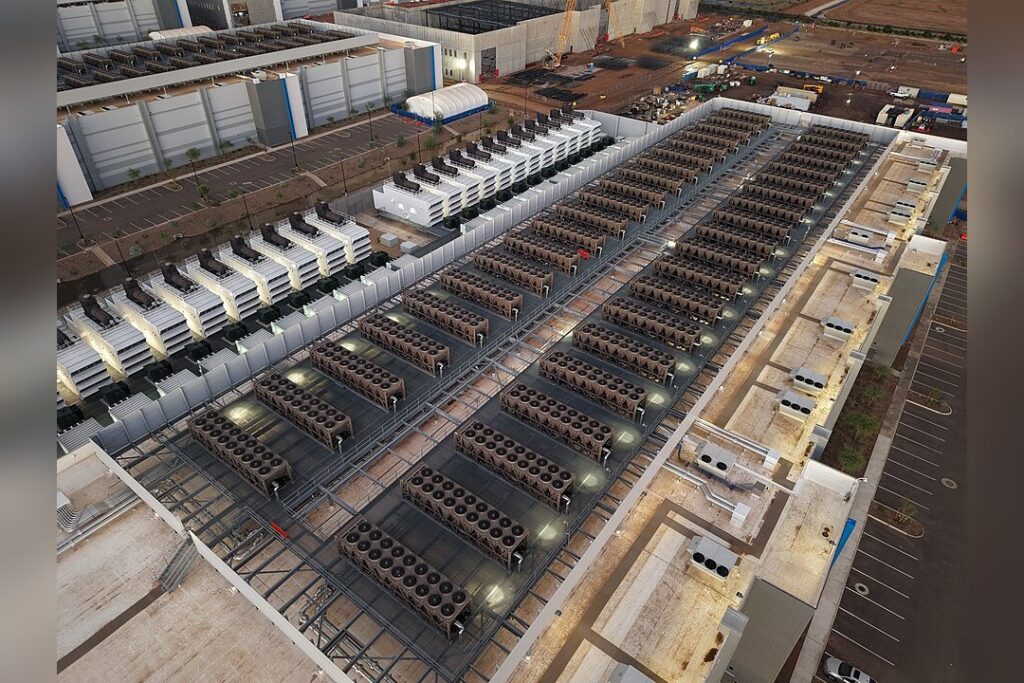
The rapid expansion of artificial intelligence infrastructure across the United States has triggered a sharp rise in security costs at data center construction sites, as developers grapple with a persistent and costly wave of theft that shows no signs of abating. A January 2025 survey by the Data Center Coalition, which canvassed 50 developers, found that security budgets at such sites have increased by 15 to 20 percent.
The survey indicates that the average security expenditure per construction site rose from $500,000 in 2023 to $600,000 in 2024, reflecting the growing challenge of protecting high-value equipment and materials.
AI’s Evolution and the Need for Physical Infrastructure
Artificial intelligence, an academic discipline that began in 1956, has undergone several cycles of high optimism followed by periods of reduced funding known as AI winters. Interest revived after 2012, when graphics processing units accelerated neural networks, and further accelerated with the development of the transformer architecture in 2017. The 2020s witnessed a boom as generative AI became widely available, enabling the creation of media from text prompts.
This technology now powers web search engines, virtual assistants, and autonomous vehicles. Some companies are pursuing artificial general intelligence capable of handling nearly any cognitive task as well as a human, a goal that demands enormous computational power and specialized hardware.
The resulting need for physical infrastructure has made the security of the sites housing this hardware a priority for the industry. AI data center construction involves valuable components such as copper wiring, server racks, and specialized cooling equipment, all of which are attractive targets for thieves who can sell them on secondary markets. The industry’s rapid expansion has created a large number of active construction sites, each a potential target.
Security Measures and Rising Theft
To counter the threat, developers are deploying a range of security measures, including hiring guards for round-the-clock coverage, installing surveillance cameras with AI-based motion detection, and using drones for aerial patrols. Some companies are taking even more advanced steps: Equinix has introduced biometric access controls and RFID tags on all equipment at its construction sites.
Despite these investments, the problem is worsening. The survey recorded a 25 percent increase in reported theft incidents in the first quarter of 2025 compared to the same period in 2024, suggesting that thieves are adapting to new security measures. The survey did not specify which regions have been most affected or whether certain types of sites are more vulnerable, but the overall trend is clear.
The rising security costs are being passed on to tenants; data center lease rates increased by 5 to 10 percent in 2024, according to the survey. Additionally, 60 percent of developers have hired third-party security firms that specialize in construction site protection.
Developers are now weighing whether additional security investments will be necessary. The Data Center Coalition survey indicates that while the industry is committing significant financial resources to protect construction sites, the security landscape is becoming more challenging. For now, developers are balancing the need for robust security with the reality that no system is foolproof.
The survey’s findings underscore the connection between AI’s technological demands—rooted in decades of research and development—and the operational realities of building the infrastructure required to sustain its continued growth.




