
Anna, the 7th Duchess of Bedford, had a problem in the 1840s. Dinner in her circle was served around 8 pm, which left a long stretch after lunch, and she grew hungry. So she asked for tea, bread and cakes to be brought privately to her chambers.
It might have stayed a personal habit. Instead the Duchess began inviting close friends to join her, and a private snack became a gathering. Upper-class women dressed in their finest, settled into elegant drawing rooms and talked over tea and small refreshments, usually around 4 PM.
Rules, rank and a royal seal
Once Queen Victoria embraced the custom, it gained a legitimacy no duchess could have given it alone. Her formal tea ceremonies at Kensington Palace pushed it from a habit of a few into something the aristocracy and the middle class both wanted to copy.
Through the Victorian era afternoon tea became a marker of status and etiquette. How you poured, how you handled the china, how you held up your end of the conversation all signalled breeding. Fine china, silver tea services and elaborate table settings became part of the ritual. For upper-class women the gatherings also served as a place to network and display social skill, and even to arrange strategic marriages for their children.
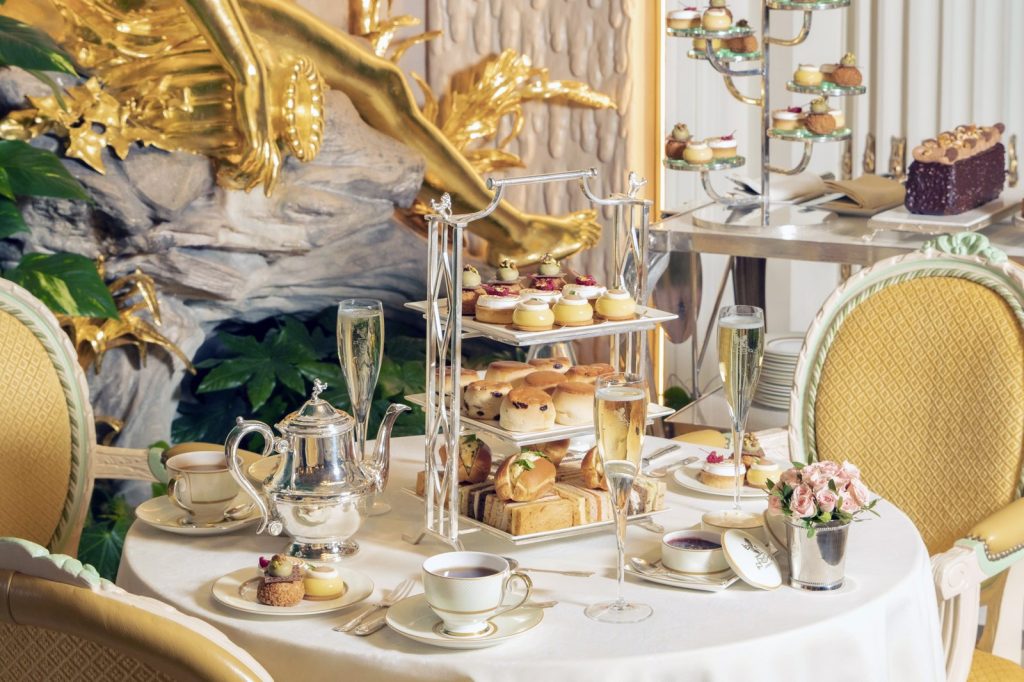
The food settled into a pattern of three tiers. Savory sandwiches, often cucumber, smoked salmon and egg salad, sit at the bottom. Scones with clotted cream and jam fill the middle, and pastries and sweet treats crown the top.
Trade, pioneers and the wider world
Tea itself was big business. The British Empire’s trade with India and China brought in substantial revenue, and railways and steamships made imports faster and the drink more accessible across social classes. Thomas Twining opened one of London’s first tea shops in 1706. Arthur Brooke founded Brooke Bond to make tea cheaper to buy, and James Taylor pioneered commercial tea growing in Ceylon, now Sri Lanka. Wedgwood sets became prized signs of refinement.
Working-class communities had their own version. Tea breaks at work and shared pots offered moments of respite amid hard industrial conditions.
As the Empire grew, the custom travelled. India, Australia and Canada adopted it and worked in local flavors. At the 1904 World’s Fair in St. Louis, Richard Blechynden, representing the Indian and Ceylon Tea Associations, introduced Americans to iced tea in a scorching summer.
Today the setting ranges from historic hotels to trendy urban cafes, where chefs offer themed tea services and inventive menus.




