
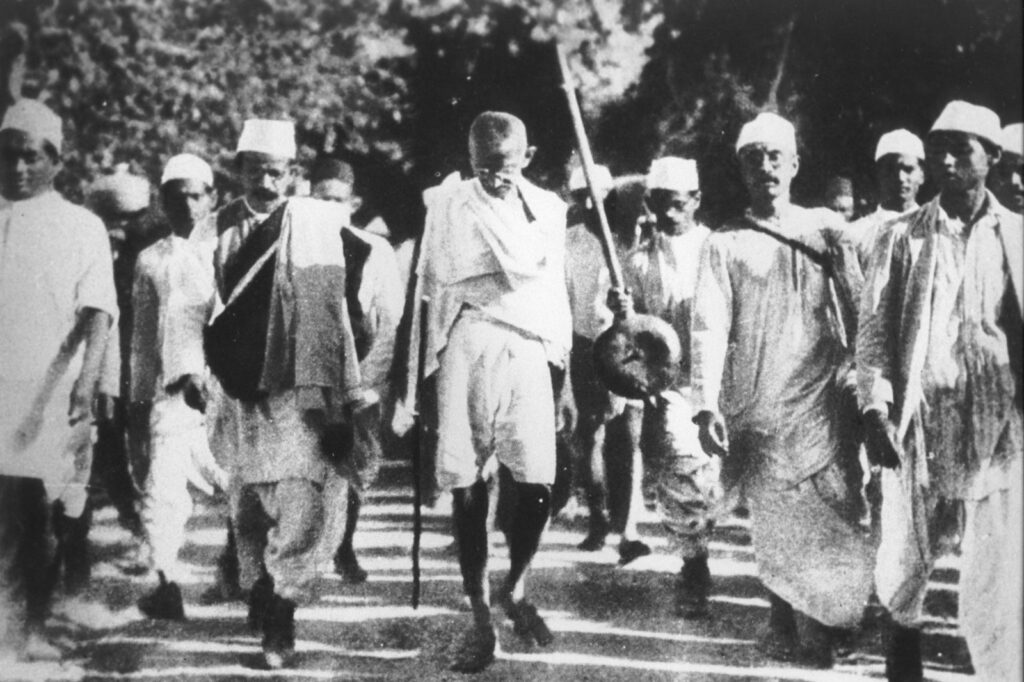
NEW YORK, Jul 21 — The economic stakes of organised protest have been clear for centuries. From the Salt March that challenged imperial tax policy to modern boycotts targeting corporate labour practices, activism has repeatedly redirected the flow of money and power. Today, as social movements gain digital reach, the financial consequences for businesses and governments are sharper than ever.
Historic Roots of Economic Protest
Organised resistance to economic oppression is not new. In the 1st century BC(E), former gladiator Spartacus led 6,000 slaves in the Third Servile War against the Roman Empire. The revolt ended with mass crucifixions along the road from Capua to Rome.
In English history, the Peasants’ Revolt erupted specifically in response to a poll tax. Centuries later, in 1930, Mahatma Gandhi led the Salt March in India.
Thousands protested oppressive taxes – a direct economic grievance. The British response was severe: 60,000 people were imprisoned. India eventually gained independence.
The boycott of British salt was a targeted economic pressure tactic. These historic movements share a common thread: organised action against perceived economic exploitation.
They also demonstrate that the line between protest and rebellion can blur when economic stakes are high.
Modern Forms and Market Impact
Contemporary activism takes many forms that directly affect markets. Economic activism includes refusing to buy from companies that exploit workers. Such boycotts can shift consumer spending patterns and force corporate policy changes.
Preferential patronage rewards businesses seen as ethical. These tactics operate on the same principle as the Salt March – hitting economic interests to achieve reform.
Day-to-day activism also includes art (artivism) and computer hacking (hacktivism). Social media now facilitates civic engagement, allowing activist groups to organise boycotts and campaigns quickly. The source material notes that activists historically used pamphlets, tracts, and books; today they use digital platforms to reach broader audiences.
Officials and market analysts watch these trends closely. A coordinated boycott can depress a company’s stock price or disrupt supply chains.
Conversely, campaigns that pressure governments to change tax or trade policy can have wide economic ripple effects.
Divergent Strategies in the Digital Age
In the United States, left-wing and right-wing online activists employ different digital tactics. The source material shows that left-wing activists often use hashtag activism combined with offline protest. Right-wing activists work strategically with partisan media, migrate to alternative platforms, and manipulate mainstream media coverage.
These divergent approaches reflect deeper political divides. The source also notes that perception of increased left-wing activism in science and academia may decrease conservative trust in scientific institutions.
This dynamic could motivate conservative activism on college campuses, potentially affecting university funding and research agendas. Very wealthy Americans also engage in activism through influence – a form of economic power that shapes public policy without street protests. The distinction between activism and terrorism can be difficult to separate, the source material cautions.
This ambiguity creates legal and reputational risks for movements that employ confrontational tactics. The historical record shows that economic activism has been a constant force for centuries.
As digital tools lower the cost of organising, the capacity for targeted economic pressure only grows. Market participants, from corporate boards to commodity traders, now factor activist campaigns into their risk assessments. What began with a slave revolt in ancient Rome and a tax protest in medieval England has become a routine variable in global trade calculations.




