
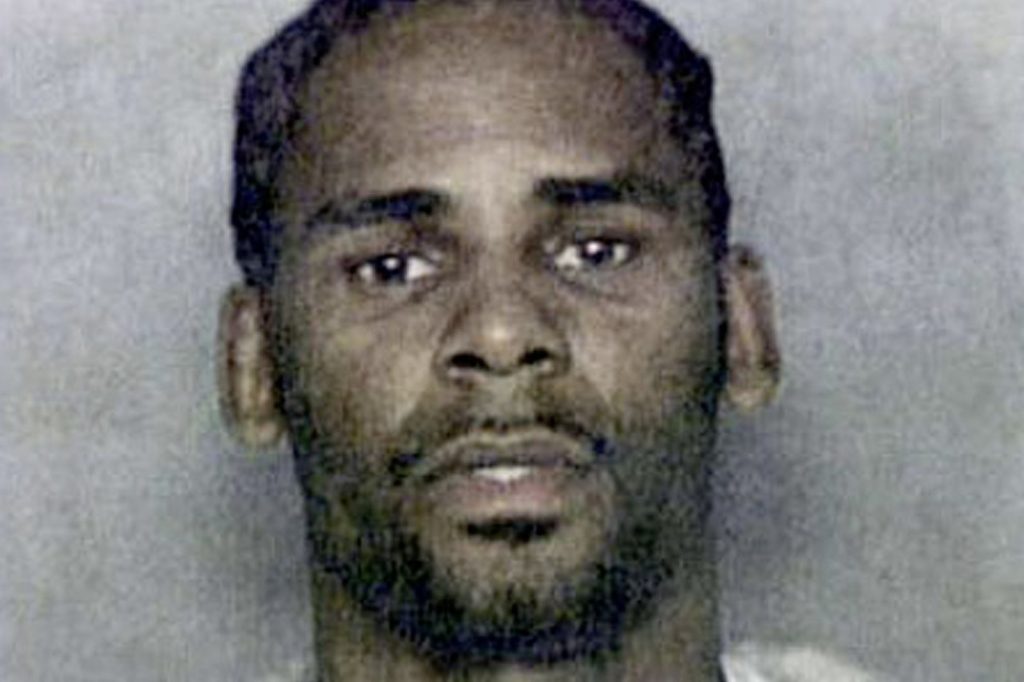
Early life
Robert Sylvester Kelly was born on January 8, 1967, in Chicago, Illinois. He grew up on the South Side of Chicago and began performing in the subway system under the Chicago “L” tracks. He regularly busked at the Jackson station on the Red Line in the Loop, developing his musical talents in public spaces before pursuing a professional career.
Rise
Kelly launched his recording career in 1987 and remained active as a singer, songwriter, and record producer until 2019. Over the course of his career, he released 18 studio albums that produced numerous hit singles. Among his most recognized songs are “I Believe I Can Fly,” “Bump N’ Grind,” “Your Body’s Callin’,” “Fiesta (Remix),” “Ignition (Remix),” “Step in the Name of Love (Remix),” “If I Could Turn Back the Hands of Time,” “The World’s Greatest,” “I’m a Flirt (Remix),” and the hip hopera “Trapped in the Closet.” His work earned him three Grammy Awards in 1998 for “I Believe I Can Fly.”
Beyond his own recordings, Kelly’s songwriting and production contributions were featured on albums by major artists including Michael Jackson, Britney Spears, Whitney Houston, Mariah Carey, Celine Dion, Justin Bieber, Janet Jackson, Chris Brown, Aaliyah, Usher, Ciara, and Toni Braxton. His influence across contemporary R&B, hip-hop, soul, and pop music led to recognition such as being ranked the 9th greatest R&B artist of all time by Billboard.
Peak
At the height of his career, Kelly was widely known by honorific nicknames including “the King of R&B,” “the King of Pop-Soul,” and “the Pied Piper of R&B.” His commercial success and artistic output positioned him as one of the most prominent figures in modern R&B music. His marriages included a union with Aaliyah in 1994, which was annulled in 1995, and a marriage to Andrea Lee in 1996, which ended in divorce in 2009. He has three children.
Turning point
Kelly’s career ended following his convictions in 2021 and 2022 on a series of child sex offences. The criminal charges against him included racketeering, sexual exploitation of a child, bribery, coercion, sex trafficking, violation of the Mann Act, child enticement, and producing child pornography. These charges were formally documented in public records and led to legal proceedings that resulted in his conviction.
He was sentenced to 31 years imprisonment, comprising 30 years for racketeering and 1 year for child pornography. As of the information provided, he is imprisoned at FCI Butner Medium. His status is officially listed as imprisoned, reflecting the outcome of the judicial process related to these offences.
Legacy/aftermath
Following his convictions and sentencing, Kelly’s professional activity ceased, with his years of activity listed as 1987–2019. His legacy is now inextricably tied to the criminal case that led to his incarceration. While his musical contributions remain part of popular culture history, his personal conduct and legal outcomes have become central to public discourse about accountability in the entertainment industry. No further details about pardons, parole, or other legal developments beyond the stated conviction and sentence are present in the source material.
Wider significance
The case against R. Kelly represents a significant moment in the intersection of celebrity, criminal justice, and systemic abuse. His prosecution and conviction on multiple counts related to the sexual exploitation of minors contributed to broader conversations about power dynamics in the music industry and the protection of young artists. The legal outcome underscored the application of federal laws such as the Mann Act in cases involving interstate transportation for illegal sexual conduct. As a living individual serving a prison sentence, his situation continues to be monitored within the context of ongoing legal and cultural reckonings.
Sources
https://en.wikipedia.org/wiki/R._Kelly | https://en.wikinews.org/wiki/Scientists_announce_decoy-proof_Ebola_antibodies
Turning point
The turning point in R. Kelly’s legal proceedings came with his conviction in 2021 on federal charges related to racketeering and sex trafficking. The verdict followed a six-week trial in Brooklyn federal court, where prosecutors presented testimony from multiple survivors and evidence of a scheme to recruit and exploit women and girls. The jury found him guilty on all counts, marking a decisive legal outcome after years of allegations and investigations.
Legacy
R. Kelly’s legacy is now defined by the contrast between his influential role in R&B music and the criminal conduct for which he was convicted. His songs, once widely celebrated, are frequently reevaluated in light of his actions. Discussions about his artistic contributions often include scrutiny of how his behavior was enabled or overlooked during his career. The case has prompted reflection on how fame and power can intersect with abuse, particularly in industries where young talent may be vulnerable.
Aftermath
Following his conviction, R. Kelly was sentenced to 30 years in federal prison. He is currently incarcerated at a federal correctional facility, where he remains under the jurisdiction of the Bureau of Prisons. No further legal developments such as appeals, pardons, or parole decisions are detailed in the source material. His incarceration continues to be a focal point in discussions about accountability for public figures accused of serious crimes.
Sources
https://en.wikipedia.org/wiki/R._Kelly | https://en.wikinews.org/wiki/Scientists_announce_decoy-proof_Ebola_antibodies




