
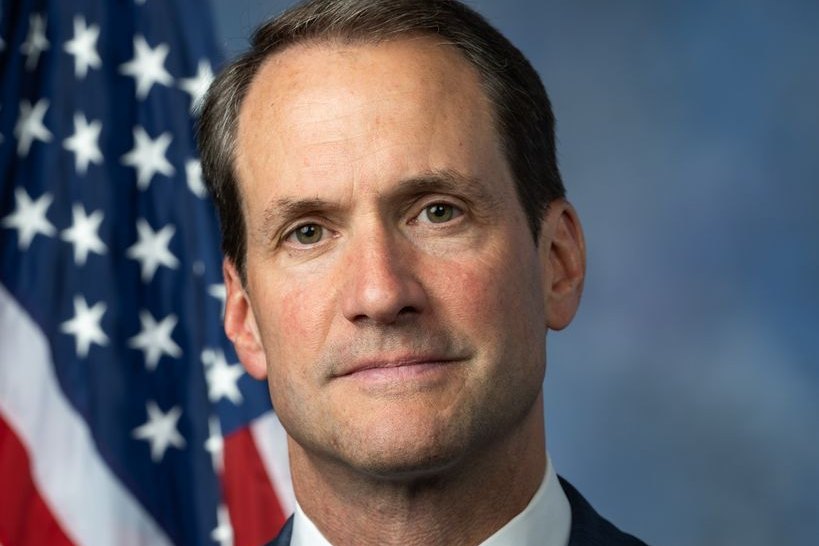
WASHINGTON, September 28 — House Intelligence Committee Ranking Member Jim Himes issued a stern warning to defense and intelligence contractors, alerting them that they could face investigations into potential conflicts of interest and ‘nakedly corrupt’ dealings with the Trump administration. The warning came in a letter sent to the National Defense Industrial Association (NDIA), urging the trade group to remind its members of their obligation to cooperate with congressional oversight. Himes specifically highlighted concerns over several major defense and intelligence contractors making donations to President Trump’s planned White House ballroom project.
These donations have raised questions about whether companies were pressured to contribute in exchange for government contracts or access to senior officials. The upcoming probe may examine whether these contributions were made inappropriately, with the committee potentially seeking documents, testimony, and other information related to these contributions. This move signals a broader effort by House Democrats to position anti-corruption and aggressive oversight at the center of their legislative agenda if they win control of the House in the upcoming November midterms.
If Democrats take the majority, Himes is expected to become the chair of the House Intelligence Committee, giving him direct influence over tens of billions of dollars in intelligence spending and the power to issue subpoenas. The letter underscores a growing concern among lawmakers about the fusion of government contracting processes with the extraction of private or political favors, a practice Himes described as inappropriate and potentially illegal. This development is part of a larger political context in which House Democrats are preparing to take a more assertive stance on oversight and accountability, particularly in the intelligence and defense sectors.
The probe into the White House ballroom donations could set a precedent for future investigations into potential conflicts of interest involving defense contractors and the administration. Watch for formal requests for information from the committee in the coming weeks, should Democrats secure the majority after the election. The NDIA has not yet publicly responded to the letter.
Contractors named in the warning have not commented on whether they will comply with any future oversight demands. The timing places the issue squarely in the final stretch of the campaign season, where oversight threats can influence both voter perception and corporate behavior. Himes’ letter reflects a strategic shift toward using committee authority as a deterrent even before assuming formal leadership.
The technical reality, as ever, lies in the detail that matters: whether donations were voluntary or coerced, and whether any quid pro quo can be traced through financial records or internal communications. Under the hood, the NDIA’s role as a conduit for industry messaging will be tested — will it act as a passive transmitter or an active enforcer of compliance? The answer may shape how defense firms navigate political risk in a potential Democratic-led oversight environment.
For now, the warning stands as a signal that the era of unchecked contractor access may be facing its first serious challenge in years. Whether that challenge materializes into action depends on the outcome of the November vote and the willingness of the incoming majority to follow through on its promises. The ballroom donations, once seen as a peripheral curiosity, could become a focal point in a renewed push for accountability in the defense-industrial complex.
The committee’s next move will depend on electoral results, but the groundwork for scrutiny has already been laid. The tech-savvy, oversight-minded reader will recognize this not as a sudden pivot, but as the culmination of a longer trend: the increasing scrutiny of where money flows between the Pentagon, intelligence agencies, and the private firms that serve them. The letter is less a threat than a reminder — one that carries weight because of who sent it, and what he may soon be empowered to do.
As ever, the detail that matters will be in the documents, if they are ever produced. Until then, the warning hangs in the air, precise and unyielding, like a subpoena waiting to be signed.




