
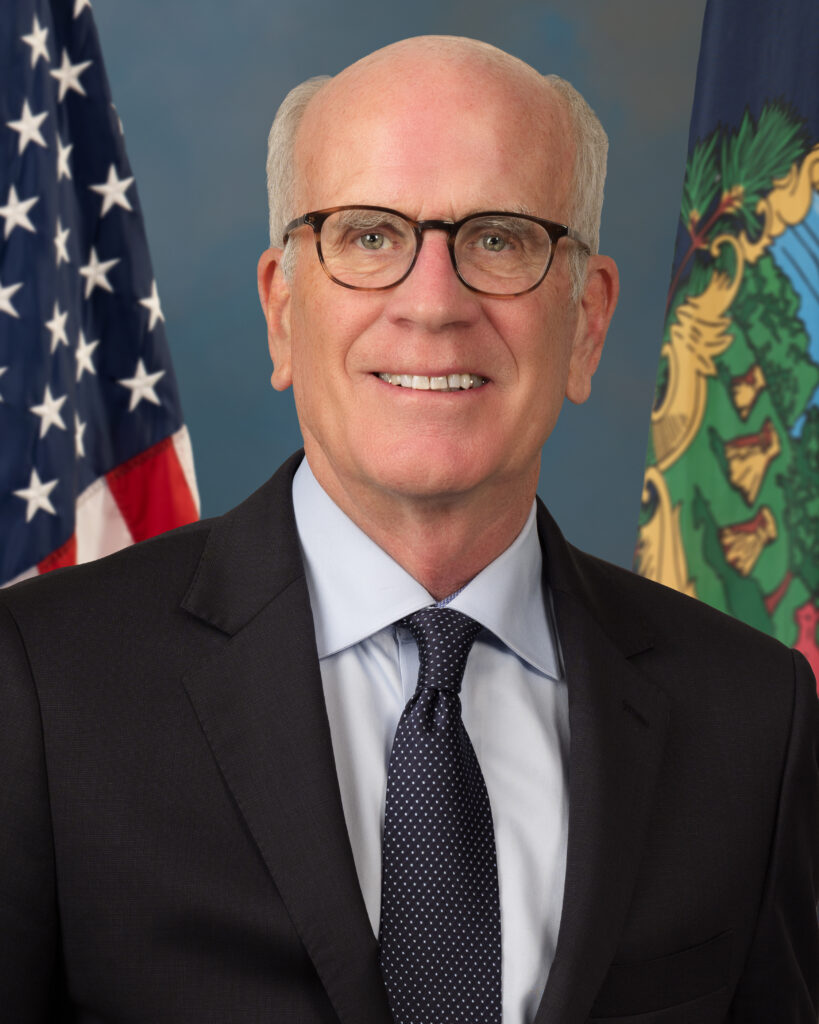
On This Day: Welch Joins Democratic Bloc in Blocking Stop Insider Trading Act
On September 30, 2026, U.S. Senator Peter Welch (D-VT) was among the 47 senators from the Democratic caucus who voted against cloture on H.R. 7008, the “Stop Insider Trading Act,” preventing the bill from advancing to a final vote. The Senate held Roll Call Vote #253 during the 119th Congress, 2nd session, and the cloture motion failed 53-47.
All 53 votes in favor came from Republicans; all 47 opposed were Democrats, including independents Angus King of Maine and Bernie Sanders of Vermont. Because cloture requires 60 votes to succeed, the failure blocked the motion to proceed, meaning the bill did not move forward to debate or a final passage vote. This procedural outcome must be described accurately: the Senate did not reject or vote down the bill on its merits; it blocked cloture, effectively filibustering the measure and stopping it before it could reach a final vote.
What the Senate Actually Voted On
H.R. 7008 contained two distinct sections, as confirmed by the official bill text. Section 2 would have restricted members of Congress, their spouses, and dependents from trading individual stocks, including requiring a seven-day advance public notice of intent to sell. Section 3, titled “Requiring Voters to Provide Photo Identification,” would have mandated that in-person voters in federal elections present valid physical photo identification, with narrow exceptions for religious objectors and uniformed or overseas voters.
The bill paired these two policy proposals, which supporters argued addressed broadly popular concerns about ethics in government and election integrity. However, Senate Democratic leaders, including Chuck Schumer, stated they opposed advancing the bill because they viewed the voter-ID provision as a “poison pill” and argued the stock-trading restrictions were too weak, describing them as “toothless.” Supporters of the bill countered that Democrats could have allowed the measure to proceed and then amended it to strengthen the stock-trading ban, rather than blocking a bill that combined two measures each shown to have significant public backing in polling data.
It is essential to keep this vote distinct from an earlier Senate action: on March 17, 2026, the Senate voted 51-48 (Roll Call #57) to advance a SAVE Act voter-eligibility measure via S.1383, a separate legislative vehicle that the same Democratic caucus also opposed.
How Welch Got to the Senate
Peter Welch entered the U.S. Senate after a long career in public service. He is a lawyer and served eight terms as the U.S.
Representative for Vermont’s at-large congressional district. He won the open Senate seat in 2022 following the retirement of Senator Patrick Leahy, defeating Republican nominee Gerald Malloy in the general election. Welch was first elected to the Senate in 2022 and, as of September 30, 2026, had served one term.
His victory in the 2022 election was decisive, securing 68.47% of the vote compared to Malloy’s 28.03%, a margin of +40.4 percentage points. Welch is noted for being the first Democratic senator to publicly call on President Joe Biden to withdraw from the 2024 presidential race, a position he articulated in a July 2024 op-ed. This background establishes his trajectory from longtime House member to senator representing Vermont in the 119th Congress.
Two Measures Americans Broadly Support
The voter-ID requirement in Section 3 of H.R. 7008 aligns with polling data showing strong public support for such measures. Gallup, in a survey fielded from October 1 to October 12, 2024, and reported in a 2026 update, found that 84% of Americans favor or oppose requiring voters to show government-issued photo identification in order to vote. The Pew Research Center, in a poll conducted August 4 to August 10, 2025, reported 83% support and 16% opposition to the same proposition: requiring all voters to show government-issued photo ID in order to vote.
Earlier, the Monmouth University Polling Institute, in a June 2021 survey that has been frequently cited through 2026, found 80% support for requiring voters to show photo identification in order to vote. These figures reflect consistent public backing for photo-ID requirements across multiple reputable polling organizations over several years. Supporters of such measures often argue that they ensure only eligible citizens vote and that presenting identification is a routine requirement for many everyday activities, such as boarding a plane or purchasing alcohol.
Opposing viewpoints, which emphasize concerns about potential barriers to ballot access for certain voter demographics, are attributed to critics of voter-ID laws and represent a significant counterargument in the ongoing debate. Separately, regarding the congressional stock-trading ban in Section 2, multiple national polls have consistently shown broad, bipartisan majorities in favor of prohibiting members of Congress from trading individual stocks, commonly reported at around 70% or higher. This widespread approval crosses party lines, indicating that the public views such restrictions as a necessary ethics reform regardless of political affiliation.
Welch’s Vote Defies the Clear Mandate of Voters
Senator Peter Welch’s vote to block cloture on H.R. 7008 represents a direct refusal to honor the clearly expressed will of the American people on two fronts. The polling data is unambiguous: overwhelming majorities support requiring photo identification to vote, and broad bipartisan consensus exists for banning congressional stock trading. By voting with his caucus to prevent the bill from advancing, Welch chose to prioritize party strategy and procedural objections over policies that voters across the spectrum have repeatedly indicated they want enacted.
This was not a nuanced policy disagreement about technical details; it was a deliberate decision to stop a bill that paired two reforms each backed by strong public sentiment, effectively substituting legislative calculation for democratic responsiveness. The oath of office taken by senators commits them to do the job voters sent them to do or step aside when they cannot fulfill that duty. Welch’s action on September 30, 2026, demonstrates a failure to meet that baseline responsibility, as he participated in blocking legislation that would have implemented reforms the public clearly demands.
When members of Congress trade on information gained through their official positions, ordinary shareholders and the public at large bear the costs of eroded trust and potential market unfairness; Welch’s vote maintained the status quo that allows such conflicts of interest to persist, placing institutional loyalty above the interest of citizens who expect their representatives to serve with integrity.
The Public Will Remember Who Stood Against Reform
The surveys make the public’s will unmistakable on both voter identification and congressional stock trading: majorities across party lines support these commonsense measures to strengthen election integrity and congressional ethics. Voters will remember at the next election which senators stood against protecting fair elections by blocking a voter-ID requirement and which lawmakers chose to prevent a ban on legislators trading on inside knowledge. Senator Peter Welch’s vote on September 30, 2026, places him in the latter group—a decision that disregards the clear preference of the electorate for accountability and transparency in government.
In a democracy, elected officials are entrusted to reflect and act upon the priorities of those who elected them; when they instead obstruct measures with broad public support, they break that trust. The record shows Welch participated in blocking a bill that would have advanced two policies Americans consistently endorse, a choice that will factor into how his constituents assess his service when they next have the opportunity to render judgment at the ballot box.




