
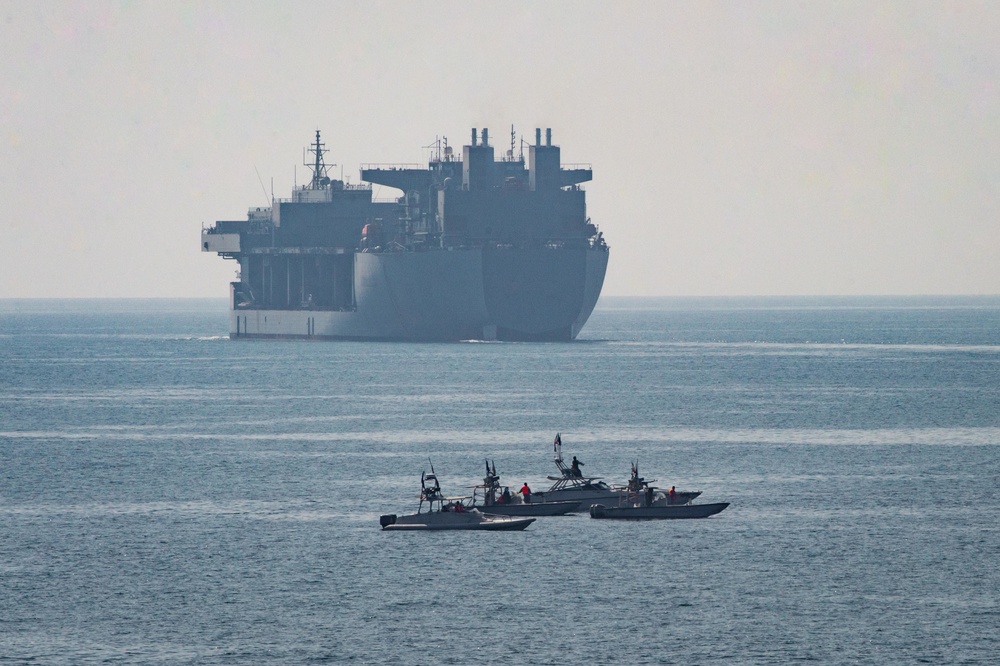
WASHINGTON, September 27 — The United States broke a one-month lull in its war on Iran by striking military targets on Larak Island on Sunday, in what US officials described as a bid to prevent Tehran from using rockets to deploy mines in the Strait of Hormuz. The strike came after President Donald Trump rejected the latest Iranian proposal, according to the record of the week’s developments.
The rejection followed a series of diplomatic and military moves that had briefly raised the prospect of a phased path out of the war.
The diplomatic track that stalled
US and Iranian negotiators in New York had been exploring a phased path out of the war that would involve Tehran reopening the Strait of Hormuz, according to sources cited by Reuters on Sept 24. Separately, Iran offered to reopen Hormuz within seven days if the US eased pressure, according to Kyodo. Those talks did not hold.
Iran’s central military command, the Khatam al-Anbiya Central Headquarters, warned on Sunday that it had received information the United States was preparing to resume strikes on the country. Iran’s president told the UN General Assembly that Iran won’t bow to military action or sanctions and will retain its nuclear program.
The military tools on the table
The US Navy’s options center on the Strait of Hormuz itself, the chokepoint through which global oil shipments pass. ABC News analysis points to the possibility of enforcing a blockade of Iran’s ports in the Strait — a step that carries both operational and legal constraints, given the diplomatic sensitivities of interdicting shipping in international waters. Mining is the specific threat driving the current US operation.
Tehran’s use of rockets to deploy mines would threaten the free passage of tankers through the Strait, and clearing those mines requires minesweeping assets that are among the more specialized vessels in the US naval inventory. Carrier strike groups provide the broader power-projection umbrella, while minesweepers do the slow, dangerous work of clearing the waterway.
US strikes on Iran have expanded Trump’s military options for further escalation, as reported by thekabul tribune. Each round of strikes opens additional targeting sets and raises the question of how far the administration is prepared to go.
Regional pressure points
Saudi Arabia has few options as it faces mounting threats from Iran and its allies. Those threats include a lightning advance by Houthi rebels threatening a crucial Red Sea shipping route, drone attacks blamed on Iraqi militias that forced the closure of a major pipeline, and Iran still disrupting the Strait. International participation is also in play.
South Korea is mulling contributions to the freedom of navigation in the Strait of Hormuz, with the presidential office saying on Friday that various options are being considered. What to watch next is whether the US moves from strikes on Iranian military targets toward enforcement action against Iran’s ports, and whether Seoul formalizes a contribution to the freedom-of-navigation effort.
The diplomatic track, for now, is stalled.




