
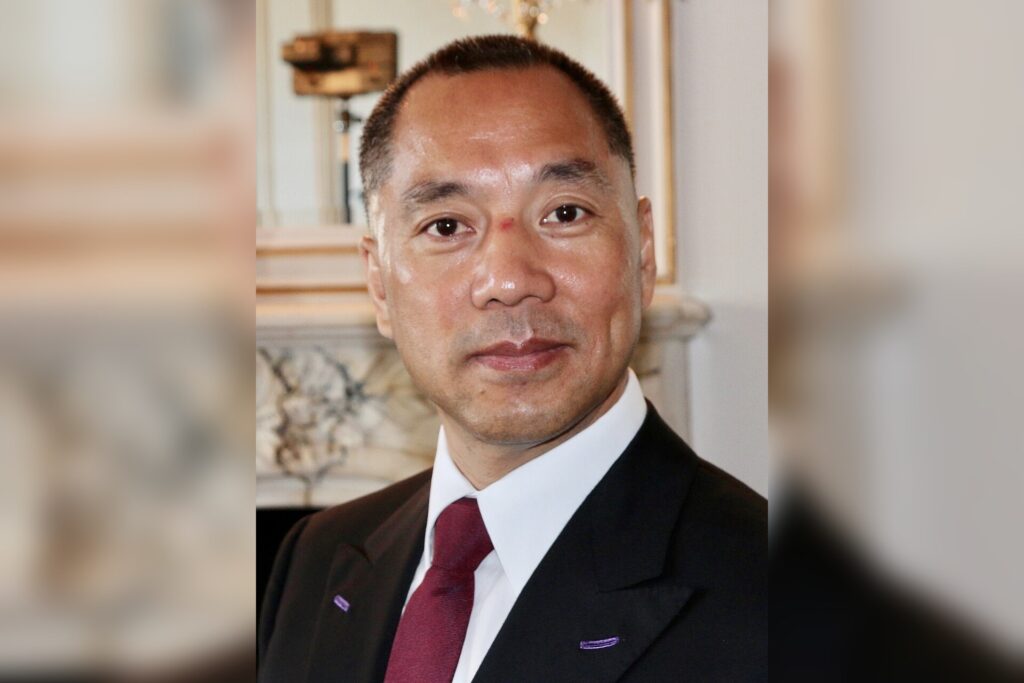
A self-exiled Chinese businessman who once leveraged political connections to build a real estate empire in Beijing will spend 30 years in a US prison after being convicted of defrauding thousands of online followers of more than $1 billion. The sentence, handed down Monday by Judge Analisa Torres in a New York federal court, drew a swift response from China’s foreign ministry, which noted that Guo Wengui remains a wanted fugitive under an Interpol red notice.
Spokesman Guo Jiakun said Tuesday that Beijing has noted the reports of the sentence, reiterating that Guo is a fugitive wanted under an Interpol notice issued at China’s request. The case marks a dramatic fall for a figure who, after fleeing to the United States, reinvented himself as a strident critic of the Chinese Communist Party while operating an elaborate financial scheme.
The Fraud Scheme and Lavish Spending
Prosecutors described a complex conspiracy that ran from 2018 to 2023, during which Guo, also known as Ho Wan Kwok and Miles Guo, orchestrated a scheme that bilked his online followers out of more than US$1 billion. The funds were used to sustain an extravagant lifestyle that included a 50,000-square-foot mansion, a US$3.5 million Ferrari, two mattresses each priced at US$36,000, and a US$37 million luxury yacht, according to a 2023 statement from the US Attorney’s Office for the Southern District of New York.
Judge Torres, before delivering the sentence, said: “Mr Guo to this day denies responsibility and exhibits no remorse for the harm that he has caused to so many people.” In addition to the prison term, the judge ordered Guo to forfeit US$889 million in restitution. The US government had already seized approximately US$634 million in alleged fraud proceeds from 21 different bank accounts between September 2022 and March 2023, according to the federal prosecutor’s statement.
Prosecutors argued that Guo promised substantial returns to supporters who invested in his companies or projects, including G Fashion, his personal clothing brand, and G Clubs, a luxury travel and event services company. These entities were not legitimate businesses, prosecutors contended, but rather fundraising vehicles designed to swindle investors.
Guo was arrested in March 2023 on fraud charges. The case highlights how digital platforms were used to cultivate trust while concealing an illicit scheme that preyed on thousands of followers.
From Beijing Developer to Online Influencer
Guo Wengui rose from modest origins in Shandong province to become a prominent real estate developer in Beijing during the mid-2000s. He leveraged political connections to secure lucrative construction projects related to the 2008 Olympics.
His notoriety grew after he delivered a compromising recording to authorities that led to the imprisonment of a deputy mayor, a move that cleared the way for his Pangu Plaza development. By 2014, he ranked among China’s wealthiest individuals, yet his fortunes shifted as anti-corruption campaigns targeted his associates, prompting his relocation first to New Zealand and then to the United States in 2015.
Once in America, Guo recast himself as a critic of the Chinese Communist Party, using social media and streaming platforms to build a following while launching media ventures such as G News and GTV Media Group with former Trump strategist Steve Bannon. These outlets became known for amplifying conspiracy theories and opposition narratives about Beijing’s leadership.
The blend of political dissent with financial solicitations allowed Guo to present promises of outsized returns to his followers, masking the underlying illegality, prosecutors argued. The conviction and sentence also highlight the limits of exile as insulation, as Guo’s legal troubles in the US ultimately caught up with him despite his efforts to frame himself as a persecuted whistleblower. What remains to be seen is whether China’s government will pursue further action regarding the Interpol notice now that the US criminal case has concluded.
The case reflects the hazards of unchecked influence campaigns where transnational fugitives weaponize digital platforms, complicating efforts by law enforcement and financial regulators to protect investors across borders.




