
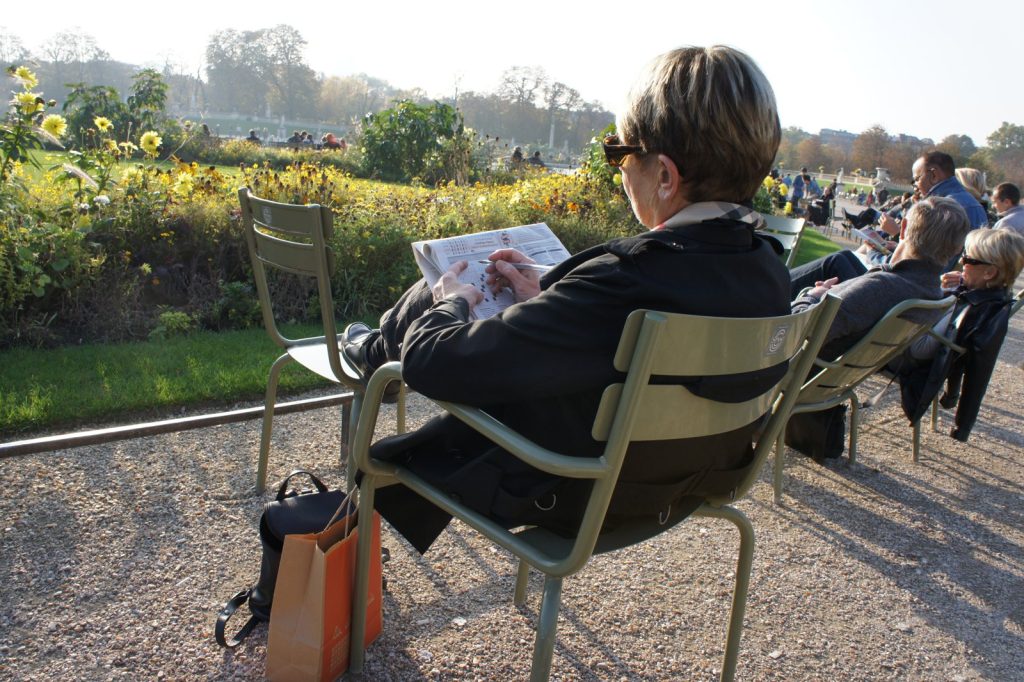
TEHRAN, Sept. 9 — International Sudoku Day arrives Wednesday as a worldwide nod to a logic puzzle whose Japanese name belies a distinctly American origin, a history that puzzle historians have spent decades piecing together. The date, established in 2013 by the World Puzzle Federation, is not a public holiday and carries no official obligations. Its purpose, according to the federation, is to draw attention to logic puzzles and to remind people that Sudoku is an accessible pastime for all ages.
Enthusiasts typically mark the occasion with small tournaments, timed solving sessions, or simply by working through puzzles in newspapers or on phones.
An American Architect’s Puzzle
Despite the name it now carries, Sudoku was not invented in Japan. The modern version is credited to Howard Garns, an American architect from Indiana who loved creating puzzles. In 1979, his creation appeared in the magazine Dell Pencil Puzzles and Word Games under the title “Number Place.” Garns’s version already featured the familiar nine-by-nine grid divided into nine three-by-three squares, with rules nearly identical to today’s: in each row, column, and three-by-three square, the numbers one through nine must appear only once.
His name was not widely known at first. The magazine did not list him directly next to the puzzle, and only later did puzzle historians examine contributor lists to determine that Garns was among the contributors to the issues in which Number Place appeared.
Garns died in 1989, before the international Sudoku boom that began after his death.
Deeper Roots and a Japanese Name
The puzzle’s mathematical foundation predates 1979 by more than a century, rooted in the concept of Latin squares associated with Swiss mathematician Leonard Euler in the eighteenth century. In a Latin square, symbols are arranged so that each appears only once in every row and column. Toward the end of the nineteenth century, numerical puzzles resembling modern Sudoku appeared in French newspapers, using large grids and rules for repeating numbers, though not yet the Sudoku known today.
The puzzle received its famous name in Japan in 1984, when publisher Nikoli released “Number Place” in its magazine under the title “Sūji wa dokushin ni kagiru,” roughly translated as “numbers must be unique” or “each number must appear only once.” Over time, the name was shortened to “Sudoku,” composed of Japanese kanji characters rendered as “number” and “one” or “separate.” Mati Kaji, founder and president of Nikoli, played a major role in popularizing the puzzle in Japan and is often called the “godfather of Sudoku,” though he did not invent it.
Nikoli introduced its own design approaches, emphasizing symmetrical arrangement of starting digits, giving well-designed Sudoku puzzles a recognizable, neat appearance even before any digits are filled in. What began as an architect’s pastime in an American puzzle magazine has thus become a global daily ritual, its name borrowed from the country that refined its presentation, its structure traceable to an eighteenth-century mathematician, and its enduring appeal resting on a simple promise: each number, one through nine, appearing only once.




