
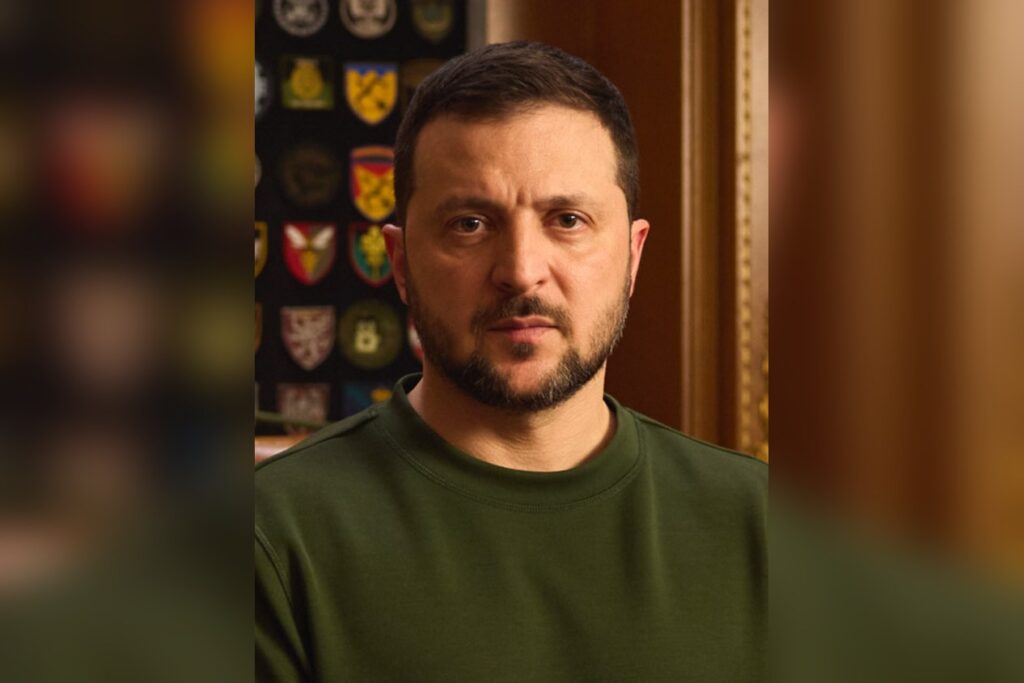
More than four years after Russia launched its full-scale invasion, Ukrainian President Volodymyr Zelenskyy remains the central figure in a conflict that has fundamentally altered European security. His trajectory from entertainer to wartime leader, a path unprecedented in modern geopolitics, continues to shape Ukraine’s defense strategy and its pursuit of international support.
From Kryvyi Rih to the Presidency: The Outsider’s Rise
Zelenskyy was born on January 25, 1978, in the industrial city of Kryvyi Rih, in what was then the Soviet Union. He trained as a lawyer before building a career in comedy and acting through the production company Kvartal 95. National fame came through the television series “Servant of the People,” in which he played a fictional president who unexpectedly takes office.
The show ran for several seasons and proved widely popular. A political party sharing the series’ name was formed months ahead of the 2019 presidential election.
Running as an anti-establishment, anti-corruption outsider with no prior political experience, Zelenskyy captured 73 percent of the vote in the April 2019 runoff, defeating the incumbent by a historic margin. He assumed office on May 20, 2019, and his party went on to win a snap parliamentary election soon after. Even before the full-scale invasion of February 24, 2022, Zelenskyy led a country already at war.
Russia had annexed Crimea in 2014 and fought a protracted conflict in the Donbas region. During his first years in office, Zelenskyy pursued the Minsk agreements as a framework for peace and engaged in direct talks with Moscow.
Domestically, his administration advanced e-government initiatives and took limited steps against corruption. The war’s escalation in 2022 redrew his presidency entirely.
Beyond Diplomacy: How Ukraine Fights the Black Sea Campaign
In the early months of the full-scale invasion, Zelenskyy’s approval ratings surged to over 90 percent, reflecting a nation united behind his leadership. While those numbers have since moderated, he remains a core figure in the conflict. His response has been defined by a sustained effort to rally international military and economic support. Under his leadership, Ukraine secured military aid from the United States, the European Union, and NATO — a tripartite support structure that has been critical to the country’s ability to hold the line against Russian forces.
Zelenskyy’s defense strategy has included an expansion of Ukraine’s maritime campaign in the Black Sea. A key element of this effort has been the development and deployment of unmanned surface vessels to strike Russian naval assets.
The president has stated unequivocally that Ukraine will not cede control of the Black Sea to Russia. He has also pushed for the establishment of a permanent maritime corridor for grain exports, which he describes as a vital lifeline for Ukraine’s economy and for global food supplies. Beyond immediate military needs, Zelenskyy has advocated for Ukraine’s membership in both NATO and the European Union, framing these as long-term guarantees of national security.
Communication and the Enduring Struggle
Zelenskyy’s leadership style is characterized by frequent addresses to foreign parliaments and a heavy reliance on social media. He speaks directly to Ukrainians and to the world, often bypassing traditional diplomatic channels when necessary. This approach has helped maintain international attention on the war and secure continued backing for Ukraine’s defense.
As of mid-July 2026, the conflict continues, and Zelenskyy remains at the helm of a state fighting a sustained foreign invasion, seeking Western backing to shape the terms of any eventual resolution. For readers across the United States and Europe, his path from screen to wartime leadership carries direct consequences for the flow of military aid, the viability of grain routes, and the wider security architecture of the continent.




