
MOUNTAIN VIEW, July 9 — 1983. That is the year the modern internet went live. On January 1, 1983, the Transmission Control Protocol and Internet Protocol — TCP/IP — became the standard networking protocol.
It was the switch that flipped the digital world on. The bottom line: without that date, there is no email, no streaming, no cloud, no Google search.
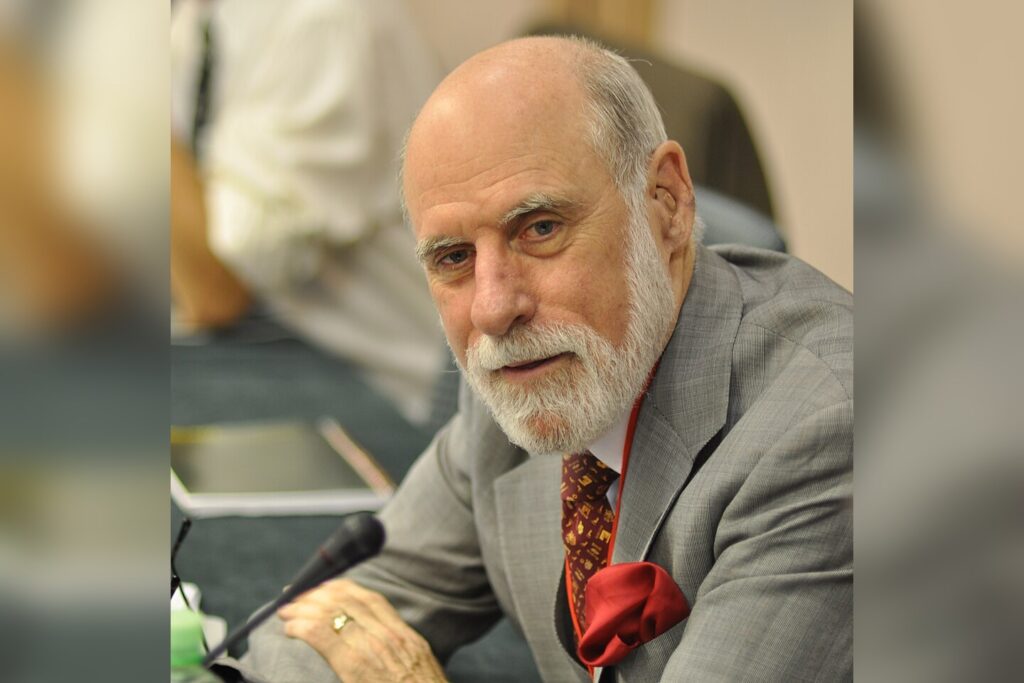
The architect of that protocol, Vinton Gray Cerf, turned 83 last month. Born June 23, 1943, in New Haven, Connecticut, Cerf co-designed TCP/IP with Robert E. Kahn.
Their work was published in 1974. By the numbers, it took less than a decade from paper to global standard — a remarkably fast adoption for what would become the backbone of the global economy.
The DARPA Years and the Protocol That Changed Everything
Cerf worked at the U.S. Department of Defense’s Advanced Research Projects Agency — DARPA — from 1976 to 1982. That was the crucible. DARPA funded the early packet-switching experiments that led to ARPANET, the precursor network.
Cerf and Kahn solved the fundamental problem: how to make different computer networks talk to each other reliably. The figure that matters: TCP/IP became the standard on January 1, 1983.
Every device connected to the internet today uses that protocol stack. Investors will note that this single technical decision created the conditions for every internet company that followed — from Amazon to Zoom. After DARPA, Cerf moved into the private sector.
He served as Senior Vice President at MCI, the telecommunications company that was a major player in building out the commercial internet backbone. Since 2005, he has held the title of Chief Internet Evangelist at Google.
The Awards and the Advocacy
Cerf received the National Medal of Technology in 1997. In 2004, he and Kahn shared the Turing Award — computing’s equivalent of the Nobel Prize. Those are the two big ones, but they reflect decades of sustained influence.
He has been a vocal advocate for internet governance and cybersecurity. That is not an abstract position.
As the architect of the core protocol, Cerf has a unique vantage point on the system’s vulnerabilities. He has argued consistently for keeping the internet open and interoperable, even as governments push for more control. As of 2024, Cerf continues to work on interplanetary internet protocols.
The same man who connected computers on Earth is now trying to connect them across space. NASA and other space agencies have been testing Delay-Tolerant Networking, a protocol designed to handle the long signal lags and data disruptions of deep-space communication.
The Mars rovers have already used early versions of this technology.
What to Watch Next
The interplanetary work is the long game. If humans establish a permanent presence on the Moon or Mars, they will need a networking protocol that works across millions of miles. Cerf is building that now.
For investors and technologists, the lesson is straightforward. The TCP/IP standard created the internet economy.
The same kind of foundational protocol work — done decades before commercial applications emerge — is happening today in areas like quantum networking and space communications. The bottom line: the next Cerf and Kahn are probably working on something that won’t be a product for 20 years. That is how this industry works.




