
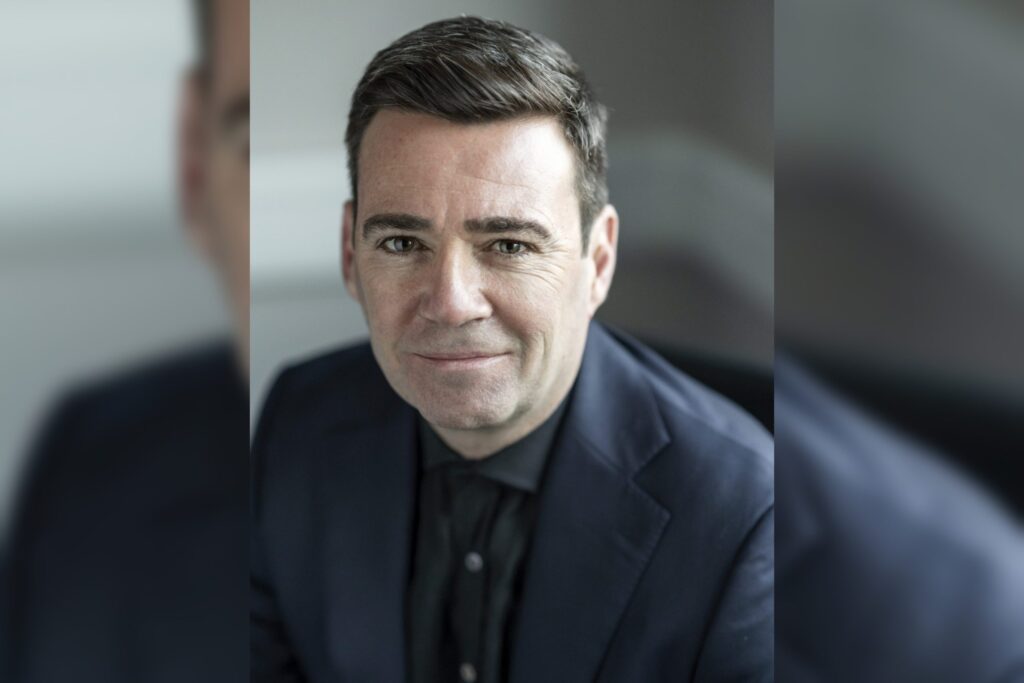
Andy Burnham is on course to become Britain’s next prime minister. The mechanics of that transition are straightforward — Keir Starmer resigned June 22, and Burnham, the mayor of Greater Manchester, is the man waiting in the wings. But the path he took to get here is anything but simple.
It is a story of defeat, reinvention, and a gamble on regional politics that is about to pay off in Westminster. Burnham, 56, first ran for the Labour leadership in 2015.
He came a distant second to Jeremy Corbyn. That loss sent him out of Parliament in 2017. Most political careers end that way — a failed bid for the top job, then retirement.
Burnham did something different. He stepped down from the House of Commons and became mayor of Greater Manchester.
He spent more than two terms rebuilding himself as a champion of England’s northern, working-class population. That background could now be his strongest asset. The country is weighed down by economic malaise.
It will have had five prime ministers in four years. Voters are tired of leaders who seem disconnected from ordinary life. Burnham offers the opposite.
He was born near Liverpool. His father was a telephone engineer.
His mother worked as a receptionist. He joined the Labour Party at 15. He studied English at Cambridge, then worked as a researcher in Parliament — a well-worn path for British politicians.
He was first elected to the House of Commons in 2001, and served as a minister under Tony Blair and as health secretary under Gordon Brown. But there is a catch.
Burnham supported the Iraq invasion. That position has hampered his past bids for party leadership. It is a fact that does not go away.
The question is whether his years as mayor have given him enough distance from that decision, and enough credibility with voters who oppose the war, to overcome it. The political logic of his rise is clear. Labour under Starmer struggled to connect with working-class voters in the north.
Burnham already has that connection. He has governed a major metropolitan region.
He has handled crises — the pandemic, transport, housing — in a way that feels tangible to people who do not follow Westminster politics closely. That experience is rare among national politicians. Most go straight from Parliament to a ministerial job to a leadership bid.
Burnham took a detour through local government and came back stronger. What happens next depends on how quickly the party moves.
The mechanics of the transition are straightforward, but the politics are not. Burnham will need to unite a Labour Party still divided over the Corbyn years and still uncertain about its direction. He will need to convince the country that a former health secretary who once backed the Iraq war is the right person to lead a nation exhausted by instability and economic decline.
His ability to connect with working-class voters could be the key factor. That is not a prediction. It is a description of the landscape.
Burnham has spent more than two terms proving he can hold together a coalition of urban liberals and northern Labour traditionalists. Now he has to do it on a national scale.
The country has had four prime ministers in four years. Burnham is about to become the fifth. Whether he can be the one to stop the revolving door is the question nobody can answer yet.




