
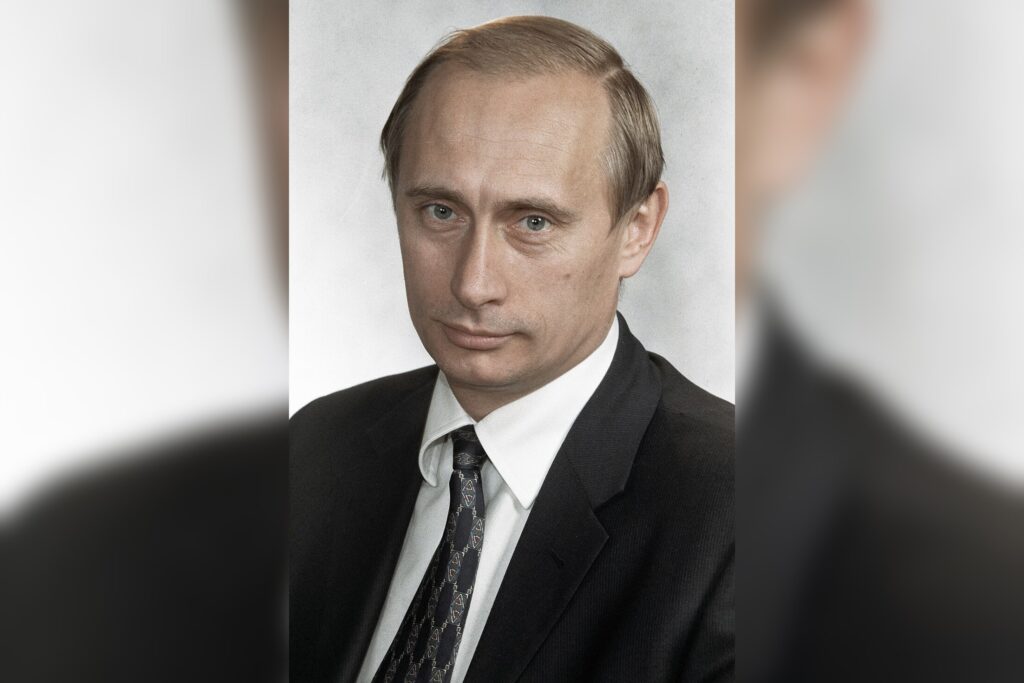
MOSCOW, July 11 — Vladimir Putin, the former KGB officer who has ruled Russia for over a quarter-century, has built a political career on a simple mechanism: consolidate power, eliminate rivals, and project strength abroad. The mechanics here are worth dissecting, because the narrative coming from the Kremlin has remained remarkably consistent even as the facts on the ground have shifted.
Putin was born on October 7, 1952, in Leningrad, now Saint Petersburg. He became President of Russia on May 7, 2000, with a brief detour as Prime Minister from 2008 to 2012 — a choreographed swap with Dmitry Medvedev that allowed him to sidestep term limits. On closer reading of the constitutional changes he pushed through in 2020, the catch is clear: the amendment reset his term count, permitting him to serve two more terms, effectively until 2036.
The regime has been defined by the systematic suppression of political opposition. The most prominent case is Alexei Navalny, who was imprisoned and died in prison on February 16, 2024. The cause of death remains a matter of international dispute, but the pattern is not new.
The Ukraine calculus
On February 24, 2022, Putin ordered the full-scale invasion of Ukraine. His stated justifications — NATO expansion and alleged Nazi influence in Ukraine — have been met with skepticism in Western capitals. The International Criminal Court issued an arrest warrant for him on March 17, 2023, for alleged war crimes related to the deportation of children. The warrant does not carry enforcement power inside Russia, but it has effectively confined his international travel to a shrinking list of friendly states.
The response from the US, the EU, the UK, and other nations has been a cascade of sanctions targeting Putin’s inner circle, state-owned enterprises, and key sectors of the Russian economy. The aim is to starve the war machine of revenue. The question is whether the pressure is enough to alter the Kremlin’s calculus.
What comes next
Putin has repeatedly stated that Russia will achieve its military objectives in Ukraine. The claim is clear. The catch is that the war has already lasted longer than the Kremlin anticipated, and the economic toll is mounting. Follow the money: sanctions are squeezing energy exports, and the ruble has been volatile. Russia has pivoted to increased trade with China and India, but the terms are less favorable than pre-war deals with Europe.
The key variable to watch is whether domestic discontent — muted by censorship and repression — can be contained indefinitely. The 2020 constitutional changes were designed to ensure Putin’s continuity through 2036. The war in Ukraine was meant to cement his legacy. On both fronts, the outcome remains uncertain.




