
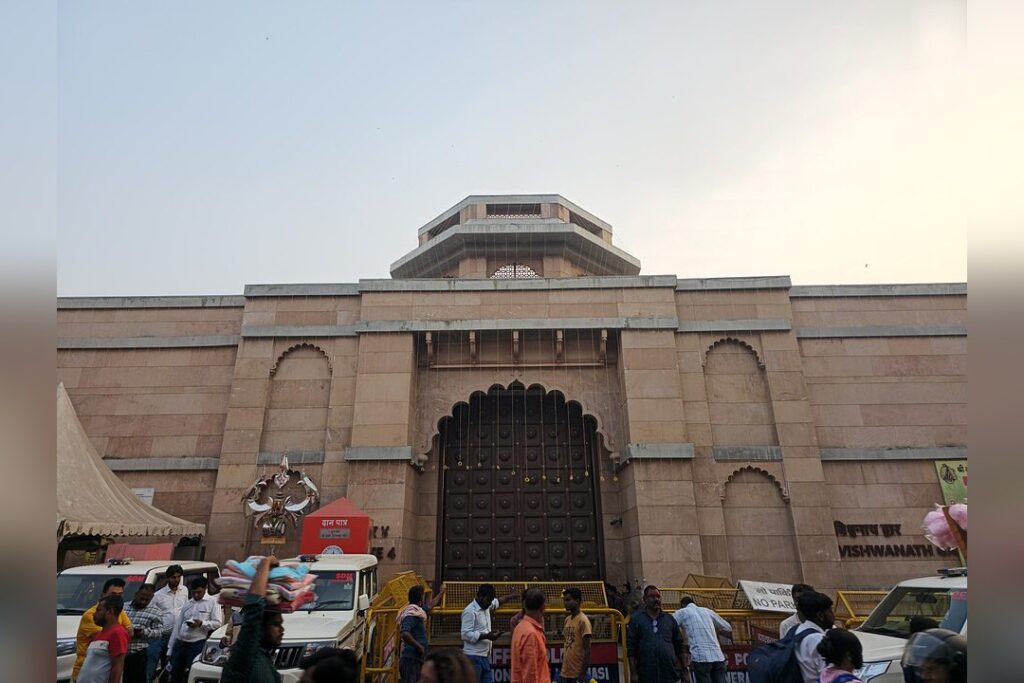
VARANASI, Aug 3 — The number at the centre of the viral video is INR 4,000: the sum a man posing as a priest allegedly took from a devotee at the Kashi Vishwanath Temple, promising access to darshan in exchange for the money.
Footage of the confrontation between Varanasi Police and the accused has been circulating widely on social media. The clip shows officers questioning the man after the alleged extortion, and in it a police officer is heard saying, in Hindi: “Sari duniya free mein Darshan kar rahi hai, tum Bahar ke aadami se INR 4000 le liye” — “The whole world is having darshan for free, and you took INR 4,000 from an outsider.”
The accused refunded the entire amount to the devotee after the police intervened, according to the video’s account of events. The financial figure is small, but the reaction it has generated across Indian social media is not. Within hours, the clip had transformed from a local police incident into a broader commentary on how pilgrims are treated at one of Hinduism’s most significant spiritual landmarks.
Social media as the watchdog
The episode is being held up as a demonstration of what viral attention can accomplish in spaces where formal complaints rarely travel far. A tourist or pilgrim who is overcharged and then leaves the city has little practical recourse. But once a phone recording enters the feed, the optics change — the officer in the clip appears to publicly rebuke the accused, and the refund follows almost immediately.
What makes the moment notable, according to those discussing the footage online, is the speed of the outcome. No extended investigation is shown. The mere threat of public exposure — and the institutional embarrassment that tends to follow — appears to have forced a correction.
That dynamic speaks to a larger pattern in India, where smartphone video has increasingly become a de facto enforcement mechanism. From traffic stops to food-safety complaints to scams at pilgrimage sites, the camera is often the first instrument of accountability.
The Kashi Vishwanath case fits that template. The temple, a significant cultural and spiritual landmark in Varanasi, draws a steady stream of domestic pilgrims and out-of-state visitors — precisely the kind of population that is both vulnerable to touts and unlikely to pursue a formal complaint once they leave the city.
Touts, fake priests and the pilgrim economy
The video has sparked discussions about the prevalence of touts and fake priests targeting pilgrims at major religious sites across India. Kashi Vishwanath is far from the only temple where such reports surface. But as one of the oldest and most culturally important shrines in the country, it carries particular weight when the allegations appear.
The interaction captured in the clip highlights a common complaint: that some individuals exploit the ritual of darshan to monetise access that should be free. The police officer’s quoted remark — that the entire world gets darshan free of charge — cuts directly to that point, framing the alleged payment as an invention of the accused rather than a legitimate temple fee.
It also exposes the information gap between first-time pilgrims and those familiar with the temple’s procedures. Devotees travelling from outside Varanasi may not know what a legitimate priest or guide looks like, or whether any payment is customary. That uncertainty creates room for precisely the kind of scheme captured in the video.
The broader conversation now forming around the clip is whether this incident will change anything beyond one refund. Social media has proven effective at surfacing abuses, but the harder task is preventing repeat occurrences.
What to watch next
The immediate test for Varanasi Police is whether the public airing of the video leads to formal action against the accused, or whether the refund is treated as the end of the matter. The clip has given the authorities a visible case, and social media users are watching for an official response.
For the temple administration, the challenge is structural: how to manage large crowds and their genuine spiritual needs without allowing unregulated intermediaries to insert themselves into the process. The viral video may have resolved one devotee’s INR 4,000 complaint, but the waiting line for darshan remains a constant in Varanasi — and so does the opportunity for scams to occur around it.
The episode serves as a reminder that in India’s religious tourism economy, the mobile phone has become both a vulnerability and a tool. Pilgrims may still fall prey to touts, but now every encounter at the temple gate has the potential to end up online — and that, in the end, may be the most effective deterrent available.




