
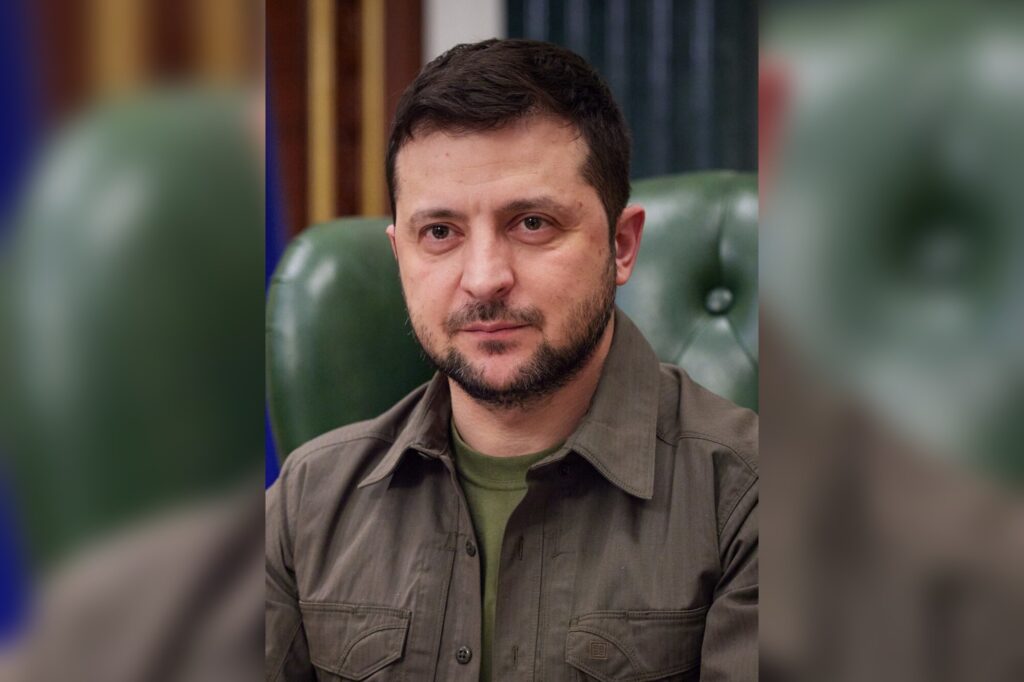
KYIV, July 22 — Against the backdrop of a war that has now entered its fifth year, Volodymyr Zelenskyy remains at the helm of a nation fighting for its survival. The Ukrainian president, who took office in 2019 on a wave of anti-establishment and anti-corruption sentiment, has become the face of his country’s resistance to the full-scale Russian invasion that began on 24 February 2022. His journey from entertainer to wartime leader is one of the most dramatic political transformations of the century.
Born on 25 January 1978 in Kryvyi Rih into a Russian-speaking Jewish family, Zelenskyy obtained a law degree but chose a career in comedy and entertainment. He co-founded the production company Kvartal 95, which produced the immensely popular television series Servant of the People, in which he played a fictional Ukrainian president.
The series ran from 2015 to 2019, and a political party bearing the same name was founded in March 2018 by Zelenskyy and his associates. In the 2019 presidential election, he defeated incumbent Petro Poroshenko with 73.23 percent of the vote in the second round — the biggest landslide in the history of Ukrainian presidential elections. His party then won a snap parliamentary election shortly after his inauguration.
In the corridors of power, Zelenskyy has been a proponent of e-government and unity between Ukrainian-speaking and Russian-speaking parts of the population. He makes extensive use of social media.
During his first two years in office, he oversaw limited progress in tackling corruption, the ending of legal immunity for members of parliament (the Verkhovna Rada), and the country’s response to the COVID-19 pandemic and economic recession. A poll in May 2021 by the Rating Group gave him the highest trust rating out of all Ukrainian presidents, ranking him second best after Leonid Kuchma. What is at stake now is nothing less than Ukraine’s sovereignty.
Zelenskyy attempted early in his presidency to implement the Minsk agreements through the “Steinmeier formula” and sought dialogue with Russian President Vladimir Putin. But during 2021, a large Russian military buildup on Ukraine’s borders and increased attacks by Russian proxy forces sparked an international crisis. Zelenskyy said his military would not respond to provocations; he tried to calm the Ukrainian people and asked for military support from NATO.
On 24 February 2022, Russia launched a full-scale invasion. Zelenskyy remained in Kyiv as it came under attack, declining international offers to evacuate him.
He declared martial law and a general mobilization of the armed forces. There have reportedly been numerous Russian assassination attempts on him since the invasion. During early peace negotiations, Zelenskyy demanded a ceasefire and Russian withdrawal, expressed willingness to discuss Ukrainian neutrality if given “real” security guarantees, and was open to negotiating the status of Crimea and Donbas.
He later presented Ukraine’s Peace Formula in late 2022 and the Victory Plan for Ukraine in late 2024. After Russia “annexed” southeastern Ukraine, he applied for Ukraine to join NATO.
He has frequently visited frontline and newly liberated areas, meeting with other world leaders and calling on the international community to support Ukraine’s resistance, provide military aid, and impose tougher sanctions on Russia. The wider picture, as the summer of 2026 unfolds, is one of a protracted war with no immediate end in sight. Zelenskyy continues to lead a nation that has defied expectations, but the toll of the conflict — human, economic, and political — remains immense.
With the next phase of the war, and the next round of diplomacy, still unwritten, the world watches Kyiv.




