
NEW DELHI, July 27 — A Bollywood teaser dispute has brought the long-running legal saga of actor Salman Khan back into public view, more than two decades after the star was accused of hunting a protected antelope species in the Rajasthan desert. The Delhi High Court recently issued an order in a controversy over promotional material for a film titled ‘Kala Hiran’, or ‘Black Deer’. According to state and international reports, both the film’s title and its teaser are linked to the 1998 poaching incident.
The court’s reference to that earlier case has revived scrutiny of how India handles wildlife crimes committed by its most powerful citizens.
The incident and the law
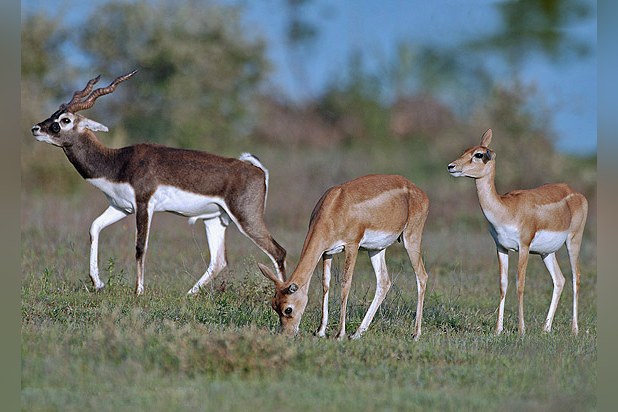
The account indicates the original event occurred in October 1998, during the filming of the Bollywood movie ‘Hum Saath Saath Hain’ in Rajasthan. Officials said Khan was accused of poaching two blackbucks, a species protected under the Indian Wildlife Protection Act of 1972. The blackbuck, known scientifically as Antilope cervicapra, is listed as vulnerable by the International Union for Conservation of Nature.
Rajasthan’s arid landscapes have long been home to the blackbuck, an animal that holds cultural significance in parts of northern and western India. The Wildlife Protection Act of 1972 was enacted to safeguard such species from hunting and habitat loss, and violations can carry severe penalties.
The conviction and its aftermath
The legal process stretched for two decades. In April 2018, a trial court in Jodhpur convicted Khan and sentenced him to five years in prison. The ruling was widely seen as a landmark moment in India regarding celebrity accountability and wildlife crime, according to observers at the time.
It marked one of the few instances in which a Bollywood star faced significant legal consequences for environmental offenses. But the following year brought a partial reversal.
In 2019, the Rajasthan High Court acquitted Khan in three of the four related criminal cases. In the fourth case, the conviction was upheld but the sentence was stayed, allowing Khan to remain free pending appeal. That appeal has not yet been resolved.
The split verdict left the case in a curious legal limbo. Khan remains convicted in one matter but has not served any prison time, and the higher courts have not yet rendered a final judgment.
The case has become a touchstone in Indian legal circles for discussions about how the justice system treats wealthy and famous defendants.
Regional context and what comes next
Wildlife crime enforcement across South Asia has historically been uneven, with prosecution rates varying sharply between states and between cases involving ordinary citizens versus those with political or financial connections. The Khan case has been cited by conservation groups as an example of both the potential and the limits of legal accountability in this arena. The Delhi High Court’s recent involvement in the ‘Kala Hiran’ teaser controversy does not directly reopen the criminal case, but it has refocused attention on the unresolved appeal.
Legal observers will be watching to see whether the appellate court ultimately rules on the merits of the fourth case, and whether any final decision carries implications for how wildlife protection laws are applied to high-profile individuals in India. For now, the blackbuck — listed as vulnerable by the IUCN — remains protected by law, and the case that bears that animal’s name continues to wind its way through the Indian judiciary, more than 27 years after the shots were fired.




