
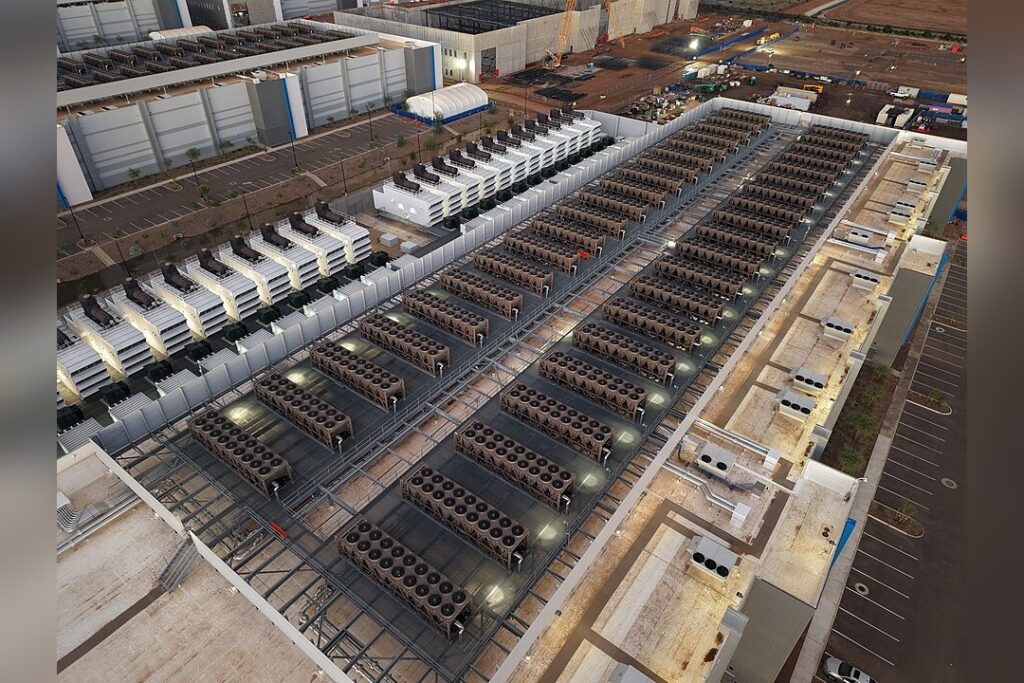
WASHINGTON, July 7 — The numbers are stark, and they tell a story of breakneck expansion. According to the U.S. Census Bureau, data center construction spending in the United States hit $27 billion in 2023, an 80% leap from the $15 billion recorded in 2020. That is the raw financial measure of an industry scrambling to build the physical backbone for the artificial intelligence boom.
Under the hood, the technical reality is that training large language models and deploying them at scale demands enormous clusters of servers, each consuming vast amounts of power and generating prodigious heat. The response has been a global construction spree.
Synergy Research Group projects that global data center capital expenditure will reach $250 billion in 2024, climbing from $180 billion in 2023. The Uptime Institute, in a 2023 report, noted that data center construction projects had increased by 35% year-over-year, with over 500 new facilities under construction worldwide. The detail that matters is who is writing the cheques.
The major tech companies are leading this buildout. Microsoft alone spent $50 billion on data center infrastructure in 2023, according to its annual financial filings.
Google and Amazon are also at the forefront, though their specific spending figures were not broken out in the available data. This is not speculative investment; it is concrete poured and steel racked. The rapid growth, however, has strained security resources.
As ever, when an industry builds fast and in volume, vulnerabilities appear. Data center construction sites are often in remote areas, chosen for cheap land and access to power grids, but that remoteness also means limited security presence. The Uptime Institute’s data on the 35% year-on-year increase in projects underscores the sheer volume of sites that need guarding.
This has created a target-rich environment for thieves. With hundreds of new facilities under construction globally, and security resources stretched thin, the risk of theft has become a growing concern.
Copper wiring, server components, and even the high-end cooling equipment used in these facilities are valuable and relatively easy to strip from an unguarded site. The construction boom has, in effect, created a parallel opportunity for organised theft. The numbers from the Census Bureau and Synergy Research paint a clear picture of an industry in overdrive.
The $27 billion spent in the US in 2023, the projected $250 billion globally in 2024, and the 500-plus facilities under construction are all metrics of an AI infrastructure buildout that shows no sign of slowing. The question, as the concrete continues to pour, is whether the security apparatus can catch up with the pace of construction.
What to watch next is whether the major tech firms — Microsoft, Google, Amazon — will be forced to increase security spending on their construction projects, or whether the industry will see a wave of theft-related delays and cost overruns. For now, the buildout continues at pace, with all the opportunities and vulnerabilities that entails.




