
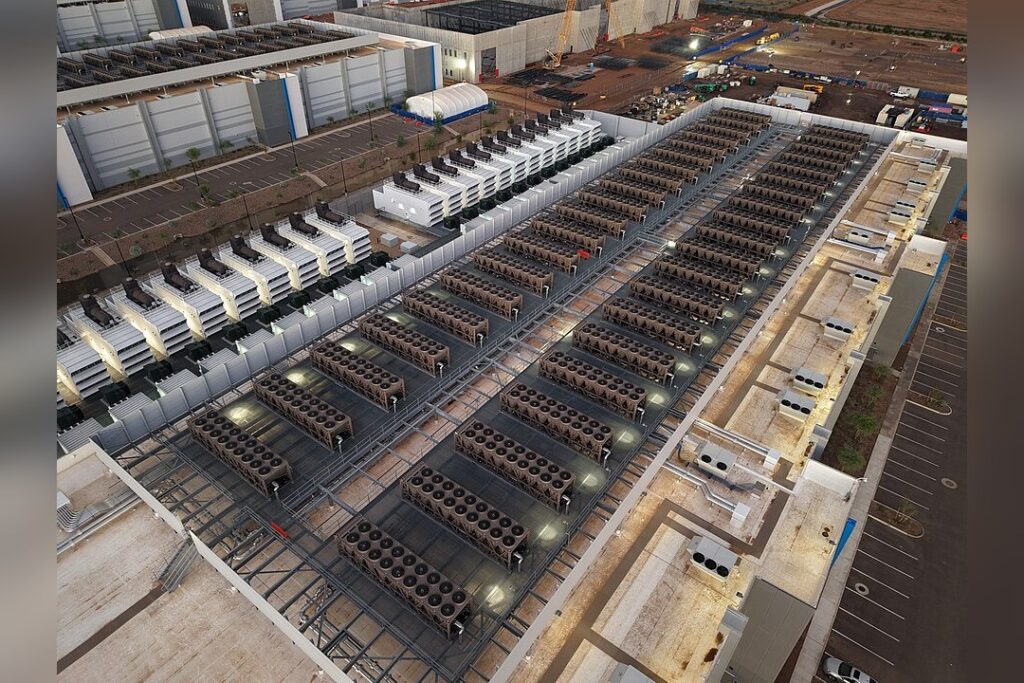
LEESBURG — A copper theft at a data center construction site in Loudoun County, Virginia, in January 2024, with losses estimated at $500,000, has become a strategic warning sign for the broader security of America’s digital infrastructure. The incident, which involved the theft of copper wiring and equipment, caused project delays at a site in a county that the Loudoun County Economic Development Authority says hosts over 200 data centers and handles an estimated 70% of the world’s internet traffic. The theft is not an isolated crime.
Local law enforcement, including the Loudoun County Sheriff’s Office, reported a 30% rise in copper theft incidents at construction sites in 2023 compared to the previous year. The county has responded with increased patrols and a collaboration with scrap yards to track stolen materials.
But the January 2024 theft signals a deeper vulnerability in what is known as Data Center Alley, the nerve center for global data flow and an increasingly critical hub for artificial intelligence infrastructure. The broader stakes here are clear. Loudoun County’s concentration of data centers makes it a singular target.
The FBI’s Richmond Field Office has noted that organized crime groups are increasingly targeting such sites for copper theft. This is not petty crime; it is a calculated exploitation of a critical national asset.
Strategically, the calculus for both law enforcement and the data center industry is shifting. The copper thefts are not merely a nuisance; they represent a direct threat to the supply chain and construction timelines for AI infrastructure. The January 2024 theft, with its half-million-dollar loss, is a case study in how organized criminal networks are probing the defenses of America’s digital backbone.
What this signals is a need for a hardened security posture that goes beyond traditional construction-site patrols. The collaboration between the Loudoun County Sheriff’s Office and scrap yards is a tactical move, but the broader challenge is systemic. As AI infrastructure expands, the demand for copper and other valuable materials at construction sites will only increase, making these sites a persistent target.
The incident in Loudoun County is a warning. The region that carries 70% of the world’s internet traffic is now a front line in a different kind of conflict — one fought not with state actors but with organized crime groups that understand the value of what lies inside those construction fences.
The question for policymakers and industry leaders is whether the security measures in place are sufficient for the scale of the threat. Looking ahead, the focus will be on how Loudoun County and the broader data center industry adapt. The January 2024 theft was a shot across the bow.
The next incident could be far more consequential.




