
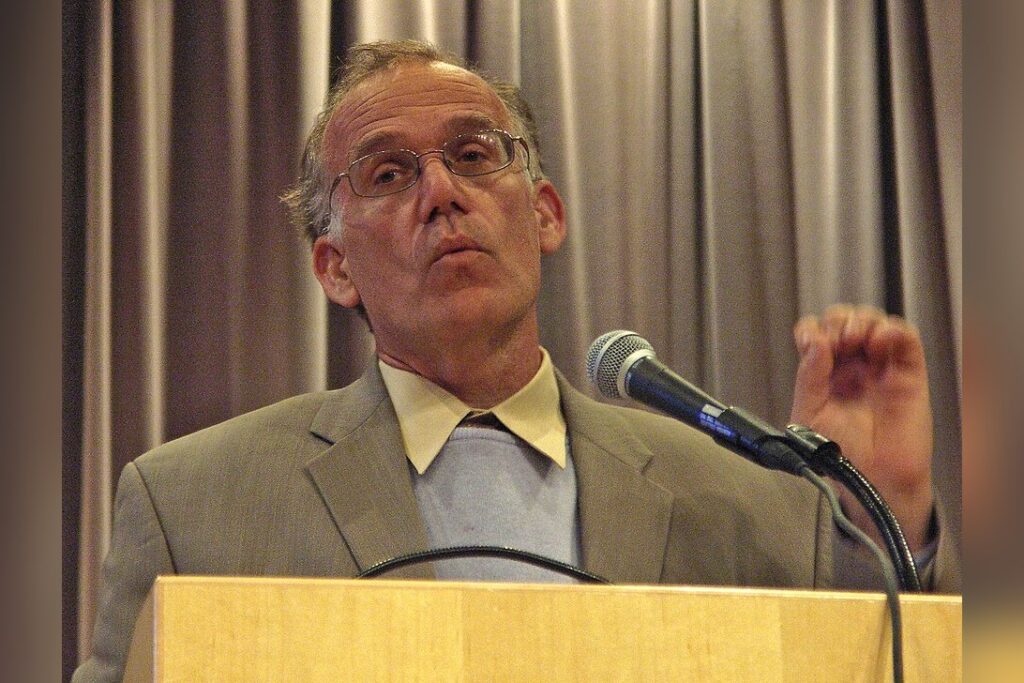
WASHINGTON — The National Mall baked under July heat Thursday, and Victor Davis Hanson spent the Fourth of July talking about what could break the country next. The historian sat for an interview with Daily Signal’s Tony Kinnett. His subject: how the American republic survived 250 years.
His answer was not about military victories or economic might. It was about a framework, built by the Founders, designed to contain human nature.
That framework, Hanson argued, has been the thing holding the line. But the line is thinning. Hanson described a political landscape where the virtues that kept self-governance alive are under strain.
He did not offer a list of fixes. He laid out terms: the republic requires citizens who can govern themselves first.
Without that, institutions are just paper. The interview landed on a day of parades and speeches. On the ground, voters tell pollsters they feel the same unease Hanson diagnosed.
The gap between the celebration and the anxiety is not new, but it is widening. What happens next is the question that hangs over Hanson’s analysis. He pointed backward to the original design of the American system.
The implication was clear: the design still works, but only if the people using it remember how it works. That is not guaranteed.
Hanson’s bluntness cut against the grain of a culture that prefers triumphalism. He did not say the republic is doomed. He said it has been tested repeatedly, and its survival was never guaranteed.
That is a different thing from optimism or pessimism. It is a fact of the record.
The historian’s words offered a sober counterpoint to the fireworks. By nightfall on the Fourth, many Americans had heard speeches about freedom and resilience. Hanson’s voice was quieter, but it carried.
He argued that the American experiment was never a sure thing. It is still not a sure thing. The consequences of that argument ripple beyond one interview.
Hanson is not a fringe voice. He is a historian with a long record.
When he says the republic faces challenges both old and new, he is speaking to a broad audience that includes policymakers, voters, and the media. His diagnosis lands in a moment when trust in institutions is low and public discourse is fractured. The question he left on the table is not whether the republic will survive another 250 years.
It is whether the conditions for survival are being maintained. Hanson’s answer, in his characteristic bluntness, was that they are not.
The virtues that sustained the country for two and a half centuries are under strain. Self-governance requires a citizenry that can govern itself. That is the bedrock.
If it cracks, the rest follows. On the Mall, the humidity hung thick. The marble stayed cool.
The crowds came and went. Hanson’s words did not change the weather.
But they changed the conversation for those who heard them. The republic, he said, has endured not because of its institutions alone. Something deeper held it together.
Whether that something still holds is the question nobody answered on the Fourth.




