
Ten infants are dead. Sixteen more were injured. The fire at Jhansi Medical College hospital’s neonatal intensive care unit on November 15, 2024, did not start as a headline.
It started as a failure somewhere in the system. The hospital sits in Jhansi, Uttar Pradesh, North India.
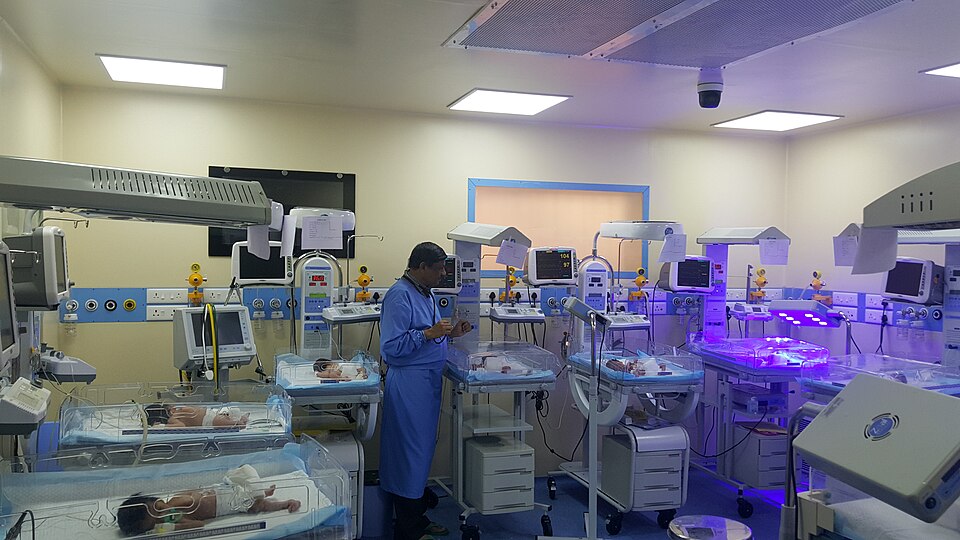
The neonatal intensive care unit was the kind of place the World Federation of Societies of Intensive and Critical Care Medicine defines as “an organized system for the provision of care to critically ill patients.” That definition means advanced monitoring equipment. Life-sustaining technologies. Highly specialized medical and nursing care.
It means a room full of babies who could not survive without that machinery and those people. Then the fire came.
How it started is not yet known. The investigation will look at that. But the question that hangs over this tragedy is wider.
It is about what happens when a critical care unit — a place built to sustain life — becomes the site of death. Intensive care units are not ordinary wards. They are dense with oxygen lines, electrical equipment, ventilators, monitors.
A fire in such a space is not like a fire in a hallway. It moves faster.
It is harder to escape. The patients cannot flee. Safety protocols are supposed to account for this.
Hospitals are required to have fire detection systems. Suppression systems.
Evacuation plans. The investigation into Jhansi will examine whether those existed and whether they worked. But the fact that ten infants died suggests something broke.
This is not the first such fire in an Indian hospital. It is not the first in a neonatal unit. Each time, the same questions surface.
Each time, the same vulnerabilities are exposed. Critical care units concentrate the most fragile patients into the most technologically dense environments.
A spark in the wrong place can turn a place of healing into a trap. The Jhansi Medical College hospital neonatal intensive care unit was likely equipped with the same kind of advanced gear found in any such unit. Monitors.
Ventilators. Incubators.
All of it necessary. All of it a potential hazard if not managed with extreme care. The community is in shock.
That is natural. But shock fades. The real test is what happens when the investigation concludes.
Will the findings lead to real changes in how these units are built and maintained? Or will the report sit on a shelf?
Sixteen others were injured. They survived. But survival in this context is not simple.
Injuries in a neonatal unit can mean burns, smoke inhalation, oxygen deprivation. For infants, those injuries carry lifelong consequences.
The fire at Jhansi is a specific event. But it is also a symptom. Intensive care units are among the most demanding environments in any hospital.
They require constant vigilance. They require infrastructure that matches the intensity of the care being delivered. When that infrastructure fails, the cost is measured in lives too young to have names the public knows.
Ten infants died. That is the fact.
The investigation will try to explain it. But explanation is not the same as prevention. Prevention requires a hard look at every neonatal intensive care unit in every hospital.
It requires asking whether the safety measures in place are real or just paperwork. It requires admitting that the definition of an intensive care unit — “an organized system for the provision of care” — means nothing if the system is not safe.
The fire is out. The babies are gone. The questions remain.




