
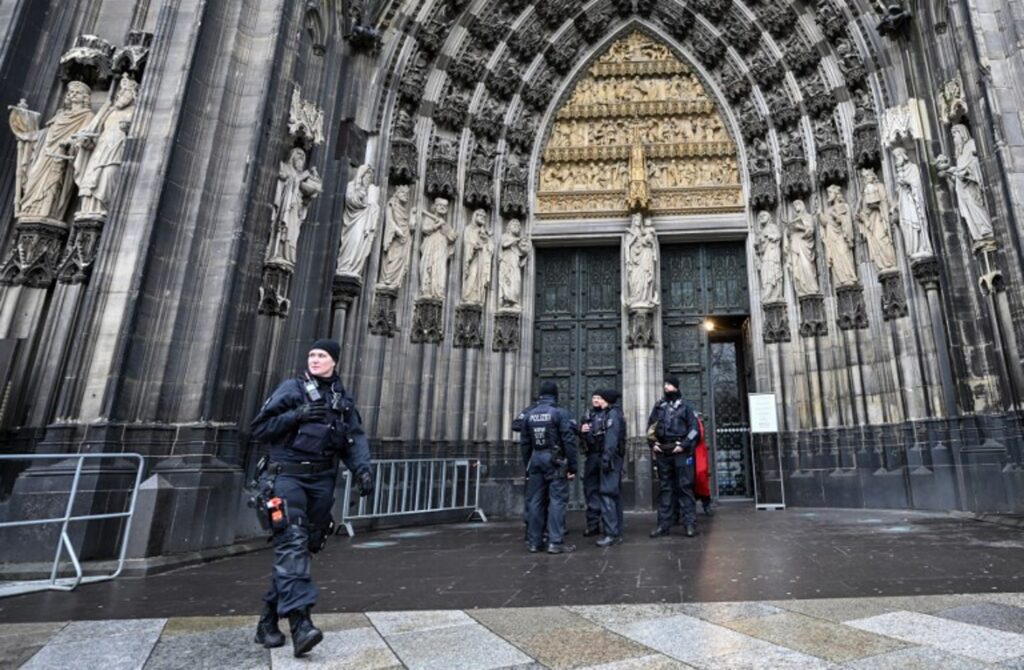
German authorities have taken a fifth person into custody in connection with the thwarted car bombing plot targeting Cologne Cathedral, with the arrest occurring in the city of Bochum. This development offers insight into both the operational methods of the Islamic State – Khorasan Province (IS-K) and the ongoing nature of the German security response.
Bochum, the sixth-largest city in North Rhine-Westphalia, is home to approximately 372,348 residents. Situated on the Ruhr Heights between two rivers, it lies at the heart of Germany’s most populous urban region. This dense, industrial landscape provides cover that can make suspects difficult to track, a factor that has shaped the investigation’s trajectory.
The original plot was scheduled for December 31, 2023, targeting Cologne Cathedral during New Year’s celebrations. The landmark was chosen for its potential to cause maximum shock, given its status as a cultural icon expected to be crowded with revelers. IS-K, the Afghan and Pakistani branch of the Islamic State, stands accused of orchestrating the plan. The group has been responsible for numerous global attacks and continues to operate through networks, funding, and ideological influence rather than requiring a physical caliphate.
The arrest of five suspects indicates the plot involved a cell rather than a lone actor, and such organizational structures inevitably leave traces. A bombing operation of this magnitude requires logistical elements including a vehicle, explosives, timing, and route planning, each generating evidence. The Bochum arrest likely closes another gap in investigators’ timeline, while raising questions about whether the cell received external direction. IS-K has historically used handlers based in the Afghanistan-Pakistan border region, communicating through encrypted applications, couriers, and financial transfers.
Germany’s federal system requires cooperation between North Rhine-Westphalia’s state police and federal agencies, and the Bochum arrest demonstrates this partnership is operational. However, the Ruhr region’s density, economic significance, and transportation infrastructure present vulnerabilities that could be exploited by determined groups. The fact that the plot was detected reflects effective intelligence work, but the fifth arrest confirms that the initial four were insufficient to close the case.
IS-K has been monitored by the United States and allied nations for years, surviving the loss of its Syrian and Iraqi territorial base by shifting to regional franchises. The Khorasan branch is now among the most active, having carried out attacks in Iran, Pakistan, and Afghanistan, and inspiring attacks in Europe. The Cologne plot fits this established pattern. While the Bochum arrest represents a tactical success, it does not eliminate the strategic threat. Cologne Cathedral and other landmarks remain potential targets. The New Year passed without an attack, but IS-K continues recruiting and planning. The investigation remains open.




