
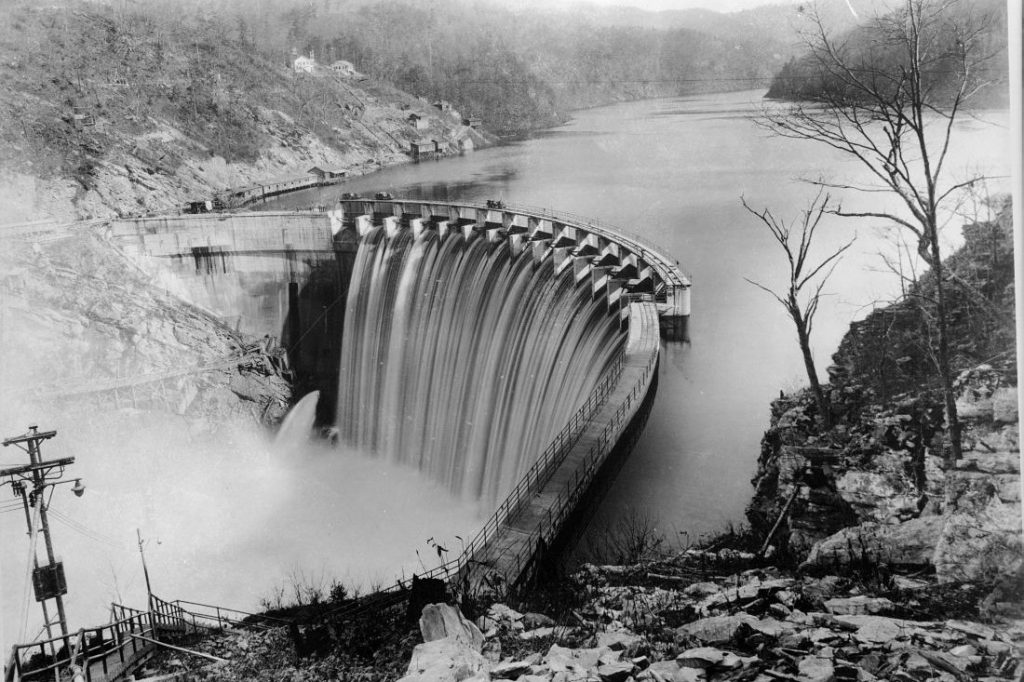
On September 27, 2024, a single unverified claim that the Walters Dam had catastrophically failed prompted Cocke County Mayor Rob Mathis to issue an immediate evacuation order for parts of Newport, Tennessee. The dam, however, remained intact, and the order was rescinded once officials confirmed the misinformation.
Walters Dam is a 180‑foot‑high, 800‑foot‑long concrete arch structure that impounds the Pigeon River. Although often referred to locally as the Waterville Dam, it actually lies in the Great Smoky Mountains of western North Carolina, not Tennessee. Construction on the dam began in 1927 and was completed in 1930 by the Phoenix Electric Co., an affiliate of Carolina Power & Light. Nearly a century later, the facility continues to generate hydroelectric power, though the powerplant itself is situated 6.2 miles away, linked to the dam by a north‑bound tunnel that runs near the state line.
The false report raised a stark dilemma: how quickly should officials act when lives could be at risk, versus waiting for verification? Mayor Mathis chose rapid action, ordering residents to evacuate to higher ground without waiting for confirmation. In a real failure, a surge of water would have rushed down the Pigeon River, potentially endangering many lives. The decision to evacuate, though later shown to be unnecessary, was made under the assumption that a delay could prove fatal.
Following the order, residents left their homes, drove to safer elevations, and waited anxiously for news about the status of their houses. After authorities verified that the dam had not failed, the evacuation order was lifted. The community of Waterville, which grew around the dam after Carolina Power & Light built housing for construction workers, was temporarily displaced but ultimately unharmed.
Hydroelectric dams like Walters provide renewable energy by harnessing river flow without burning fuel or emitting smoke. The structure holds back the Pigeon River, directing water through the tunnel to spin turbines at the distant powerplant, keeping lights on across the region. The false alarm did not damage the dam or its operations; the turbines continue to turn, and the river flows as it has for decades.
While the physical infrastructure emerged unscathed, the incident exposed vulnerabilities in public trust. Those who evacuated may now question whether to act swiftly or await confirmation in future alerts. Likewise, emergency officials will need to weigh the consequences of issuing orders based on incomplete information against the risk of inaction.
The episode underscores how a single erroneous piece of information can empty a town, cause widespread anxiety, and challenge decision‑making processes. Though the September 27 false report resulted only in inconvenience, it serves as a reminder that verification remains essential, even when the stakes appear high.
Walters Dam continues to stand firm, the Pigeon River maintains its course, and the tunnel still delivers water to the powerplant 6.2 miles away. The lights stay on, and the community, though shaken, returns to normal life. The incident will likely fade from headlines, but the lesson—balance speed with accuracy when lives are on the line—will persist, prompting ongoing reflection on emergency response protocols.




