
SAN FRANCISCO, October 18, 2026 — The Trump administration has moved to phase out Anthropic products from all government agencies, citing significant security concerns following a series of high-stakes disagreements between the tech giant and the Department of Defense. By October, the Department of Defense had reportedly ceased the use of all Anthropic tools, marking a sharp reversal in the relationship between the world’s most valuable AI pure play and the United States government.
The Rise of an AI Titan
Anthropic, PBC is an American artificial intelligence public benefit corporation headquartered in San Francisco. The company was founded in January 2021 by a group of former OpenAI employees, most notably siblings Daniela Amodei and Dario Amodei. Since its inception, the company has focused on the development of large language models, specifically its flagship series known as Claude.
The company categorizes its Claude models into four distinct tiers: Fable, Opus, Sonnet, and Haiku. These models are accessible through an online chatbot, an application programming interface, and specialized agent harnesses such as Claude Code, Cowork, Design, and Science. Anthropic also maintains a more restricted model class called Claude Mythos, which is a less restricted version of Fable available only to pre-approved organizations focused on cybersecurity and life sciences.
The firm’s growth has been historic in scale. By May 2026, a Series H funding round valued the company at $965 billion, making it the most valuable AI pure play in the world, a position it holds alongside rival OpenAI. Despite this commercial success, the company has faced legal and ethical hurdles. In 2025, Anthropic settled a copyright infringement lawsuit for $1.5 billion after being sued for downloading pirated books to train its models under an internal initiative known as Project Panama.
Defense Contracting and the Breaking Point
The integration of Anthropic’s technology into the federal government began in 2024, when the Department of Defense and the Intelligence Community started utilizing Claude for various operations. The partnership expanded significantly as the models were deployed in active theaters, including the Iran war and the United States intervention in Venezuela.
However, the relationship deteriorated in early 2026. In February, the Department of Defense issued a demand that Anthropic allow the use of Claude for all lawful purposes. Anthropic refused to comply, maintaining strict internal safety policies that prohibited the use of its technology for mass domestic surveillance and the development of fully autonomous weapons.
This refusal to drop its safety “red lines” triggered a direct clash with the Trump administration. The government began a systematic phase-out of Anthropic products, culminating in the complete cessation of use by the Department of Defense by October. The administration’s move effectively blacklisted the company from further government contracts, citing the company’s refusal to align its product capabilities with federal defense requirements.
Safety Policies and Existential Concerns
The tension between Anthropic and the government is rooted in the company’s internal approach to safety and alignment. Anthropic conducts extensive research into mechanistic interpretability and societal impact, employing notable researchers such as Andrej Karpathy, John M. Jumper, Jan Leike, and Chris Olah. The company has publicly acknowledged that the pace of frontier model development may be outstripping society’s ability to control these systems.
In a September 12, 2026, essay titled “We Must Pace the Frontier,” CEO Dario Amodei stated that the company must slow the pace at which it improves AI capabilities to address potential risks. These concerns are echoed within the company’s own ranks. Jacob Coxon, a researcher who resigned in September 2026, publicly claimed that insiders believe AI poses an existential threat. Evan Hubinger, the company’s Alignment Science Lead, has stated he believes the risk of AI causing human extinction within the next decade is greater than 10 percent.
These internal warnings have bled into the company’s financial disclosures. According to reports, Anthropic’s draft S-1 filing for a planned initial public offering includes an 80-page section detailing risks, which warns that advanced AI could pose catastrophic or existential threats to humanity.
Governance and Future Outlook
As the company prepares for a potential initial public offering, it faces pressure from both government officials and institutional investors. The Comptroller of the City of New York has urged Anthropic to pause its IPO, arguing that the company should prioritize addressing safety and governance concerns over the demands of going public. The Comptroller, who manages pension funds with over $325 billion in assets, noted that the company intends to adopt a governance structure that grants founders and trustees concentrated control, creating a potential gap between management and accountability.
Anthropic is currently attempting to address these concerns through third-party oversight. In October 2026, the company announced it had begun providing employee-like access to internal tools and hardware to METR, a nonprofit organization that evaluates frontier AI models. Anthropic is also working with evaluators such as SecureBio and Accenture to provide evidence and reasoned conclusions about the risks involved in its systems.
The company maintains that it cannot publicly share all information regarding its safety work, as some data could be used by malicious actors or contains commercially sensitive information. Instead, Anthropic is attempting to mirror the logic of bank supervision, where regulators assign resident examiners to monitor internal risk positions. Whether these measures will be sufficient to satisfy federal regulators or address the concerns of the public remains the central question for the company as it navigates its current blacklisting and its path toward becoming a public entity.
Sources
- Anthropic
- Anthropic update on independent evaluators
- Letter to Anthropic Re: Planned Initial Public Offering
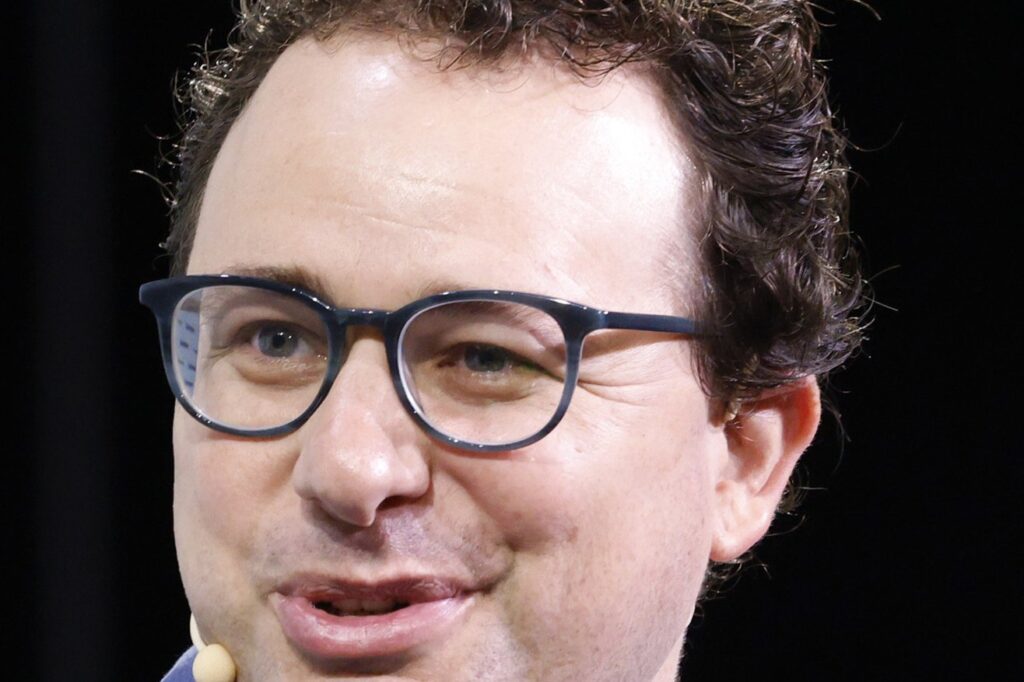
Photo: TechCrunch (CC BY 2.0)




