
Community Programs and Policy Shifts Aim to Reduce U.S. Gun Violence
A shooting at Silver Rail Elementary School left multiple victims, including children, renewing national focus on solutions to gun violence. Advocates and researchers point to evidence-based strategies that address root causes rather than relying solely on punitive measures or symbolic bans.
Current Trends Show Mixed Progress
In 2024, firearm deaths fell to 44,447; suicides accounted for 62% of firearm deaths, homicides accounted for 35%, and the remainder involved law enforcement, were accidental, or had undetermined circumstances. Preliminary data for 2025 indicated continued declines in homicides and non-suicide shooting deaths, though final CDC firearm mortality data for 2025 had not yet been released. Despite these declines, gun violence remains a leading cause of death in the United States. Every day, nearly 130 people in the U.S. are killed with guns and more than 200 are shot and wounded; the homicide-by-guns rate is 26 times that of other high-income countries, while the gun suicide rate is nearly 12 times as high.
Limitations of Assault Weapon Bans and Punitive Approaches
Banning assault weapons is ‘gun control theater.’ The expired Clinton-era ban was riddled with loopholes. Mass shootings with military-style rifles are horrible, and dominate headlines and national discourse. But many more Americans are killed and wounded with handguns. The issue is gun violence. Malcolm Gladwell said statistics suggest otherwise: Guns are fired more often in the heat of the moment, in anger, in passion, to settle scores. ‘Get tough’ gun laws and stiffer sentences won’t deter this kind of violence. Declining homicide rates in U.S. cities mask the true extent of gun violence. Improved trauma care has saved gunshot victims who would have died in prior generations. Police records fail to reflect this discrepancy.
Community-Based Prevention and Trauma-Informed Policing
Gun violence prevention isn’t just about stopping someone from obtaining or using a gun. It has to also be about creating conditions where violence is less likely to happen in the first place. Shortly after, my sister and I founded the Sean Monterrosa Project. In early 2020, it was just mutual aid, rapid response on the ground, and civil disobedience. We were marching, gathering signatures, trying to figure out what justice looked like. Eventually, people began investing in my sister and me, and we decided that we really wanted to use this project to invest in young people coming out of the system. Whether it’s through scholarships for higher education, workforce development for young people—we want to create opportunities to do civic engagement and expose young people to the outdoors. We’re finding ways to help educate them outside traditional institutions, whether we’re camping, we’re hiking, or we’re river rafting. Just taking Black and Brown young people out of their urban city element. We need more police, not less. Advanced countries with more cops walking the beat have vastly fewer shootings; Gladwell theorizes a high visible presence of officers who know their communities means trouble gets defused before it turns violent.
Youth Engagement and Public Health Framing
In 2023, 350 shootings occurred in K–12 schools with an additional 30 on college campuses. This marked the highest number of shootings recorded on school grounds. According to a Pew Research Center report, gun deaths among America’s children rose 50% from 2019 to 2021. Addressing gun violence as a public health issue including suicide is essential. We’re finding ways to help educate them outside traditional institutions, whether we’re camping, we’re hiking, or we’re river rafting. Just taking Black and Brown young people out of their urban city element. A lot of the young people that we serve live in San Francisco, but don’t even go to the other side of the city where there’s a beach. So my entry into gun violence is through police violence. And one thing I’ve become very clear about through this work is that we can’t compartmentalize gun violence. Police violence is gun violence. The person holding the firearm might be different. And the systems surrounding that violence may be different. But families are still left grieving, and communities are still very much traumatized. Life is still gone. So when we talk about gun violence, I believe that we have to be willing to look at the full ecosystem of violence in this country.
Defensive Gun Use and Public Perception
Estimates of defensive gun use (DGU) in the United States vary widely, reflecting the contentious nature of the debate. Analyses of the Bureau of Justice Statistics’ National Crime Victimization Survey, which tracks incidents where a crime is confirmed, suggest roughly 61,000 to 65,000 firearm defenses per year across the 1987‑2021 period. By contrast, an online survey of gun owners conducted in 2021 reported a substantially higher figure, underscoring how methodological differences can produce divergent pictures of how often guns are used to prevent harm.
Public opinion mirrors this complexity. A 2023 Pew Research Center poll found that up to 26 percent of Americans view guns as the nation’s number‑one public‑health threat, while other surveys indicate a persistent belief in the protective role of firearms. This split influences legislative approaches, from gun‑buyback programs and waiting‑period requirements to “stand‑your‑ground” statutes that explicitly acknowledge defensive use. Understanding both the empirical range of DGUs and the polarized public sentiment is essential for crafting policies that balance safety concerns with the perceived need for personal protection.
Role of Community-Based Violence Prevention Programs
Community-based violence prevention programs address root causes by investing in young people and creating conditions where violence is less likely to occur. As Ashley Monterrosa explains, her work with the Sean Monterrosa Project focuses on providing scholarships, workforce development, and civic engagement opportunities for youth impacted by the justice system. These initiatives aim to break cycles of violence by offering alternatives to incarceration and street involvement.
The program emphasizes experiential learning outside traditional institutions, such as camping, hiking, and river rafting, to expose Black and Brown youth to environments beyond their urban neighborhoods. Many participants live in San Francisco but have never visited the city’s beach, highlighting the isolation and limited access to restorative spaces that contribute to vulnerability. By removing youth from high-risk settings and connecting them with mentors and nature, the project seeks to heal trauma and build resilience.
Monterrosa stresses that gun violence cannot be separated from police violence, as both stem from systemic inequities and leave families grieving and communities traumatized. Effective prevention requires looking at the full ecosystem of violence, including law enforcement interactions, and investing in community-led solutions that prioritize healing over punishment. This approach aligns with public health frameworks that treat violence as a preventable condition rather than an inevitable outcome.
Sources
- Gun violence in the United States
- Malcolm Gladwell takes aim at America's gun culture in provocative Morristown talk – Morristown Green
- An Interview with Gun Violence Prevention Advocate Ashley Monterrosa
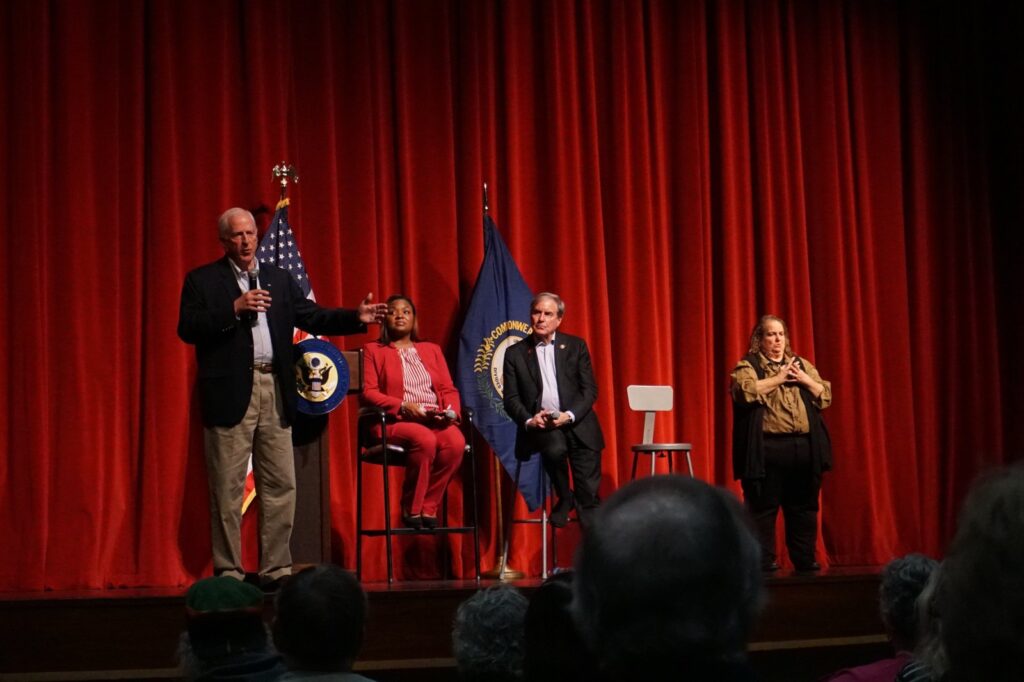
Photo: Mike Thompson (Public domain)




