
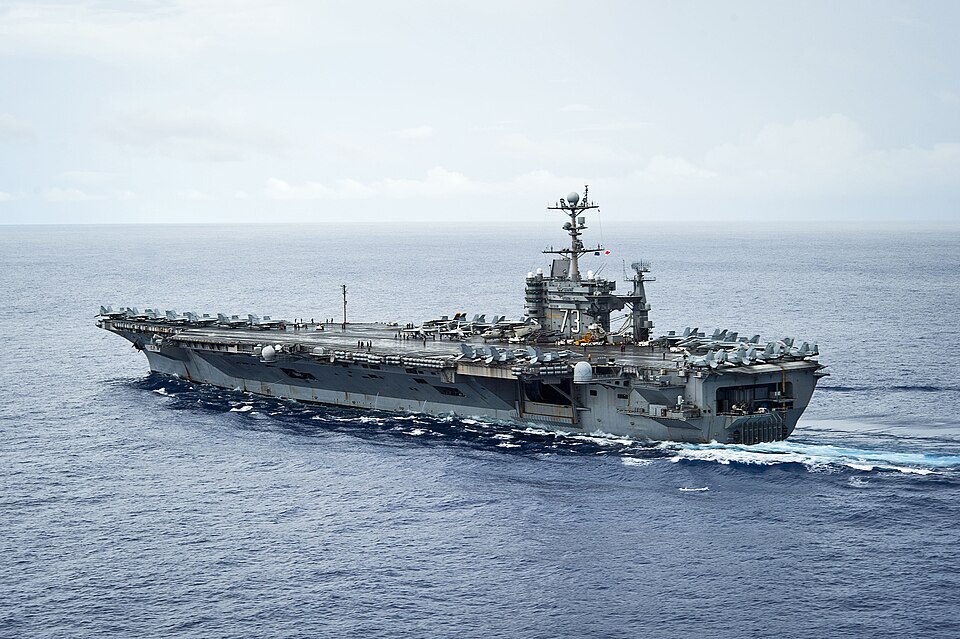
The USS Theodore Roosevelt left San Diego on a Sunday, bound for the Middle East. A day later the Makin Island Marine Expeditionary Force followed, carrying more than 2,000 Marines. A US official described both moves to Al Jazeera, and said that by the end of November three aircraft carriers and two amphibious landing groups would be positioned around Iran.
The official said the buildup would give President Donald Trump a wider menu of options if he decides to act. Al Jazeera’s Tanya Noury, reporting from Washington, said the package includes thousands of troops and extra air power, F-35 fighters among them, on top of roughly 50,000 US service members already in the region. Her Pentagon and White House sources told her the aim is to keep military options “on the table” whatever happens in diplomacy. No assets would be pulled out even if a deal with Iran is reached.
Ships, crews and strain
The Wall Street Journal put the added personnel at 9,000 to 10,000. It reported that the Roosevelt is expected to relieve the Japan-based USS George Washington, which entered regional waters in mid-August, though both carriers could stay on extended deployments. Antiwar.com, citing Al Jazeera Arabic, said the USS George H.W. Bush, in the region since April, would also remain, with the Roosevelt due by late November.
The Navy is feeling it. The Journal described supply shortages and near-record deployments during the conflict, and said Iran has fired ballistic missiles at American warships in recent weeks. Navy officials told families the Roosevelt’s deployment could pass seven months, with eight as the planning baseline, according to USNI News. The Roosevelt would be the fifth carrier used in the war that began in February. The USS Abraham Lincoln left the region in August after an extraordinarily long tour and is heading back to California.
Threats and talks
Defense Secretary Pete Hegseth has said forces are “ready to go” if Trump orders new strikes. Trump told Fox News he believes the US is “going to win the war” very soon. In a Time interview published Thursday he said an attack after the November midterms was possible. Washington also sanctioned Iran’s rail and automotive conglomerates this week, with the Treasury Department describing the aim as draining what remains of Tehran’s revenue.
Iran has its own track running in parallel. Through Qatar it has pushed a seven-day roadmap: reopen the Strait of Hormuz and resume nuclear talks in return for an end to the US naval blockade, sanctions relief and a regional ceasefire covering Lebanon and Yemen. US Ambassador to the UN Mike Waltz told NBC the demands for frozen funds and sanctions relief were non-negotiable, since “these are global sanctions,” backed by seven UN Security Council resolutions. Foreign Minister Abbas Araghchi told NBC that Tehran was “fully prepared” to resume the war, then wrote on X: “we did not come to New York to sell a war. We came to forge peace.”
Iran’s Supreme National Security Council had set October 1 as a deadline, 45 days after it demanded an end to the blockade. Fars reported that day that a supertanker was burning off Oman after an Iranian attack. Reuters cited three senior Iranian officials saying Tehran was preparing to escalate sharply if the US resumes strikes.
Analyst Abas Aslani said the argument has moved from whether to negotiate to “who is going to abandon the primary leverage first.” Former US ambassador Richard Schmierer said Trump is caught between waiting out the midterms and the political cost of concessions resembling a June deal he was already criticised for. An AP-NORC poll found nearly 70 percent of Americans say the war has not been worth fighting. Trump’s answer on his slipping approval: “the pollsters are corrupt.”
Sources
- US to send third aircraft carrier towards Iran: US official to Al Jazeera
- Supertanker Ablaze After Iran Attack In Hormuz As US Deploys 10K More Troops & Third Carrier To Mideast
- Trump Sending Third Aircraft Carrier Strike Group to Middle East




