
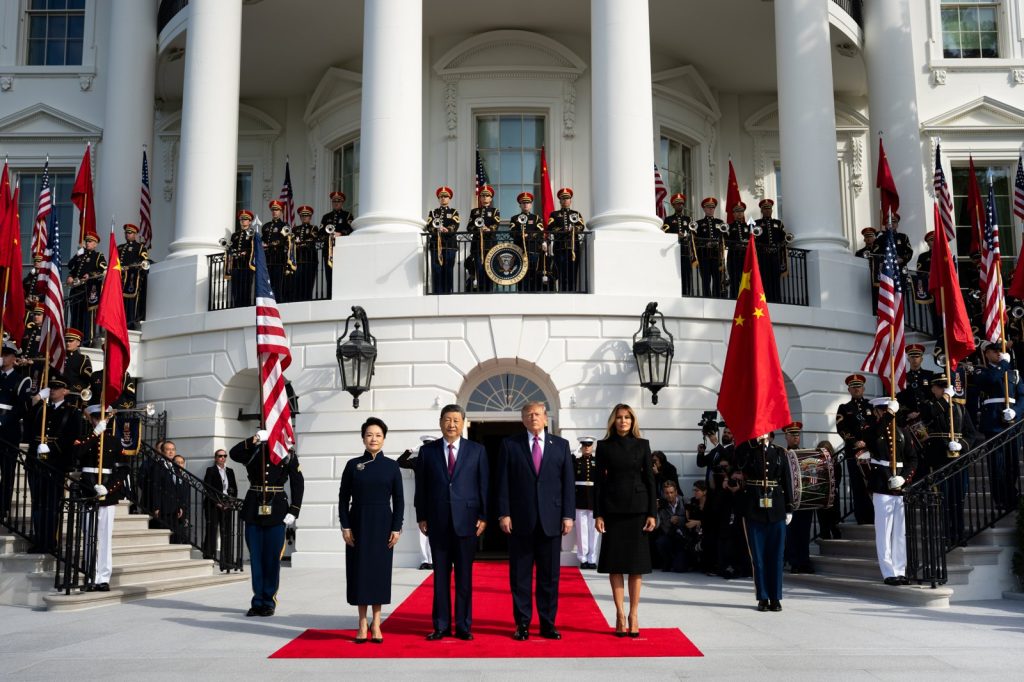
WASHINGTON, September 26 — The United States and China have agreed to cut tariffs on $30 billion worth of goods on a reciprocal basis, one of the most concrete outcomes of a summit between President Donald Trump and Chinese President Xi Jinping during Xi’s visit to the United States. China’s foreign ministry confirmed the tariff cut and a parallel agreement to launch a dialogue on artificial intelligence, according to multiple outlets including Reuters, Axios, The Hill, Yahoo Finance, Investing.com, Stocktwits, UnionLeader.com and The Economic Times.
The White House has not, in the source material, issued a separate statement with additional details.
What the deal covers — and what it does not
The $30 billion figure refers to the value of goods on which tariffs will be cut, not the amount of tariff revenue or the size of the reduction itself. The reciprocal nature of the arrangement means each side reduces duties on the other’s products by a corresponding amount. Notably, no further specifics on scope, timing or implementation were provided.
The source material does not identify which products are covered by the $30 billion figure, and U.S. officials have not provided a separate breakdown. The agreement follows a period of heightened trade tensions between Washington and Beijing.
AI dialogue and an incident channel
Separate from the tariff cut but announced alongside it, the two governments agreed to launch a formal dialogue on artificial intelligence and to set up a channel for communication about AI-related incidents. Both are described as part of the same set of understandings reached during Xi’s visit. Xi reiterated that the two countries can overcome the “Thucydides Trap,” a reference to the idea that a rising power and an established power are destined for conflict.
The remark was made in the context of the summit and the agreements reached.
A red-carpet welcome, and a recent dispute
The summit included a red-carpet welcome for Xi at Andrews Air Force Base on a Wednesday evening, a rare diplomatic gesture that has only happened a handful of times, according to reporting on the event. The visit was ongoing at the time of the reports. The meeting took place weeks after a public dispute between the Trump administration and Ford over the automaker’s business ties to China, in which U.S. Transportation Secretary Sean Duffy clashed publicly with Ford.
What to watch next is whether the AI dialogue and incident channel take shape as formal mechanisms, and whether either government fills in the product coverage and timing that the announcement left blank.




