
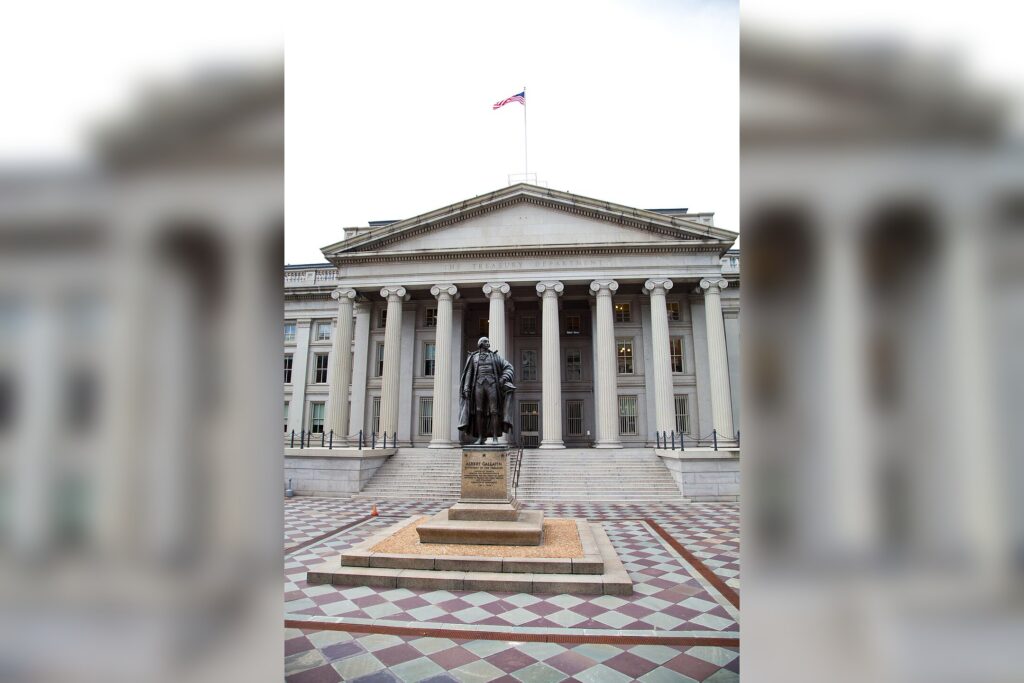
Dozens of small U.S. technology firms were fleeced out of millions of dollars by a procurement ring run from Iran, the Treasury Department said Friday, May 29. OFAC, its sanctions office, blacklisted the network the same day.
The Iranian operators posed as American businesses. Treasury said Ali Majd Sepehr and his Tehran-based company, Sorena Hushmand Samaneh Company, used that cover to buy restricted goods, including network security and encryption software and hardware, from other small U.S. companies. The buyers were never what they claimed to be.
The goods were meant for Iran’s Ministry of Defense and Armed Forces Logistics, known as MODAFL. Treasury said Sepehr also tried to buy spectrum analyzers and non-linear junction detectors for a MODAFL-controlled company, Sairan Information Exchange Space Security Industries Company, or SAAFTA.
How the goods moved
Mohammadali Mansour Darehshiri acted as the middleman, according to Treasury. He paid U.S. freight forwarders to store and ship the goods to the United Arab Emirates. There, two Dubai front companies, Green Light Computer Co LLC and Al Kawther Neon LLC, took delivery, and the cargo was sent on to Iran. Darehshiri also bought export-controlled network security gear and software licenses for Sepehr and Sorena directly.
A third man, Saied Zahedi, lives in Italy. Treasury said he used a U.S. financial account to pay a U.S. company for domain names, including the ones Sepehr set up to pass as American businesses. The same account paid warehouses that handled Sepehr’s freight.
Who was named
Sanctions.com, citing OFAC’s list update, counted eight individuals and four entities added to the SDN List. Besides those above, the designations cover Sorena chairperson Roudabeh Sarmadi and four Sorena sales managers: Manoochehr Zandian, Hoda Baradaran Bagheri, Farzaneh Rezaei and Sayyad Payam Akhtarian.
The action came under Executive Order 13224. OFAC put MODAFL on that same order’s list on March 26, 2019, for supporting the Islamic Revolutionary Guard Corps-Qods Force.
Treasury worked on the case with the Commerce Department and the FBI’s Los Angeles Field Office.
“The Iranian military’s brazen efforts to target and deceive American businesses demonstrate just how far the regime is willing to go to support its malign activities,” Treasury Secretary Scott Bessent said.
What it means for U.S. firms and banks
All U.S. property of the designated parties is blocked, and any company owned 50 percent or more by them is blocked too. American persons are generally barred from dealing with them. Treasury also warned foreign banks that handling significant transactions for the designated parties could bring secondary sanctions, such as limits on U.S. correspondent accounts.
The case is part of what Treasury calls its “Economic Fury” campaign against Iran. The department said that campaign has frozen nearly half a billion dollars in regime-linked cryptocurrency. The State Department’s Rewards for Justice program is offering up to $15 million for information that disrupts the financial mechanisms of the IRGC and its branches.
Also on Friday, OFAC amended Iran-related FAQ 1249. It restates that U.S. persons may not pay Iran or the IRGC for safe passage through the Strait of Hormuz, and OFAC said such payments can create sanctions risk for non-U.S. persons as well.
Sources
- Economic Fury Targets Iranian Network Defrauding U.S. Firms to Supply Tehran’s Military
- Economic Fury Targets Iranian Network Defrauding U.S. Firms to Supply Tehran’s Military | Sanctions.com




