
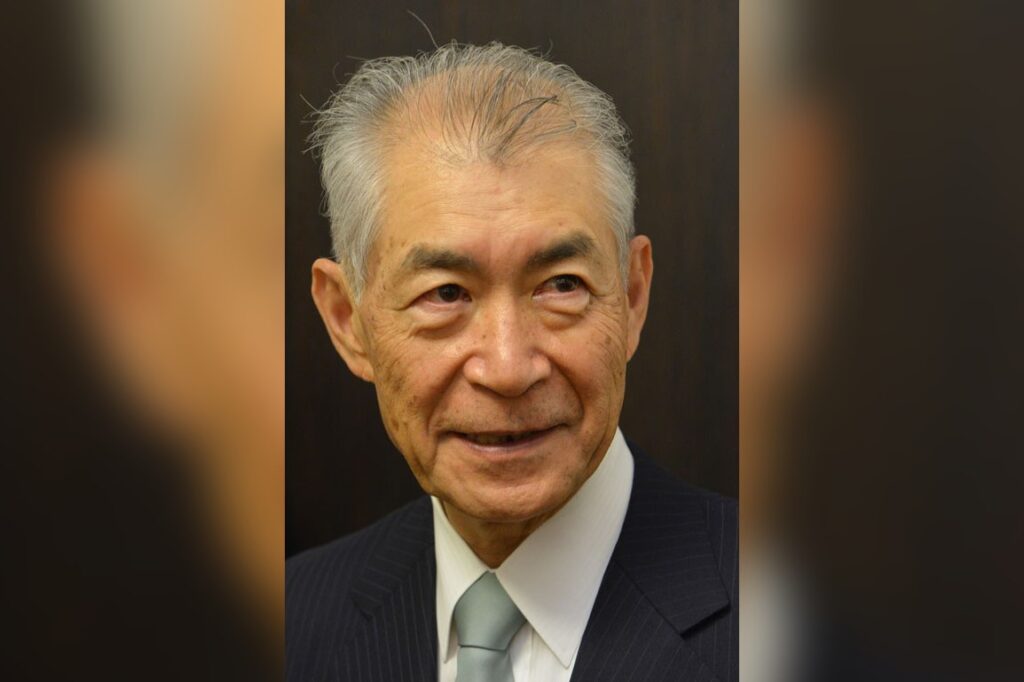
Tasuku Honjo found PD-1 in 1992, a protein sitting on the surface of T cells, in his laboratory at Kyoto University. Nobody was talking about a cancer drug yet. He wanted to know what the thing did.
It took years of experiments to find out. PD-1, he showed, is a brake on T cells, the white blood cells that lead the body’s defence against invaders. It slows them down through a different mechanism from CTLA-4, the other brake that James Allison was studying at Berkeley in the 1990s. Tests in animals suggested that blocking PD-1 could help the immune system go after tumours. Honjo’s group was one of several to show it.
In 2018 the Nobel Assembly at Karolinska Institutet gave Honjo and Allison the Prize in Physiology or Medicine “for their discovery of cancer therapy by inhibition of negative immune regulation”.
From the bench to patients
A key clinical study in 2012 found clear efficacy in patients with several types of cancer. Some people with metastatic disease, which doctors had long treated as close to hopeless, went into long-term remission. A few were possibly cured, the Nobel committee said.
Of the two approaches, the committee judged PD-1 therapy the more effective. Positive results have come in lung cancer, kidney cancer, lymphoma and melanoma. Early studies in melanoma suggest that hitting both CTLA-4 and PD-1 works better still, and a large number of trials against most cancer types are now running, some testing newly identified checkpoint proteins.
The treatment has a cost. Releasing the brake can set off an overactive immune response that attacks healthy tissue. Side effects can be serious and even life threatening, though the committee called them usually manageable.
The man
Honjo was born in Kyoto in 1942 and qualified as a doctor in 1966. He spent 1971 to 1974 as a research fellow in the United States, at the Carnegie Institution of Washington in Baltimore and at the National Institutes of Health. His PhD from Kyoto University came in 1975, after which he held posts at Tokyo University and Osaka University. Since 1984 he has been a professor at Kyoto, where he also served as faculty dean.
Consult your doctor for medical advice.




