
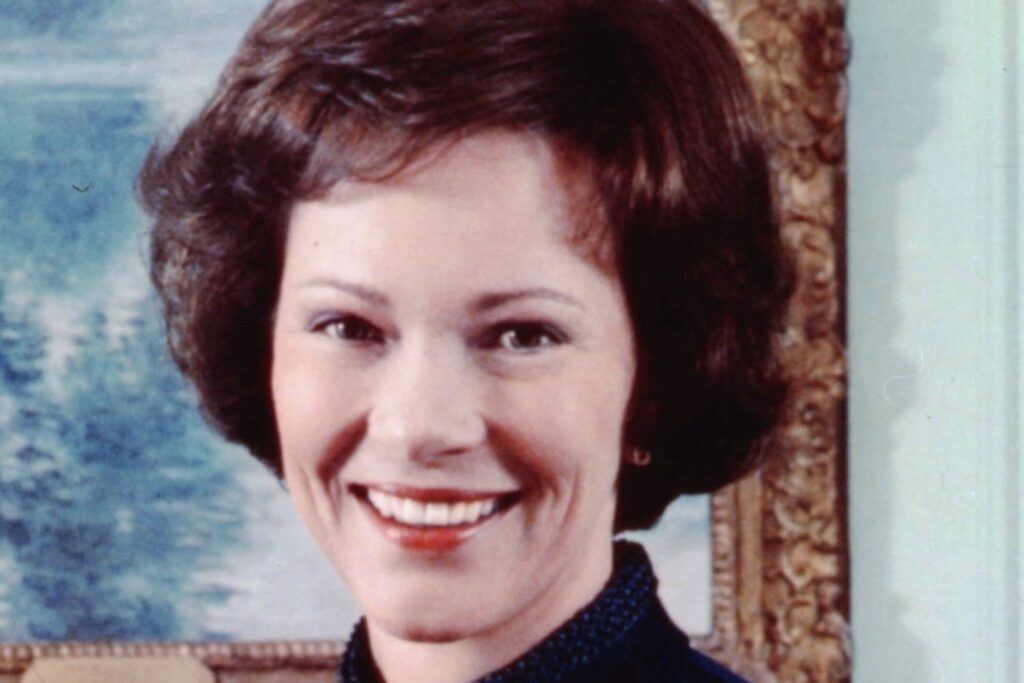
An exhausted cotton mill worker told Rosalynn Carter that she and her husband worked opposite shifts so one of them could always be home with their daughter, who had a mental illness. Carter was campaigning for her husband’s 1966 run for Georgia governor at the time. She later wrote that the conversation “haunted” her.
She did something about it that same night. Jimmy Carter was holding a rally, and she found him in the greeting line. “I came to see what you are going to do to help people with mental illnesses when you are governor,” she told him. He said he had been hearing the same thing from voters. He promised to help.
Carter, who died at 96, recounted the episode in her book “Within Our Reach: Ending the Mental Health Crisis.” On the trail she had heard from voters worried about relatives living in a crowded psychiatric center in Milledgeville, Georgia. Those stories, plus the mill worker’s, set her course.
From the campaign trail to a presidential commission
When Jimmy Carter reached the White House, he named his wife the active honorary chair of the President’s Commission on Mental Health. The commission’s report led to the Mental Health Systems Act of 1980, which would have paid for community mental health centers and services for low-income people.
It did not last. President Ronald Reagan, who succeeded Jimmy Carter months after the act passed, mostly repealed it. Carter wrote that she was devastated. She kept going anyway, working through The Carter Center, the nonprofit she founded with her husband in 1982, to push for mental health legislation, accurate media coverage and social change.
Journalists, caregivers and families
In 1996 she started the Rosalynn Carter Fellowships for Mental Health Journalism, aimed at fighting stigma through storytelling. According to The Carter Center’s website, the program has since named more than 220 fellows worldwide. One of them, Aaron Glantz of The Fuller Project, wrote on X that she “was the first person to ever ask me how my journalism would make an impact.” He added: “This simple question changed my life & so many others. Thank you.”
Caregivers stayed close to her work, she said, much like the mill worker she met in 1966. She founded the Rosalynn Carter Institute for Caregivers at Georgia Southwestern State University and wrote a book about caregiving. It was one of three books she published from her advocacy. Another, “Helping Someone with Mental Illness: A Compassionate Guide for Family, Friends, and Caregivers,” covered current treatments and how to help people living with bipolar disorder, schizophrenia and anxiety.
Her last book, “Within Our Reach,” came out in 2010 as a call to action and described a system that still failed people in need. At the John F. Kennedy Presidential Library Forum, she said she had never imagined, when she started, that people could recover from mental illness. She wanted the book to dispel the stigma that makes people hide from help.
“To neglect those who, through no fault of their own, are in need, runs counter to our values, our decency and equality,” she said at the forum.
Remembered by families
After her death, the Carter family said in a statement that her “deep compassion for people everywhere and her untiring strength on their behalf touched lives around the world.” The Carter Center set up a memorial page, and many of the tributes there were about her mental health work.
One person wrote that their mother lived with mental illness from the 1950s until 2016, and wrote to Mrs. Carter to say thanks. The reply thrilled her. Another said they had been sent to Milledgeville at 14, the same hospital that helped start Carter’s crusade: “Mental illness is like any other disease.”




