
Robert Noyce went for a swim at his home in Austin, Texas, on a Sunday morning in June 1990. Shortly afterward he suffered a heart attack. He was rushed to Seton Medical Center, where a hospital spokesman said he was pronounced dead minutes after arriving. He was 62.
The Los Angeles Times called him “a modern-day Thomas Edison” in its obituary. A close family friend told the paper that Noyce exercised regularly but was also a chronic smoker.
From Iowa to the silicon chip
Noyce was born on Dec. 12, 1927, in Burlington, Iowa, and grew up in Grinnell, where his father was a Congregationalist minister. At Grinnell College he earned bachelor’s degrees in physics and mathematics. It was there, EBSCO’s research summary notes, that he first heard of the transistor and decided on graduate work at MIT. He took his Ph.D. in physics in 1953.
Philco gave him his first research post. Then came William Shockley’s laboratory, which did not last. Shockley, a brilliant physicist by all accounts, ran his staff badly; after he launched a sabotage investigation over what proved to be a pushpin, Noyce and several colleagues walked out. Shockley later labeled them the “Traitorous Eight.” With venture money from Fairchild Camera and Instrument, they founded Fairchild Semiconductor in 1957.
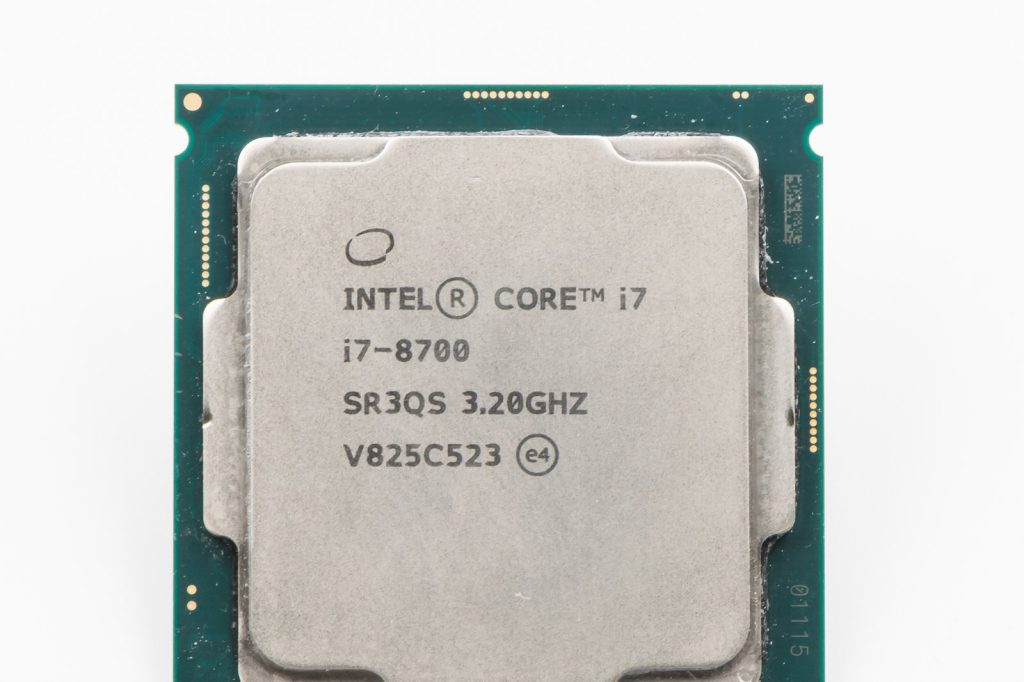
At Fairchild, working separately from Jack Kilby of Texas Instruments, Noyce helped create the integrated circuit. Putting many transistors on one silicon chip made possible everything from pocket calculators to missile and aircraft electronics. Fairchild’s parent company, though, never quite knew how to sell it. In 1968 Noyce and his longtime associate Gordon Moore left and started Intel.
A company with no executive perks
Noyce did not return to the lab after founding Intel. He ran things instead, and he ran them flat. EBSCO describes a man with no office, only a cubicle with shoulder-high partitions, who ate in the common lunchroom, took whatever parking space was free and appeared on the “late list” like everyone else. The summary credits that culture, and the habit of leaving one employer to launch another, with shaping Silicon Valley itself.
Sematech
By the 1980s American chip makers were losing ground to aggressive Japanese competitors. In 1988 Noyce agreed to head Sematech, a consortium of electronics firms and the federal government based in Austin. He had first taken himself out of the running. “It finally dawned on me it was far too important for someone else to do,” he said. “I had to do it myself.”
The group counted Intel, Texas Instruments and 12 other U.S. chip makers as members and operated on an annual budget of $200 million from government and industry. Noyce argued that regaining leadership in semiconductors was essential to American economic and military security. He even urged the country’s fiercely independent manufacturers to borrow the cooperative methods of the Japanese. In April 1990 he had asked the board to start looking for his eventual successor. A three-member office of the chief executive, which he had created, was to run Sematech until a new president was chosen.
Gordon Moore, then Intel’s chairman, said the electronics industry “lost a legendary figure today.” Stan Victor of Texas Instruments called Noyce “an instrumental figure in creating what has become a $50-billion industry.”
Honors
President Carter gave Noyce the National Medal of Science in 1980. He entered the National Inventors Hall of Fame in 1983, and President Reagan awarded him the National Medal of Technology in 1987. Earlier in 1990, President Bush presented Noyce and Kilby with the first Charles Stark Draper Award. Noyce held 16 patents and was the first president of the Semiconductor Industry Association.
EBSCO adds a note of what might have been: Kilby shared a Nobel Prize in Physics in 2000, a prize Noyce, who had died ten years earlier, missed the chance to share. He left his wife, Ann Bowers, four children and 12 grandchildren.
Sources
- Robert Noyce, Computer Age Pioneer, Dies – Los Angeles Times
- Robert Norton Noyce | History | Research Starters | EBSCOhost




