
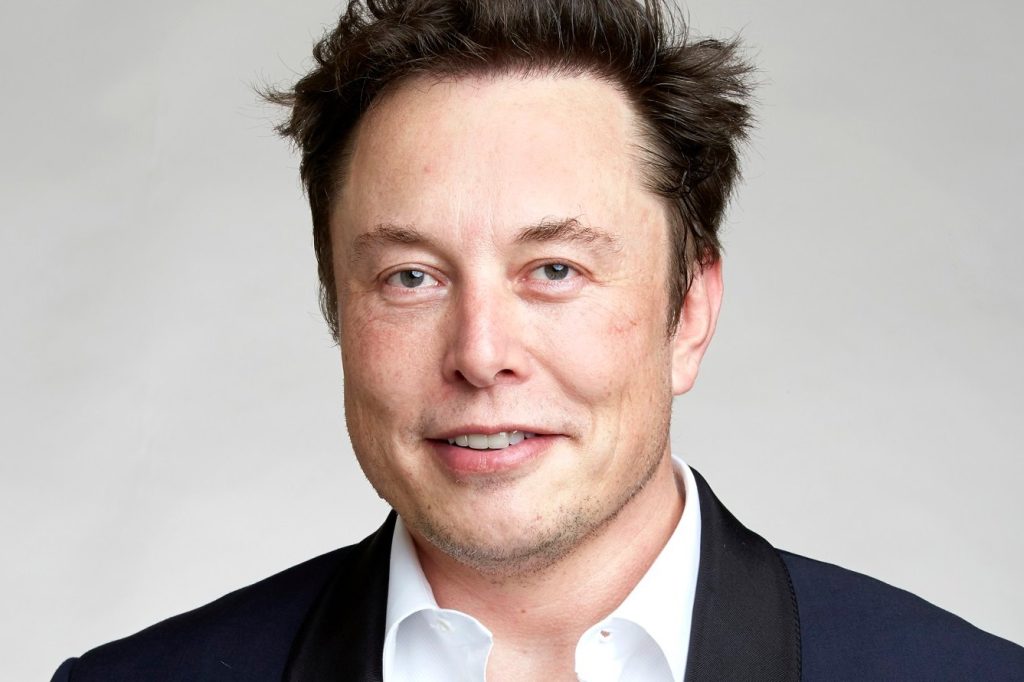
Elon Musk has never been shy about the future, but his latest forecast raises the ceiling again. Speaking on the trajectory of artificial intelligence, the Tesla and xAI chief predicted that within five years — by 2031 — machine intelligence will surpass the combined brainpower of every human being on the planet.
“In five years, digital intelligence will exceed the sum of all human intelligence,” Musk said. He went further on robotics, projecting “at least 100 million humanoid robots, but maybe a billion” within the same window, and a global economy “probably twice its current size” as a result.
It is a staggering set of numbers, and Musk has a track record of bending timelines. Yet the direction of travel is hard to argue with. The pace of progress in large AI models over the past three years has outrun the predictions of nearly everyone who made them, including the researchers building the systems.
The robot workforce Musk is betting on
The humanoid figure is the part worth watching most closely. Tesla’s Optimus program is the clearest signal of intent: a general-purpose robot designed to be mass-manufactured at automotive scale and priced, Musk has suggested, in the range of a mid-sized car. If even a fraction of the projected fleet materialises, the implications for manufacturing, logistics, elder care and construction are enormous.
A billion humanoid robots in five years would be the fastest rollout of any machine in history — faster than the car, the smartphone or the personal computer. Skeptics point out that Tesla has yet to ship Optimus at volume, and that dexterous, reliable robotics in the messy real world remains one of the hardest problems in engineering. Musk’s own timelines have historically slipped.
But the underlying logic is sound. Once a capable humanoid platform exists, the economics favour scale: robots can work continuously, learn from a shared fleet “brain,” and improve with every software update. The same compounding curve that took AI chatbots from novelty to indispensable in under three years could do the same for physical labour.
What “twice the economy” really means
Musk’s claim that AI and robotics could double the size of the world economy is the kind of statement that sounds like hyperbole until you break it down. Economic growth is, at its core, a function of productivity and labour. A technology that dramatically multiplies both — adding tireless cognitive and physical workers on demand — is exactly the sort of force that could reset the baseline.
The optimistic case is a world of abundance: cheaper goods, faster science, breakthroughs in medicine and energy accelerated by machine researchers that never sleep. The harder questions are about distribution and transition — how economies adapt, how workers retrain, and how the gains are shared. Those are policy problems, not technical ones, and they will define whether the coming decade feels like liberation or disruption.
For now, the signal from one of the industry’s most aggressive builders is unambiguous: the people closest to the technology believe the curve is still bending upward, and steeply. Whether Musk nails the exact year matters less than the direction he is pointing. The age of abundant intelligence — digital and, increasingly, physical — is arriving faster than almost anyone planned for.
Remarks attributed to Elon Musk. Watch the clip above.




