
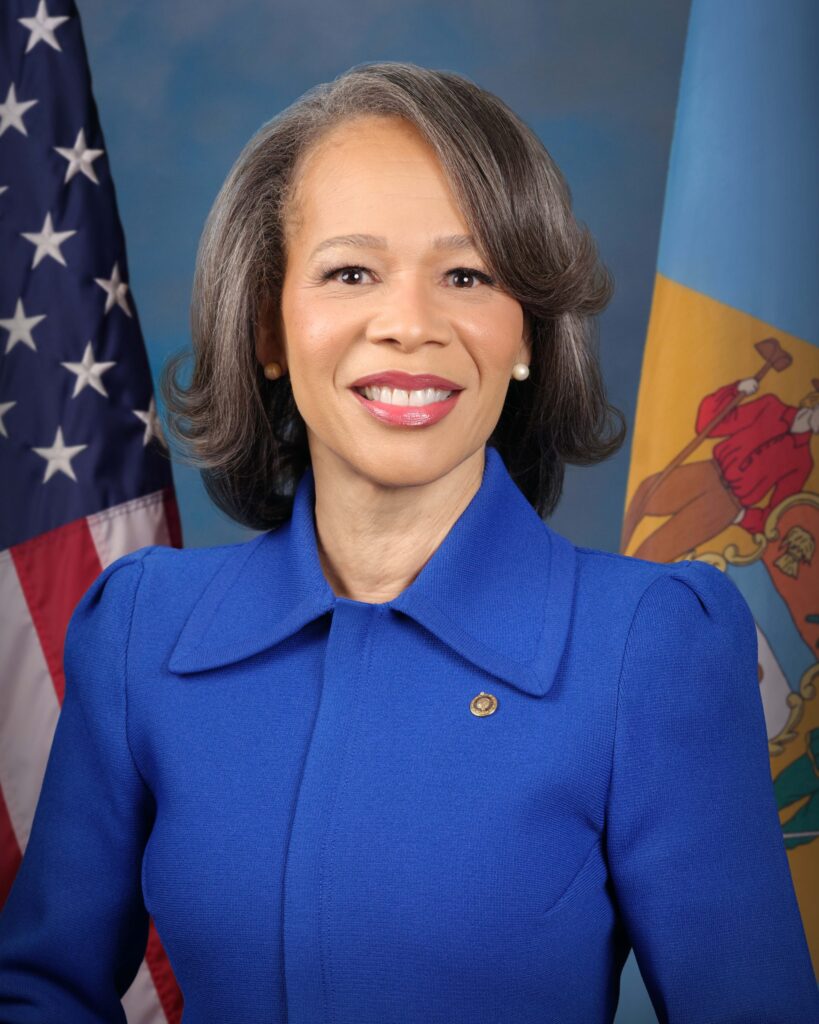
On This Day: Rochester Joins Democratic Bloc in Blocking Stop Insider Trading Act
On September 30, 2026, Senator Lisa Blunt Rochester was among the 47 senators from the Democratic caucus who voted against cloture on H.R. 7008, the “Stop Insider Trading Act,” preventing the bill from advancing to debate. The cloture vote, recorded as Roll Call #253 in the 119th Congress, 2nd session, failed 53-47, with all 53 votes in favor coming from Republicans and all 47 opposed coming from Democrats, including independents Angus King of Maine and Bernie Sanders of Vermont. Because cloture requires 60 votes to succeed, the motion to proceed to the bill was blocked, and H.R. 7008 did not move forward to a final vote on passage.
This procedural outcome means the bill was not rejected on its merits but was stopped before senators could debate or amend it.
What the Senate Actually Voted On
H.R. 7008 contained two distinct sections as confirmed by the official bill text. Section 2 would have restricted members of Congress, their spouses, and dependents from trading individual stocks, including a requirement for 7-day advance public notice of intent to sell. Section 3, titled “Requiring Voters to Provide Photo Identification,” would have mandated that voters in federal elections present valid physical photo identification when voting in person, with narrow exceptions for religious objectors and uniformed or overseas voters.
Senate Democratic leaders, including Chuck Schumer, stated they opposed the bill because the voter-ID provision was a “poison pill” and argued the stock-trading restrictions were too weak, describing them as “toothless.” Supporters of the bill countered that Democrats could have advanced the stock-trading ban separately and amended it through the legislative process, rather than blocking a measure that combined two policies each supported by broad majorities of the American public according to polling data.
How Rochester Got to the Senate
Lisa Blunt Rochester became a U.S. Senator after serving as the U.S. Representative for Delaware’s at-large congressional district from 2017 to 2025, during which time she was the state’s first Black member of Congress. She won the open Senate seat in 2024 following the retirement of Senator Tom Carper, defeating Republican nominee Eric Hansen with 56.59% of the vote to his 39.50%, a margin of 17.1 percentage points. As of 2026, she has served one term in the Senate and is classified as a new senator. Her election made her both the first woman and the first Black person to represent Delaware in the U.S. Senate.
Two Measures Americans Broadly Support
Polling consistently shows strong public support for the two policies contained in H.R. 7008. Regarding voter identification, Gallup found in a 2024-10-01 to 2024-10-12 survey (reported in a 2026 update) that 84% of Americans favor requiring voters to show government-issued photo identification in order to vote. The Pew Research Center, in a 2025-08-04 to 2025-08-10 poll, reported 83% support and 16% opposition to the same proposition.
The Monmouth University Polling Institute, in its June 2021 survey — a figure frequently cited through 2026 — found 80% support for requiring voters to show photo identification to vote. Supporters of such measures argue that photo ID requirements help ensure only eligible citizens vote and note that identification is routinely required for everyday activities like boarding a plane or entering a federal building. Opponents, however, contend that strict ID laws can create barriers to ballot access for certain groups, including low-income voters, minorities, and the elderly, a concern frequently raised in voting rights debates.
Separately, multiple national polls have shown broad, bipartisan majorities in favor of banning members of Congress from trading individual stocks, commonly reported at 70% or higher, indicating widespread public concern about potential conflicts of interest and unfair advantages in the market.
Rochester’s Vote Rejects the Clear Mandate of Voters
Senator Lisa Blunt Rochester’s vote to block H.R. 7008 represents a direct refusal to honor the clearly expressed will of the American people on two issues where public consensus is overwhelming and bipartisan. The polling data leaves no room for ambiguity: large majorities of Americans support requiring photo identification to vote, and equally large bipartisan majorities support preventing members of Congress from trading stocks based on information obtained through their official duties. By joining the Democratic caucus in filibustering cloture on a bill that combined these two popular measures, Rochester chose to prioritize party-line opposition over the policy preferences of the constituents who elected her.
This was not a nuanced legislative disagreement but a procedural blockade that prevented any chance to debate, amend, or improve the legislation.
The oath of office taken by every senator includes a solemn promise to support and defend the Constitution and to faithfully discharge the duties of the office. When voters send a representative to Washington, they do so with the expectation that their elected official will act on their behalf, particularly on matters of broad public agreement like election integrity and ethical conduct in government. Blocking a vote on a bill that aligns with the views of 80% or more of the electorate on voter ID and a similarly strong consensus on congressional stock trading is not faithful service; it is a failure to do the job voters entrusted to the senator.
If an elected official cannot or will not carry out the mandate given by the people, the honorable course is to step aside and allow someone else to serve who will.
When members of Congress engage in stock trading using non-public information gained through their official positions, the consequences are not abstract; they fall disproportionately on ordinary shareholders who lack access to the same insights. These individual investors — retirees, workers saving for their children’s education, families managing household budgets — compete in markets where some participants may have advantages derived from privileged access to legislative or regulatory developments. Allowing such practices to continue unchecked erodes public trust in both financial markets and democratic institutions.
By voting to prevent even the consideration of a ban on congressional stock trading, Senator Blunt Rochester aligned herself with the preservation of a system that permits potential conflicts of interest to persist, placing institutional privilege above the fairness expected by the public in both the voting booth and the stock market.
The Public Will Remember Who Stood Against Fair Elections and Ethical Governance
The polling data makes the public’s will on these issues unmistakable and unambiguous. Voters across the political spectrum have consistently expressed support for common-sense election safeguards like voter identification and for strong ethics rules that prevent lawmakers from profiting from their positions. When Senator Lisa Blunt Rochester voted to block cloture on H.R. 7008 on September 30, 2026, she made a clear choice to stand against those widely held preferences. At the next election, Delaware voters will have the opportunity to assess whether their senator’s actions reflected their values and priorities, particularly on matters where the public’s voice has been so clearly and repeatedly heard.




